




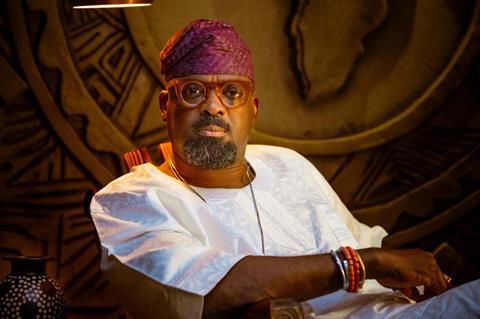
Nigerian producer and director Kunle Afolayan is optimistic. He believes new technologies and platforms can open a wealth of opportunities for filmmakers across Africa.
“I don’t think that building more multiplexes is the solution to distribution,” he says. “It’s more looking at new innovations. An average teen would hardly go to the cinema. They sleep on their phone. How do you take film to them?
“I believe in cinema, I love cinema, I grew up with cinema. But I don’t think it should be rigid. We should allow some sort of flexibility that gives room for different platforms to get the film to the people. The ticket prices in cinemas are exorbitant, even in Africa. People will always find cheaper ways to watch the film. They’ll pirate it. A lot of Nigerians are now opening channels on YouTube. They make films, and they take them straight to YouTube.”
Afolayan is one of Nollywood’s most renowned filmmakers, credited as a leading proponent of the New Nigerian Cinema movement, thanks to titles including 2006 supernatural thriller Irapada and 2010’s The Figurine, which won best film at the Africa Movie Academy Awards. His pictures began to find an international audience when Netflix licensed his 2014 thriller October 1. In 2021, he landed a three-year deal to produce three films in Nigeria as Netflix Originals: Swallow, Aníkúlápó and Ijogbon.
The filmmaker is grateful for the global platform the streamers have given to African filmmaking, even if they have recently pulled back on commissioning in the region.
“It was a struggle for African films to get selected in major festivals, except if it’s a co-production project,” he says. “Then Netflix came, and that changed things. Films were taken to the global scene.”
Afolayan also recognises the streamers’ investment in local talent: “We have a school [Kunle Afolayan Productions Film and Television Academy, or KAP] on which Netflix partnered and brought the University of Southern California on board to equip training rooms.”
The relationship Afolayan has forged with Netflix is continuing. The second season of an Aníkúlápó spin‑off series premiered on the platform in English-speaking territories at the end of January.
Attracting partners
The filmmaker is keen to encourage more international productions to look to Nigeria and Africa for filming opportunities. He points to the production and accommodation facilities he funded and founded, KAP Hub in Lagos and KAP Film Village in Igbojaye, Oyo state, as examples of Nigeria’s film infrastructure. He is also keen to express that Western media reports of violent kidnappings are not representative of the whole of Nigeria.
“Most of the places the attacks are happening are in the north,” he clarifies.
Two UK-Nigeria co-productions, both shot in Nigeria, have recently played major film festivals Cannes 2025 Un Certain Regard selection and Bafta winner My Father’s Shadow, from British Nigerian filmmaker Akinola Davies Jr, and Olive Nwosu’s Sundance 2026 selection Lady. It is a point of frustration for Afolayan that African producers have to co-produce with their Western counterparts to generate interest from festivals, and that ideas originated in Nigeria from Nigeria-based producers are not breaking through.
“The whole country was celebrating, it’s a Nigerian film,” says Afolayan, when word broke that My Father’s Shadow had landed in Cannes last year, billed at the time as the first Nigerian film to do so. “Then, the shocker came [that the film is largely funded and produced out of the UK, with Davies a UK-based filmmaker].”
Afolayan is now in pre-production on a self-funded 10-part series about the Yoruba tribe and its deities, with plans to shoot in Benin and Nigeria. He is also working on a docudrama about his late father, filmmaker and actor Adeyemi Afolayan, and is talking to the Royal African Society in the UK, organiser of London’s Film Africa festival at which Afolayan delivered a masterclass last year, about supporting the project.
Afolayan has been developing the project for around seven years and was struggling to work out how to recreate his father’s likeness, until he experimented using the Meta app. “With AI, the problem is solved.”






No comments yet