











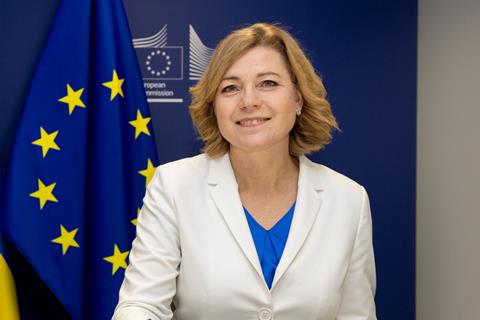
EU commissioner Henna Virkunnen said the film industry “shouldn’t be too nervous” about future funding for European films under the proposed AgoraEU programme.
Funding for film hasn’t been ringfenced in the AgoraEU programme because of a desire for flexibility, she told Screen. “But, [looking at the] overall picture, it’s important for the film industry that we were proposing to increase the whole funding, so there should be enough resources also for the film industry.”
Asked if the film industry could expect similar or more funding than the current Media programme in AgoraEU, Virkunnen replied: “Yes, I see so. Of course, [for] now it’s only the European Commission’s proposal – the European Parliament and the European member states will have to agree on it also. But our intention was not to cut the funding.”
The film industry has raised concerns about the AgoraEU programme in an open letter signed by over 5,000 filmmakers published on the eve of the festival.
The Commission has proposed a bigger budget for AgoraEU - €8.6bn - than Creative Europe. But its funding scope is much wider, including news media and video games, and it is unclear exactly how much financial support will be allocated to film and TV.
As Executive Vice-President for Tech Sovereignty, Security and Democracy, Virkunnen has oversight of the Creative Europe funding programme, whose Media strand is a key backer of European films. Seven films in Cannes competition this year are backed by Media.
The current Media programme contains dedicated support for independent producers, but the AgoraEU’s Media+ programme no longer has that provision – sparking fears that funding will go to broadcaster-backed groups. Asked why AgoraEU has not targeted funding to indie producers, Virkunnen said the audiovisual ecosystem is changing. “We thought that it maybe limiting too much the possibilities in the future if we are very much defining this by a corporate structure about who is an independent producer.”
But she stressed the importance of independent producers in the film ecosystem. “I think our competitiveness is coming very much from these independent producers, and of course, often they are very small ones.”
Bigger organisations, she added, “are not always able to provide so interesting content. Sometimes they do, but not always. It doesn’t always mean that if you are big, you have better quality.”
Virkunnen also stressed that a key focus for the AgoraEU programme is on how films reach audiences. “There are many challenges now for film producers…to access…and to reach the audience. That’s something that we have to also work with.”
Asked if the Commission had held conversations about the UK rejoining Creative Europe, Virkunnen said not. “But, of course, we will see what is the future. For many programmes, [the UK] has been joining back. The UK is a very important part of the cultural sector in Europe and very important partner for us. But, no, there haven’t been active discussions.”
In Cannes, Virkunnen said she had met film producers who had received Media funding, who explained what is working and not working about the programme and their hopes for the future.
“It was also interesting to hear how much they were underlining the role of talented people. They see that it’s a great strength for the European Union that we have these talented people, and how important it is to keep them in Europe.”
At the same time, she said the producers stressed the importance of freedom of expression and creative culture in the European Union “We see that in many, many parts of the world, it’s more limited, how you can express your ideas. And it’s very difficult to get funding for that kind of idea. It is something that makes Europe a very interesting area – it also really means that we have interesting content, that we have freedom of expression, and we can support very different creative ideas.”





No comments yet