










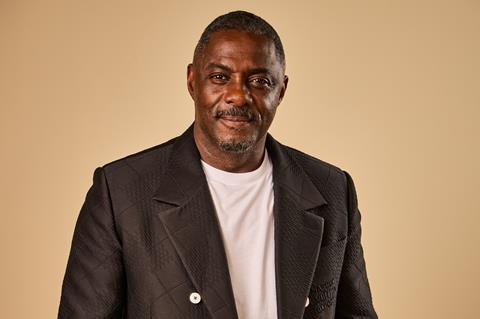
Idris Elba says giving creators greater control over their output will improve representation, both at film festivals and in the wider industry.
“When creators control capital, infrastructure, and distribution, they show up at festivals on their own terms – not as tokens, but as industry players,” says Elba.
“The long-term shift will happen when we stop talking about access as charity and start treating creativity as capital.”
Elba is an executive producer on Berlinale Forum title Crocodile – a documentary directed by a group of five Nigerian YouTubers, with New Zealand filmmaker Pietra Brettkelly. The film depicts the five teenagers’ efforts to make sci-fi spectacles with basic resources in their local area.
A study published by Screen in December 2021 showed just 1% of films in main competition sections at major festivals are by Black directors.
Change since then has been slow: two of the 24 Berlin Competition film directors this year are Black (Dao’s Alain Gomis and Soumsoum, The Night Of The Stars’s Mahamat-Saleh Haroun), while Black directors elsewhere in the programme include Ashley Walters for Perspectives title Animol and Elise Sawasawa for Panorama Documentary entry Enough Is Enough.
“Major festivals should reflect the breadth of global storytelling and 1% clearly doesn’t reflect the world,” said Elba. “There needs to be deeper investment earlier in the pipeline: development funding, access to producers, sales agents, and international co-production structures. You can’t just invite filmmakers to compete; you have to fund their journey to the starting line.”
However, festivals are not the only way. “I don’t believe validation can only come from traditional gatekeepers,” says Elba. “Technology has shifted the landscape. Black filmmakers – and African filmmakers in particular – are building audiences directly, through digital platforms, independent financing, and cross-border collaborations. That autonomy is powerful.
“It’s not about abandoning festivals. It’s about building parallel strength.”
Tenacity
Crocodile was filmed over 13 years, by Raymond, Ronald and Richard Yusuff, and Godwin and Victor Josiah. Elba boarded the film two years ago alongside Diene Petterle through their company 22Summers.
“I invited [the directors] to my film set so we could discuss where their film was at, we gave feedback to the cuts during the edit, made a few introductions,” says Elba of his role. He also sees his job as “to amplify their voice, as the film is released internationally. If my association can bring new audiences to the film, then I’m here to do that.”
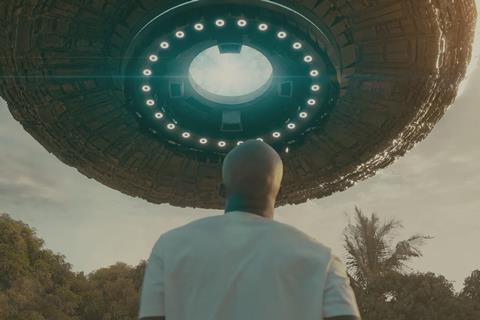
“Their story is moving and their tenacity inspiring. It shows a side of Africa I hadn’t seen on screen before.”
Having worked with filmmakers in Africa for several years, in 2026 Elba is focusing on infrastructure on the continent.
“We’ve spent years talking about representation, which is important, but representation without systems doesn’t sustain careers,” says the filmmaker. “For this year and the foreseeable, my focus is on building practical pathways.”
These include supporting training routes, mentorship and access to film, TV and digital production through his charity Elba Hope Foundation; and backing institutions like Ghana’s Institute of Film and Television (NAFTI).
Elba and his team are also working on Akuna Wallet, a digital wallet designed for African creators and entrepreneurs to receive, hold and withdraw global payments.
“That way, filmmakers can not only make work, but monetise it and retain ownership,” says Elba. “If we can strengthen those pillars, the storytelling will take care of itself.”
Late last year Elba spoke of his intention to move away from acting towards directing. He is in post-production in London on Apple Original Films’ This Is How It Goes based on a Neil LaBute play and starring recent Oscar nominee Wunmi Mosaku, Charlie Cox and Elliott Heffernan alongside Elba.
“We’re close to picture lock and working on the score,” said Elba, who confirmed Apple will be giving the title a theatrical release, ”although we haven’t got into the specifics yet.”
“I love every part of directing,” said Elba, who said his company is “at various stages of development on films I plan to direct.”






No comments yet