














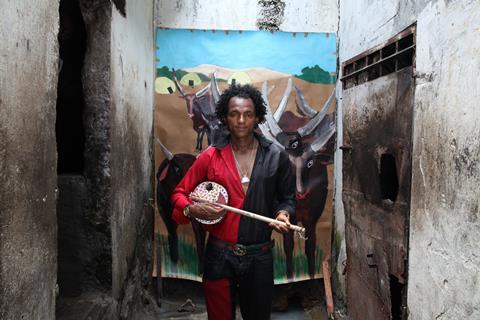
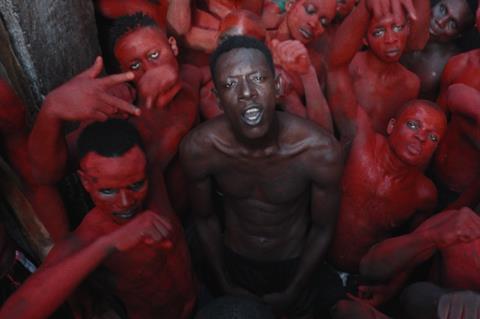
The documentary Jail Time Records is drawing heat after winning three Tribeca Festival awards for its immersive account of a recording studio inside Cameroon’s overcrowded Central Prison of Douala New Bell.
Dione Roach, an Italian visual artist who has lived in Cameroon for close to a decade, and Steve Happi, a former inmate from the prison, established Jail Time Records in 2018 – the first of its kind inside an African prison. Over the course of several years they shot the film, profiling budding inmate performers Empereur, Transporteur, and Stone.
The co-directors partnered with Taika Waititi, who brought on Ben Affleck, Matt Damon and Luciana Damon of Artists Equity, which provided support for creative productive services and finishing funds and represent worldwide sales. Waititi and his wife, the British singer Rita Ora, serve as executive producers.
Roach, Happi, and Waititi spoke to Screen about working with the inmates, how the recording studio is expanding, and their plans for the film. The inmates’ music is available on Spotify, Bandcamp, and other digital music platforms. Jail Time Productions splits streaming profits 50% with the artists and reinvests the other 50% in social impact projects.
Dione and Steve, how did the film come together?
Dione Roach: Me and Steve met inside the prison of Duala in 2018 at the time Steve was incarcerated. I was working on art projects with underage prisoners and we’d just set up a recording studio inside the prison. Steve was already a sound engineer and he was the missing element. He started working in the studio with loads of artists. The studio started as a social impact project using music and art as rehabilitation. We were already shooting video clips inside the prison and so after a few years filming a movie felt like an organic continuation.
Were the prison authorities on board?
DR: They needed little persuasion. We literally we had one meeting. The person in charge at the time was a great music lover. Music has a huge part in Cameroonian culture.
How did you choose the three main inmates as your subjects?
Steve Happi: Dione started with Stone [a former soldier]. When I spent two years in the prison, Empereur [a gang leader] was my best friend and he made music in our wing and we started doing music videos. Transporteur [a getaway driver] wasn’t a musician but wanted to be one and as soon as he saw the camera he wanted to get in front of the camera. People came to me to present new artists, or people just showed up wanting to be part of the project because they had seen our activities inside the prison.
How did you fund the film?
DR: From our pockets. It was just us and we didn’t need a big crew.
SH: Dione brought her camera, we had a microphone. Little by little we started buying equipment from our pockets. We worked hand-in-hand with the brothers there. We showed them how to record the sound, hold the camera. One of the inmates, Stone, held the boom mic for an interview with Empereur. It was a collaborative project.
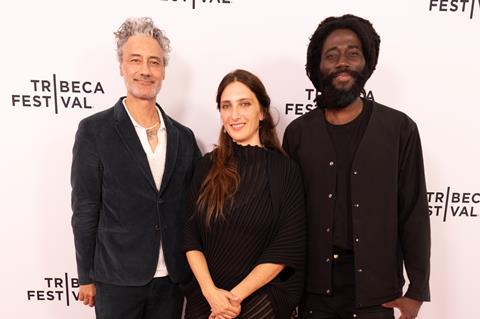
Taika, how did you get involved?
Taika Waititi: About three years ago I was scrolling online going down the rabbit holes and found this music video by Empereur and was intrigued. I started following the account and that’s when Dione got in touch. I just wanted to help in any way I could to get the story out there.
And then you took it to Artists Equity?
TW: Yes through my producer Garrett Basch we knew a producer at Artists Equity, Dani Bernfeld, who introduced [Dione and Steve] to some editors and the whole thing took off. We’ve been offering love and support.
When did you start shooting footage?
DR: We started in 2021 when Steve was already out of prison – that’s why we don’t have footage of him from the time he was in prison. After he left, Stone took over [the recording studio] and we trained him in sound engineering. We were shooting up until January this year.
Tell us about the guards. They are a peripheral presence in the film
SH: It’s a really particular prison, even in Cameroon. It’s the only one like that. Cameroon has 10 states, and we call that prison the 11th state. It’s its own world and has its own rules. The administration works hand-in-hand with inmates who run the security inside the prison. [The guards] are more about controlling the [perimeter].
Dione, how did you stay safe during the filming?
DR: I never felt in danger. Sometimes a fight would break out next to me and I wanted to protect my camera. I was always with my boys, my crew, so they protected me. The guards work more on the periphery. There were always those security guys around and they’re huge. Once, a guy touched my behind and one of the security guys punched him. After that, it never happened again.
SH: Dione’s really loved and respected in the prison. She is the mama of the gangsters there.
Steve, how did you benefit from Jail Time Records when you were in prison?
SH: As an inmate, that opportunity and the recording studio is the beginning of freedom. You have a safe space and when you use this movement as an instrument of resistance, you don’t think about prison. You have an opportunity to have your voice heard. People become famous in prison, like Transporteur – he’s really boosting his self-esteem and we’re all trying to live a positive life now.
How else does Jail Time Records help the inmates?
DR: Since we’ve been operating for eight years now, we do a lot of post-prison [work]. We’re looking for a new space for an out-of-prison studio […] We always support the artist when they come out with a grant to help set themselves up or start a little business. We’re involved with their families and try to do a lot of mediation to help that process because it’s such a delicate moment in the life of somebody who has spent a really long time in prison.
SH: When you get out, even crossing the road is difficult. You’re wondering around like you’re lost. It’s a new world. You’re seeing trees, birds, children.
Taika, what’s the plan for Jail Time Records after winning those Tribeca awards?
TW: I just want more and more people to see it, especially here on the West Coast in LA. I want to do some screenings. It’s got a chance to travel more and I want people to get exposure to a place that no-one would normally ever get to visit or think to visit […] That’s the most important part of documentary storytelling – bridging those gaps between people and cultures and countries. My wife Rita Ora wanted to be involved and lent her name to this as well.
DR: Taika’s been the best big brother as a filmmaker and supporter. We’re first-time filmmakers so the fact that Taika took that risk is gigantic.
What’s the latest on Empereur?
DR: He’s in prison and hopefully can get out around August or September because [authorities have] merged his sentences because he had a lot of different cases.
What kind of profile does Jail Time Records have outside Cameroon?
SH: We are expanding. We duplicated the same project in the MACO prison in Burkina Faso. We’ve built a recording studio in another prison in Cameroon. We started a prevention project here in Cameroon and started one in Ivory Coast. We went to Brazil and started a prevention programme in the comunidades – they don’t like it when you say “favela” if you’re not from the favelas – and we’re thinking about bringing a recording studio there too.
New Bell prison was built for 800 and houses 6,000. Is Cameroon addressing prison overcrowding?
DR: Yes and that’s why they built this new prison in Goma, just outside Duoala, where Stone gets transferred to. Once it’s finished it’s going to receive a lot of the prisoners from New Bell.
Will you show the film to the inmates?
DR: Yes! That is going to be an important stop on the calendar. It’s going to be an audience of 6,000!






No comments yet