












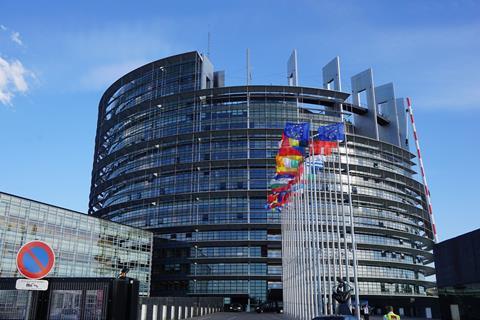
The European Parliament has voted to adopt a series of recommendations to protect copyrighted creative work from use by artificial intelligence (AI).
MEPs voted today on a resolution that EU copyright law should apply to all systems of generative artificial intelligence on the EU market. The resolution was carried by 460 votes to 71, and with 88 abstentions.
The Federation of European Screen Directors (FERA), the Federation of Screenwriters in Europe (FSE), and the Society of Audiovisual Authors (SAA) have welcomed the vote by the European Parliament to adopt the resolution.
The three organisations have now called on the European Commission to turn “this clear political mandate into concrete action without delay.”
The resolution – titled ‘Copyright and Generative Artificial Intelligence – opportunities and challenges’ – was led by MEP Axel Voss.
MEPs voted that the use of copyrighted material by genAI should be fairly remunerated in order to protect the EU’s creative sector, which generates 6.9% of the EU’s gross domestic product.
The resolution calls on the European Commission to create a new licensing market for copyrighted material, including voluntary collective licensing agreements per sector, which would include individual creators and small and medium-sized enterprises. They also want to make sure rightsholders can exclude their work from being used in AI training.
The resolution also stresses the importance of full transparency for the use of protected content by genAI. They want AI providers and deployers to provide an itemised list of all copyrighted works used to train AI.
Voss said after vote: “We need clear rules for the use of copyright-protected content for AI training. Legal certainty would let AI developers know which content can be used and how licences can be obtained. On the other hand, rightsholders would be protected against unauthorised use of their content and receive remuneration. If we want to promote and develop AI in Europe while also protecting our creators, then these provisions are absolutely indispensable.”
SAA chair Babara Hayes said: “Today’s vote confirms what Europe’s screenwriters and directors have been saying for years: the current framework is failing them. GenAI companies have built billion-euro businesses on the works of audiovisual authors without asking, paying or disclosure. The Parliament has now spoken with a clear majority. We call on the European Commission to swiftly introduce enforceable obligations that level the playing field.”
FERA chair Bill Anderson added: “Directing is not just a profession; it’s a vocation built on years of craft. Directors have always been early adopters of new technologies and many already work with AI. However, they are now seeing AI systems replicate their work. The Parliament acknowledges this threat to their livelihoods and gives it political weight. Now, we need the Commission to enforce rules so that European directors can continue to tell original stories that engage audiences worldwide.”
FSE president Jacob Groll said: “Every film, every series, every episode of television has a screenwriter behind it who spend months, most often years, bringing it to life. These words are taken unlawfully, without consent and without remuneration - stolen by generative AI systems to be used as basis of their own product. This is not an abstract policy debate, it is the fight for creatives to earn a living and for the diversity of stories offered to European audiences.”





No comments yet