






The Russian documentarist’s follow-up to Trillion and Architecton premieres out of competition in Venice
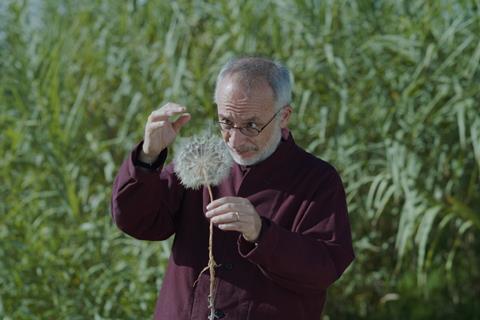
Dir. Victor Kossakovsky. Italy/Spain/Germany 2026. 105mins
Russian-born documentarist Victor Kossakovsky is nothing if not an audacious experimenter with scale, his recent work dramatically counterpointing the miniature with the monumental. Holy Wood Dust is his latest environmentally-based study, after 2018’s water-themed Aquarela, 2020 animal portrait Gunda and 2024’s Architecton, about stone. Following last year’s more abstract Trillion, here Kossakovsky focuses on trees and the pressures they face from natural and human-induced stresses. This time, however, his science-inspired, emotionally-charged approach feels excessively rhetorical.
Overstates its case and overextends some of its material
Premiering out of competition in Venice the film could, like Kosskovsky’s previous works, attract the attention of further festivals, although its journey beyond the circuit is likely limited. Yet eco-cinema aficionados and lovers of arboreal drama (i.e. Ildikó Enyedi’s recent Silent Friend or Michelangelo Frammartino’s Le Quattro Volte) may well be tempted.
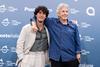
Here, Kossakovsky collaborates with eminent botanist and pioneer of plant neurobiology Stefano Mancuso. The film begins in a laboratory where Mancuso and other scientists examine plant samples, before it surges onto a vaster scale, as a tree rises aloft on a crane, later to be seen in a gimmicky VFX shot smashing the title logo to powder. An aerial sweep then shows a forest of red spruces violently buffeted about in a windstorm.
Later, destruction comes from the activity of bark beetles, with microscopic photography tracking wood surfaces in hyper-extreme close-up, marked with the twisting paths carved by the voracious insects, like little twisting. The bugs are seemingly responsible for what we see in another panorama, a forest with barely any green remaining, the diseased trees left ashen and grey: a deeply poignant sight, although it proves that even devastation can be beautiful. The film is altogether symphonic in its dynamics of scale: with drone cameras swooping from ground to sky, showing cloud-cloaked mountains over the treetops, or getting deep into the corrugated textures of a sawn timber surface.
Mancuso is also seen taking a group of lively, inquisitive schoolchildren on a forest walk, approachably expounding the topic of trees’ sentience, and musing that if only humans could practice photosynthesis as trees do, we would be a happier species. It must be said that his very personable teaching style would make Holy Wood Dust eminently suitable for school viewing, to turn young viewers onto the complexities and contemporary challenges of nature.
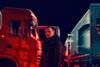
Adults, however, may feel that the film overstates its case and overextends some of its material. A case in point is the long sequence following a huge evergreen as it is transported through Italian mountain tunnels and along motorways to Rome, to be erected as the Vatican Christmas tree. Other Christmas trees feature in their thousands, on their own life cycle: chopped down and packaged, then piled up in their multitudes in a way that seems to suggest they have been somehow depersonalised, stripped of their natural ‘treeness’. Eventually, those trees are dumped come New Year, rolling in streets like tumbleweed or – in a brief, irresistible sequence – given to a zoo as toys for playful orang-utans and elephants.
But while there is ample magnificence and visual mischief on display, its presentation too often seems to proclaim ’Behold!’ n a way that Kossakovsky has previously managed to avoid. Time-lapse shots of new shoots emerging are a little insistent on the ‘miracle of life’ note, and Adrián Berenguer’s score is sometimes twinkly, sometimes bombastic, but always over-emphatic. There’s undeniable beauty throughout, and formidable tech mastery, but Holy Wood Dust lacks the genuinely revelatory magic of Kossakovsky’s best.
Production companies: Be Water Film, Solaria Film
International sales: Rai Cinema fulvio.firrito@raicinema.it
Producers: Mattia Guerra, Emanuele Nespeca, Alba Sotorra, Mayca Sanz L-Higueras, Frank Müller
Screenplay: Stefano Mancuso, Victor Kossakovsky
Cinematography: Gianmarco Donaggio
Editing: Ainara Vera
Music: Adrián Berenguer