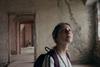
The director follows ‘Ivo’ and ‘All Is Well’ with meticulously-crafted Berlin Competition title

Dir/scr: Eva Trobisch. Germany. 2026. 116mins
Questions of personal identity and of finding a place within a wider story are at the heart of Eva Trobisch’s ambitious, mosaic portrait of a family in the small contemporary town of Greiz, in eastern Germany, which knits all of its individual strands together while nimbly avoiding the obvious. It deftly passes the baton between members of an extended family as the focus of the story subtly shifts, and it’s a testament to the exceptional quality of Trobisch’s writing that the dynamics flow as effortlessly as they do.
A step up in ambition for Trobisch
It’s a step up in ambition for Trobisch, who in 2024 won Berlin’s Heiner Carow Prize (which celebrates an exceptional emerging filmmaker) for her second film Ivo. While both Ivo and her remarkable debut All Is Well (which won Best Debut at Locarno) unfold from the perspective of a single character, Home Stories takes a more complex approach. Trobisch’s refusal to tie up the ends of her tangled threads neatly may frustrate some viewers, but her humanism and curiosity will resonate with others. The berth in Berlin Competition should provide a launchpad for further festival interest, and the picture could find a home with an adventurous arthouse distributor or streaming platform.
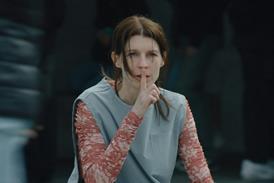
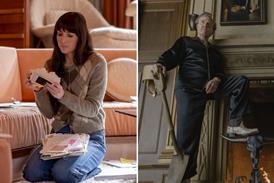
The film follows three generations of the same family. Sixteen-year-old Lea (Frida Hornemann) is a contestant in a televised talent show, and is stumped by the question of what makes her special. Her parents, Matze (Max Riemelt) and Rieke (Gina Henkel) have recently separated, Rieke is pregnant by another man. Lea’s grandparents, meanwhile, are ragged with the stress of keeping their albatross of a hotel afloat, and her aunt navigates local hostility over the city museum renovation.
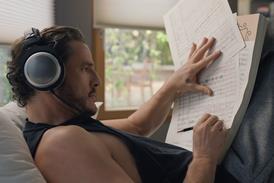
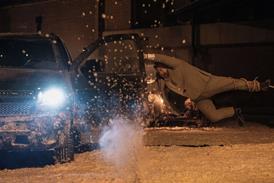
It all opens, rather obliquely, with a sequence in which a sedated horse is carefully lowered to the ground and then given an MRI examination. Watching it is Matze and his young son – they are spending time together before a slightly tense handover, delivering the child back to Rieke in the home that, until recently, they all shared. Matze takes his tax folders and claims a disputed lamp from the house; a hollow victory, given that his wife’s new lover has taken his place in the marital bed. The significance of the horse doesn’t become clear until later on – it’s one of several owned by Lea’s grandparents at their large, somewhat careworn hotel and stables. The animal, like the business, is on its last legs.
Fault lines of tension run through the entire clan. Lea is hostile towards her mother, choosing to move in with her father at the family hotel rather than to stay under the same roof as Rieke. Lea’s grandmother Cristel (Rahel Ohm) begrudges the vast sums of municipal funding secured by her daughter Kati (Eva Löbau) for the renovation of the museum, money which might have been spent on keeping local businesses like hers afloat. And Lea’s idealistic teenage cousin Edgar berates his grandparents for taking the business of what he describes as a Nazi convention in their struggle to keep the hotel solvent.
There’s a moment of joy and solidarity when the family gathers backstage to watch Lea’s first televised audition, but soon the pressures of daily life prise open the fractures between family members again.
The contrasts between east and west Germany are another core theme, with the economic disparities between the two suggested as a factor in Matze and Rieke’s split. “You weren’t here,” is her repeated accusation to the ex-husband who left to find more lucrative work to support his family. The ornate castle which houses the museum, the grand boulevards and the luxuriantly forested hillsides are all a contrast to the somewhat depleted status of Greiz in modern Germany.
Appropriately, given Lea’s musical ambitions, wide-ranging soundtrack choices bring colour to the story. Lea’s audition song is a thin, underpowered little thing, but it means the world to her family. Elsewhere, there are haunting choral pieces which, we assume, are performed by Lea and her school drama class. Adrian Campean’s preceptive camera tunes into the tensions and the loaded glances between family members. Like Trobisch’s elliptical screenplay, the cinematography hides as much it shows. In a way, what we don’t see is almost as revealing as what we do.
Production company: Trimafilm
International sales: The Match Factory info@matchfactory.de
Producers: Trini Götze, David Armati Lechner
Cinematography: Adrian Campean
Production design: Renate Schmaderer
Editing: Laura Lauzemis
Music: Teho Teardo
Main cast: Frida Hornemann, Max Riemelt, Eva Löbau, Gina Henkel, Rahel Ohm, Peter René Lüdecke, Florian Geißelmann, Yvon Sable Moltzen, Ida Fischer, Florian Lukas, Thomas Schubert, Kara Schröder, Anne Kulbatzki, Nairi Hadodo