








European production and distribution giant Fremantle, whose credits include Bugonia and Maria, has moved away from fully financing feature films following a strategic review disclosed today as Fremantle parent RTL Group released its full-year financial results for 2025.
Revenue at Fremantle was down 9.4% to €2bn in 2025, which RTL attributed primarily to lower revenue from the entertainment business, particularly in the US and the UK.
Adjusted EBITA increased 2.3% to €175m, partly due to cost control measures. Fremantle said it has cut around 550 full-time jobs since 2023 following the integration of acquired production companies and the reduction of overheads.
“Following a strategic content review, Fremantle discontinued its fully financed film business, revalued its advances into distribution rights for high-concept drama series and advances relating to certain first-look agreements, resulting in an overall negative impact of €95m in 2025,” RTL said in its annual report.
“The company will continue to focus on entertainment, drama and documentaries.”
RTL and Fremantle declined to clarify which films it has fully financed but indicated a more cautious approach to film investment going forward.
The move follows the departure of Christian Vesper, Fremantle’s chief executive of global drama and film, in January. Andrea Scrosati, group chief operating officer and chief executive of continental Europe, now oversees the film and drama division on an interim basis.
In 2023, Fremantle formed a strategic alliance with the Israel-based IBI Investment House, which launched a €150m fund to finance scripted television and film projects from the group under a four-year deal. Pablo Larraín’s Maria, a biopic of Maria Callas starring Angelina Jolie, was one of the first films to be financed through the IBI Fund. Fremantle owns Larrain’s Chilean production outfit Fabula.
Two scripted series, a six-part revenge drama called Shelter, created and written by Jim Keeble and Dudi Appleton, and Generation Loss, a four-part returning mystery thriller written by Sarah Dollard, also received IBI funding. However, RTL and Fremantle declined to provide further details on any additional films supported by the IBI Fund.
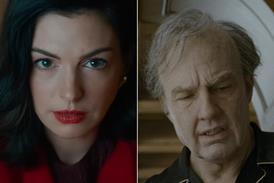
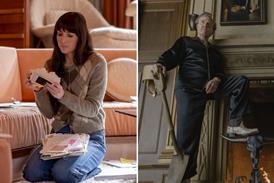
Recent Fremantle films from its portfolio of production companies include Yorgos Lanthimos’ Oscar-nominated Bugonia, produced by the company’s Ireland-UK label Element Pictures and financed by Fremantle and South Korea’s CJ ENM. The film premiered at the 2025 Venice Film Festival. Element also produced Cannes 2025 titles Harry Lighton’s Pillion and Akinola Davies Jr’s My Father’s Shadow, which both premiered in Un Certain Regard.
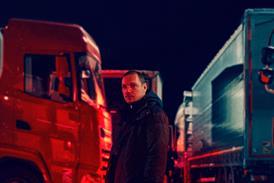
There were four further Cannes 2025 titles from Fremantle companies: Mario Martone’s Fuori, Sebastián Lelio’s The Wave, Kristen Stewart’s The Chronology Of Water and Ratchapoom Boonbunchachoke’s A Useful Ghost.
Fremantle’s Italian label The Apartment produced five Venice 2025 titles: Paolo Sorrentino’s La Grazia, Carolina Cavalli’s The Kidnapping Of Arabella and Stefano Sollima’s series The Monster Of Florence. The Apartment was also involved in Jim Jarmusch’s competition film Father Mother Sister Brother and Marco Bellocchio’s out-of-competition series Portobello.
While Fremantle’s focus on film has paid off in terms of securing prestigious festival berths, box-office results for these films have been more mixed.
In TV, Fremantle companies produce Maxton Hall and Hotel Costiera for Prime Video and entertainment formats American Idol and Got Talent in the UK and the US.
“It is well-known that the market dynamics of the global content production industry have changed over the past two to three years,” an RTL Group spokesperson told Screen. “Based on this, we – together with the Fremantle management team – have done a strategic content review and had to write down certain assets and revenue assumptions, which impacted RTL Group’s profit in 2025.”
AI focus and acquisitions
Fremantle has invested in a slew of production companies in recent years, including Miso Film in Scandinavia, Wildside and Lux Vide in Italy, Asacha Media Group in France, A Team Productions in Belgium, Dancing Ledge Productions, 72 Films and Wildstar Films in the UK, Passenger in the US, and Element Pictures in the UK and Ireland.
Speaking on an analyst call today, RTL Group CEO Thomas Rabe said the company would not pursue large-scale acquisitions along the lines of the Banijay and All3Media merger, but would focus on small and medium-sized production companies. He said the focus included Spanish-speaking countries.
Rabe added that Fremantle’s previously stated ambition to hit €3bn in revenues would “not be achieved anytime soon”, citing shifts in the media market. RTL expects Fremantle’s revenue to grow by around 3% a year going forward.
Many production-focused businesses have been challenged in recent years due to the global streamers’ focus on profitability, weaker advertising markets, and competition from short-form content on platforms such as YouTube.
Rabe touted the possible savings and creative possibilities from AI, saying management time was better spent focusing on AI than major M&A. AI, he said, requires significant management focus. Referring to the tie-up between Banijay and All3Media, he described the proposed €50m synergies from the deal as “pretty meagre”.
Last year, Fremantle launched AI label Imaginae Studios as part of its strategy to leverage AI technologies and tools for use in the creative industry. RTL said its UFA serial drama division in Germany has begun using AI to automate production and post-production workflows for selected shows.
RTL Group revenue was down 3.8% to €6bn, with the company blaming lower TV advertising revenue and lower content revenue from Fremantle as the main reasons for the decline.
RTL owns 52 European TV channels and six streaming services, and is itself majority owned by Bertelsmann. RTL Deutschland is the group’s largest business unit. It also has a 49% stake in France’s M6 Group, and has streaming services include RTL+ in Germany and Hungary and M6+ in France.



No comments yet