










Mahnaz Mohammadi’s follow-up to ’Son-Mother’ features an expressive performance from Melisa Sözen
Dir/scr: Mahnaz Mohammadi. Germany/Czechia/Luxembourg/Iran. 2026. 92mins
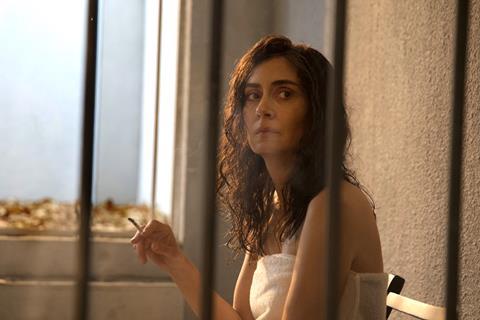
The cell in Tehran’s Evin Prison is a three-metre-square cube, lit by a flickering strip light. Iranian teacher Roya (Turkish actress Melisa Sözen giving an expressive, wordless performance) has been locked in this space for so long that time has started to bend and her dreams and reality are beginning to cleave together; her mind and her memories are the only true escape. With this formally challenging and unsettling picture, Mahnaz Mohammadi vividly evokes the terror and uncertainty of being a political prisoner in Iran, plunging us into a psyche in crisis mode. It’s not an easy watch.
An experimental and demanding work
Roya is the second fiction feature from documentary filmmaker and feminist activist Mohammadi, who has herself faced persecution throughout her filmmaking career, including a seven-year prison sentence. She spent several months in Evin Prison before the sentence was overturned. Her previous work includes her fiction film debut, Son-Mother (2020), which premiered at Toronto and enjoyed a healthy festival run. Although perhaps a more experimental and demanding work, Roya is a talking point picture which couldn’t be more timely. Following its premiere in Berlin’s Panorama section, it should figure highly on the wish-lists of programmers of further festivals and human rights focused events.
The first section of the film is shot entirely from the point of view of the prisoner – a technique previously employed in RaMell Ross’ Nickel Boys. But while in Nickel Boys the first person POV shooting technique found moments of wonder, beauty and intimacy amid the harder realities of segregated America, here the device, combined with sound design that assaults the viewer, emphasises the terrifying vulnerability and helplessness that Roya experiences. Partially blindfolded, veiled and instructed to keep her head down, we see what Roya sees – her stumbling feet and the grip of a prison guard who is manhandling her from her cell to her latest interrogation. Frail and malnourished, she is repeatedly pushed to the floor and warned that she will likely die here. Smears of crusted blood on the lift buttons and the fragments of screams of the other inmates would seem to back this up.
Sound is used to powerful effect. There’s a woman’s voice drifting from the darkness beyond Roya’s blindfold pleading to be reunited with her newborn baby. In contrast, the banal phone conversation between her interrogator and his daughter – he is late for her birthday party – feels like a slap to Roya, for whom contact with her family, in particular her dying father, is being used as a tool for blackmail .
The formal rigour of the first section is replaced with a more conventional shooting style in the rest of the film. But the storytelling is no less challenging. At first it seems that Roya has been granted a temporary escape from the cell, a compassionate three day release and, we assume, a reward for a confession (she is accused of inciting scarf-burning among her students).
But then it becomes clear that there are glitches in this narrative and what we are experiencing is a kind of waking dream. Roya’s inner life is a refuge when reality is intolerable. The disorientating images that we see are the result of Roya’s superhuman efforts to stay whole, when all the considerable forces and resources of the captors are concentrated on breaking her.
Production company: PakFilm, Media Nest
International sales: Totem hello@totem-films.com
Producers: Farzad Pak, Kaveh Farnam, Bady Minck, Alexander Dumreicher-Ivanceanu
Cinematography: Ashkan Ashkani
Production design: Alborz Malekpour
Editing: Esmaeel Monsef
Music: Andrius Arutiunian
Main cast: Melisa Sözen, Maryam Palizban, Hamidreza Djavdan, Mohammad Ali Hosseinalipour, Bacho Meburishvili, Gholamhassan Taseiri



No comments yet