



Filmmaker Selina Miles focuses on several high-profile women who have faced defamation cases, including Amber Heard
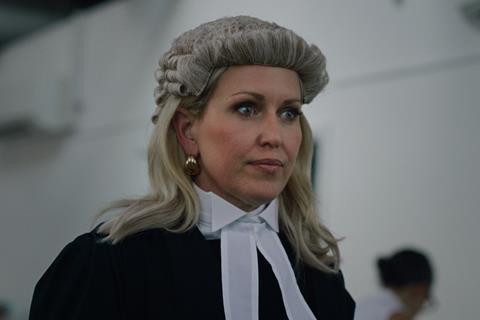
Dir: Selina Miles. Australia. 2025. 97mins
Structured around Australian human rights lawyer Jennifer Robinson, who represented Amber Heard during the 2020 defamation case brought by Heard’s ex-husband Johnny Depp against UK newspaper The Sun, Selina Miles’s eye-opening documentary goes beyond the headlines to explore the rising legal backlash to the #MeToo movement. Also following women in Colombia, Australia and Africa who have been hit by defamation suits after speaking out against their abusers, Silenced proves an essential, galvanising watch and deserves to find an audience following its premiere in Sundance’s World Cinema Documentary competition.
Goes beyond the headlines
The film opens at London’s Royal Courts of Justice in 2020, as a baying crowd assembles bearing placards with messages like ‘Ditch The Witch’. They are there to see Amber Heard attend as a defence witness on behalf of The Sun, sued by Depp over the newspaper’s claims he had beaten his then-wife Heard. The massed throng is vocally unsympathetic to Heard; as the film progresses, they become something of a rowdy frog’s chorus for the way in which women who choose to speak out against violent and predatory men are being systematically ignored, disbelieved and silenced.
That’s certainly the case for Australian Brittany Higgins, who in 2021 was raped inside Parliament House by a fellow staffer, and not only fought for years to bring her attacker to justice but was forced to defend herself in several defamation trials. In Colombia, journalist Catalina Ruiz-Navarro finds herself in the middle of a protracted legal fight after writing about claims of sexual abuse against Colombian film director Ciro Guerra. Miles talks to these women – including Heard, who in 2022 found herself the target of a second defamation suit filed by Depp – directly about their experiences, heartfelt interviews which convey the often-devastating emotional impact of telling the truth.
The film also brings in several experts, among them journalist Alexi Mostrous, head of investigations at The Observer, and Irene Khan, UN special rapporteur on freedom of expression and opinion, to help highlight just how the legal system’s systemic gender bias is being manipulated by those with the money and power to protect themselves. Most interesting is Sibongile Ndashe, the executive director of the Initiative For Strategic Litigation In Africa, who is working to help women across the continent find the confidence and resources to speak out. Elsewhere, Mostrous makes a strong case for how social media is facilitating targeted misogynistic smear campaigns against abuse victims.
Defamation cases against women have spiked in the post #MeToo period, but Miles uses archive material to highlight the fact this practice has been in use for years, including the famous footage of Bill Clinton vehemently defending himself against the claims of Monica Lewinsky. Lesser known but no less impactful is the UK’s 2018 Stocker v Stocker case, in which Nicola Stocker found herself hauled to court for claiming in a Facebook post that her husband had tried to strangle her. She found that while the attack was not in question, her use of the term ‘strangle’ was under judicial scrutiny. While the Supreme Court eventually found in her favour, Nicola tells Miles she still feels nervous when discussing the case.
While focusing on a few particular cases, Silenced makes it clear they are representative of a far more widespread problem. There is an argument to be made the film could have foregrounded women without an existing media platform, but Miles intends these studies to be representative of the thousands of women affected around the globe each year. It’s an effective strategy, keeping the focus tight and making the point that if individuals in the spotlight are facing an uphill battle to have their voices heard, what chance do ordinary women have? “The law is designed not to believe women,” laments Ndashe; it’s hard to argue with that fact in the face of the damning evidence on display here.
Production company: Stranger Than Fiction Films
International sales: Together Films, Jess Reilly jess@togetherfilms.co.uk
Producer: Blayke Hoffman
Cinematography: Michael Lantham
Editing: Bernadette Murray
Music: Chiara Costanza