







Mahamat-Saleh Haroun’s follow-up to Lingui, The Sacred Bonds is a less propulsive, more pensive work
Dir: Mahamat-Saleh Haroun. France/Chad. 2026. 101mins
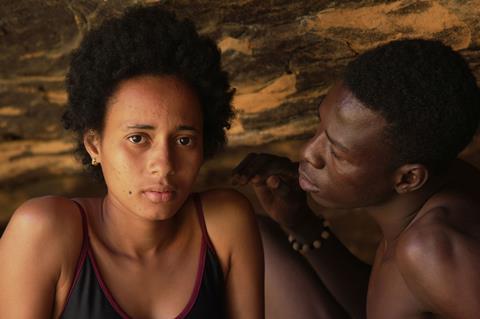
Schoolgirl Kellou (Maïmouna Miawama) is not fully accepted by her patriarchal village community near the Ennedi plateau, in northeastern Chad. Her father is dismissed as a ‘foreigner’, and since her mother died in childbirth, Kellou is damningly described as a “blood-girl”. Then she meets Aya (Achouackh Abakar Souleymane), an older woman and a fellow outcast who, like Kellou, has the dubious gift of prophetic visions. A nurturing spiritual connection between the two helps Kellou navigate the gaps in her past, in Mahamat-Saleh Haroun’s striking but sparsely plotted fable.
Striking but sparsely plotted
This mythic, magical-realist tale, which premieres in Berlin Competition, is a marked change of tone from Haroun’s previous picture, the angry, urgent Lingui, The Sacred Bonds. That film, which premiered in competition in Cannes in 2021, dealt with a frantic mother reacting to her teenage daughter’s unwanted pregnancy. While both are female-driven stories that examine the plights of women who, for whatever reason, have fallen foul of rigid societal expectations, Soumsoum is a gentler, more pensive and at times slightly underpowered picture compared to the jagged desperation that drives Lingui. But, like Lingui, Soumsoum is a strikingly cinematic and visually rich work, which cries out to be seen on the biggest screen available. Further festival exposure seems likely.
The film opens in the aftermath of a time of great change. There have been two great storms in living memory in the region, explains Kellou in a voice-over. The first was ’The Rain of Abundance’, the second was ’The Rain of Crawling Clouds’. But now another, far greater storm has swept through the community, uprooting trees and destroying buildings. “It will never be the same again,” says Kellou.
Add to this a spate of infant deaths, and the village elders are looking for someone to blame. Aya, a single woman who has recently returned to the village and is rumoured to be a witch, is the obvious suspect. Meanwhile Kellou, who is in the first flush of teen romance with her secret boyfriend Baba (Christ Assidjim Mbaihornom), becomes aware that the tragedy of her birth marks her out as an unsuitable match in the eyes of Baba’s overbearing father. The connection that grows between Kellou and Aya fulfils a need in both of them, but for Kellou – who never knew her mother and has never met someone who shares her ‘gift’ of foresight – it is life-changing.
The declamatory delivery of much of the dialogue – the village men do a lot of shouty haranguing – means that words in the film are markedly less powerful than the use of sound, the melancholy music and, in particular, the visual impact of the picture. The spectacular location, captured in cinemascope by Haroun’s Lingui collaborator Mathieu Giombini (who also has a career as a wildlife and nature photographer), is central to the themes of the story. A staggeringly beautiful region, it is surrounded by russet-coloured stack rock formations and arresting sedimentary layers.
It is used to particularly notable effect in the picture’s final act, which sees Kellou embark on a journey to fulfil a promise she made to the other woman. And it is in this region that some of the earliest traces of human life can be found, with rock paintings that date back to 7000 BC. This taps into the message of interconnectivity that Aya imparts to Kellou. “All living things are linked together”, explains Aya, but the links also run backwards and forwards in time, as well as up to the heavens and to the stars that are referenced in the title.
Production company: Pili Films
International sales: Films Boutique contact@filmsboutique.com
Producer: Florence Stern
Screenplay: Mahamat-Saleh Haroun, Laurent Gaudé
Cinematography: Mathieu Giombini
Editing: Svetlana Vaynblat
Music: Bibi Tanga
Main cast: Maïmouna Miawama, Ériq Ebouaney, Achouackh Abakar Souleymane, Brigitte Tchanégué, Sambo Saleh Adam, Christ Assidjim Mbaihornom alias Small Christ