













David Lynch’s cover of Bob Dylan’s song ‘The Ballad of Hollis Brown’ for his 2013 album ‘The Big Dream’ was the starting point for David Jovanović’s Sun Never Again, Serbia’s entry to the best international film category at the Oscars.
The song tells the tale of a family in a North Dakota mining town during the Great Depression.
“I wanted to recreate all the visuals [evoked by] Dylan and Lynch,” said Jovanović, of the screenplay he wrote with film-school friend, Djordje Kosic. “We fell in love with creating a story which would be based in realism but [would also] incorporate unreal, surreal elements which are terrifying.”
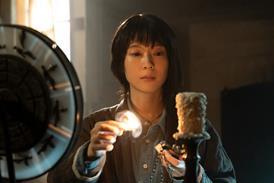
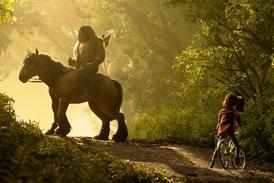
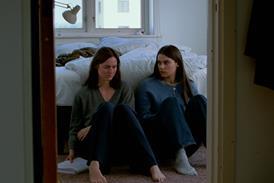
Sun Never Again is a drama about a family whose home is under threat from the expansion of an already colossal industrial mine near their village in eastern Serbia, and the young boy who tries to find magic solutions to fix his father’s strange behaviour.
“In the song, you have coyotes singing at night, but then you have jackals in this mining place,” the filmmaker explained. “In the song you have black water in the well, there you have black water in the sink. And the air is poisoned air in the song, same in Serbia.”
FYC screening

Jovanović was talking in London – a debut visit to the British capital for the 29-year-old – as part of Screen International’s FYC awards screening programme. London-based sales and production company Reason8 Films is handling international rights to Sun Never Again, which is produced by Jovanović’s Pointless Films.
To research the film, Jovanović and Kosic had travelled to a mining village in eastern Serbia where the filmmaker’s grandmother used to live when he was a child.
After raising the film’s modest budget, he went on to shoot for a brisk 17 days in a different village in the region. The locals embraced the film so much that the village became its own character on screen. “The mining area was so rich with stories and characters and culture, we ended up with so much material,” said Jovanović.
“We shot a lot of unscripted material that was inspired by the village,” he added. “The biggest reason the film came to life in this way was all the villagers that we met.”
Their stories and their culture informed the images and narrative. “In my hometown, there are grandmothers who come to funerals and scream; that’s a tradition. But in this minority community in eastern Serbia, their culture is to have an archetypal song that they create lyrics specifically for the person who died.”
Jovanović asked them to create a song for his film and a key scene was extended to include the villagers’ input.
One challenge was the language of this eastern Serbian community is only spoken, not written. “They offered the song to us, they were writing it in their heads, because there is no alphabet for it,” said Jovanovic. “I know the translation of the song, but we intentionally didn’t put it in the subtitles, because even in Serbia, nobody understands it. It’s a really small minority.”
Sun Never Again stars Serbian Dušan Jović and Nataša Marković as the parents, with young newcomer Rastko Racić. While Jovanović and Kosic wrote the father for Jović –a stage actor from the director’s hometown – casting the child was harder.
“We saw more than 500 kids over four months in these mining villages,” Jovanović recalled. “I didn’t want to go with a child actor with experience, I wanted to have a kid who has experience with the mines.”
Racić was six when the film was shot and did not know how to write at the time. “He was so intuitive, he could communicate without words and we did some tricks in post,” the director explained.
Sun Never Again premiered in the First Feature Competition at the Tallinn Black Nights International Film Festival in 2024.








No comments yet