












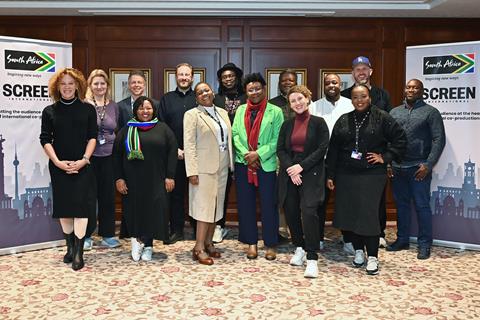
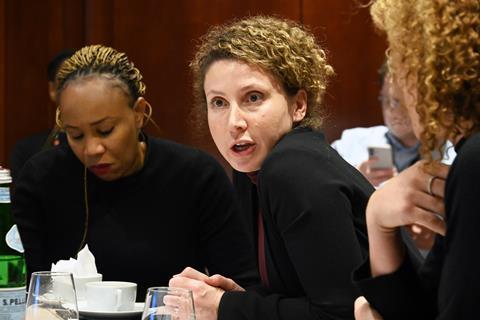
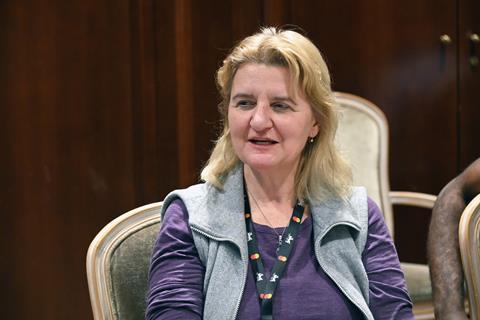
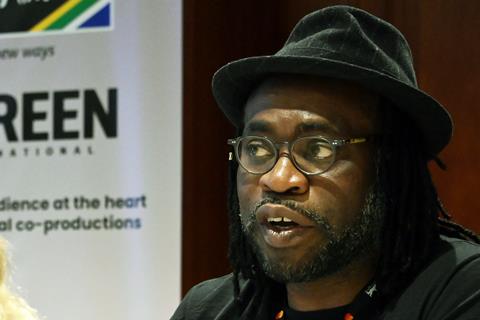
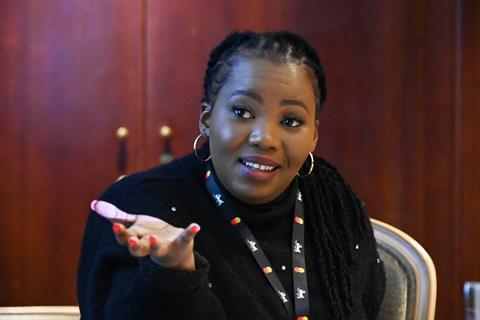
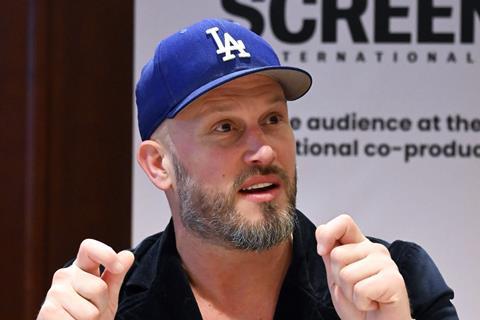
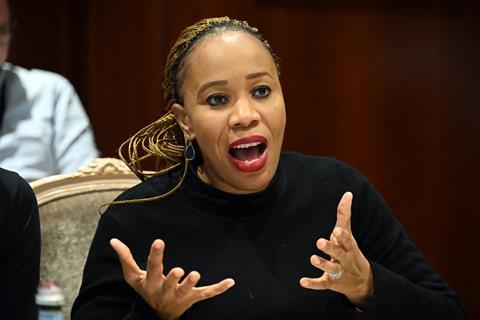
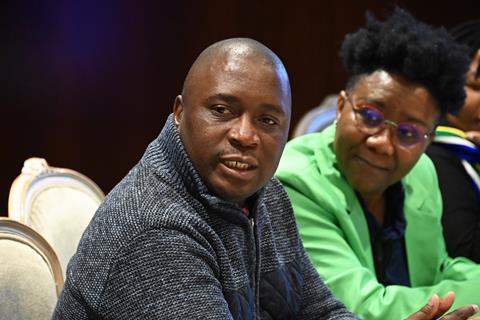
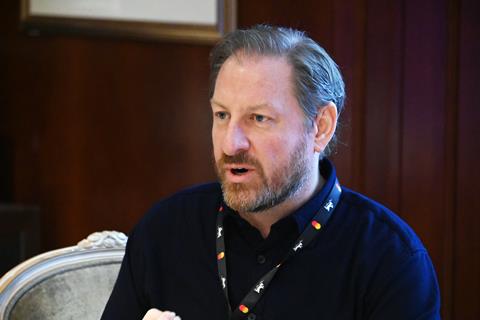
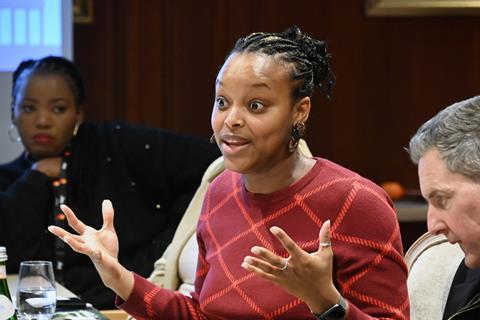
Panellists discussed strategies for boosting South African films internationally without losing sight of the needs of local cinemagoers, at a Screen International roundtable hosted by Brand South Africa titled ‘Putting the audience at the heart of international co-productions’.
Questions addressed during a wide-ranging discussion included how to get films into international festivals, keeping artistic and financial independence while co-producing with foreign partners, and how best to build global audiences for South African films.
Attendees included South African and international producers, festival programmers and sales agents.
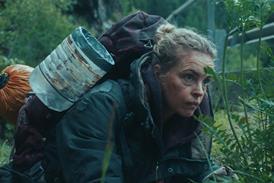
One focus was South African feature Black Burns Fast by Sandulela Asanda, which world premiered yesterday (February 15) in Generation 14plus. Yolanda Ncokotwana from South Africa’s National Film and Video Foundation (NFVF) noted it was not a co-production — and that it was selected for Berlin without European partners pulling strings with festival directors on its behalf.
She noted that co-producing often makes sense, helping projects to raise money and reach audiences in more international markets. But filmmakers need to consider the implications of co-producing. “They don’t work so well in protecting your equity and your IP because what will have started off as a purely South African film can become a French or German film,” noted Ncokotwana.
Building connections
South Africa is increasingly looking to co-produce with partners from the Global South as well as those from Europe. NFVF recently signed a memorandum of understanding with Sao Paulo Film and Audiovisual Company in Brazil.
“When it comes to collaborating with the Global South, there is more nuance rather than it being just about finance,” said Ncokotwana. She highlighted the importance of ensuring on co-productions that South Africa keeps at least 50% of the film. “Co-production is also about leveraging talent and training,” said Quebec-based Marina Mathieu, executive director of Coalition Media in Canada.
South African producer Joel Chikapa-Phiri of Known Associates called for filmmakers to look closer to home for partners. “We should be co-producing with Nigeria, with Senegal. They should be our first partners,” he said, also highlighting the “systemic issues” facing South African filmmakers when it comes to distribution and access to audiences.
Ben Akoh, founder of The African Movie Festival in Manitoba, Canada, drew attention to African filmmakers who do not screen their work at festivals with sizeable potential audiences because they are targeting A-list events like Cannes or Venice.
“If you support my festival by showing your film at my festival, I think it creates a different opportunity. It builds an audience for you, but it also sends a message to all these major film festivals.”
Ebele Okoye, a Berlin-based Nigerian German animator, suggested the lure of Netflix and other streamers may be drawing filmmakers away from co-production. “[Getting a film on Netflix] has become the target for a lot of people and they don’t look at other areas where they can monetise, such as co-productions.”
South Africa has several co-production treaties in place but not all of them are currently bearing fruit. Damien Hodgkinson, CEO of Melbourne International Film Festival, pointed out the South Africa-Australia treaty was signed more than 15 years ago but no films have been made through it yet.
However, when Nigerian feature Pasa Faho, a father-son tale from director Kalu Oji, played last year in Melbourne, it had a euphoric reception and screenings were sold out. “We wanted to ensure that Melbourne’s African community knew the film was premiering, and that they came along. To be at the world premiere and have that entire community having the night of their lives was a moment to be proud of.”
Panellists called forcefully for the South African government to “do more” to support local filmmakers.
“In South Africa, there needs to be an aggressive and intentional reframing of what the value of film is,” said Onke Dumeko, acting chief executive officer of NFVF. “The audience is there… but nothing has been done to leverage that audience, because there isn’t an appreciation of what film is outside the industry. What have we done to capitalise on the actual audience in South Africa?”
Even when South African films are shown at Ster-Kinekor, the country’s leading exhibitor, local audiences are still staying away. “It’s just not going to happen because we haven’t done enough work to transfer the love for local content that exists in South Africa, particularly for TV, to transfer that for film,” added Dumeko. “It’s not impossible. It just needs enough political will.”
Presented by: