









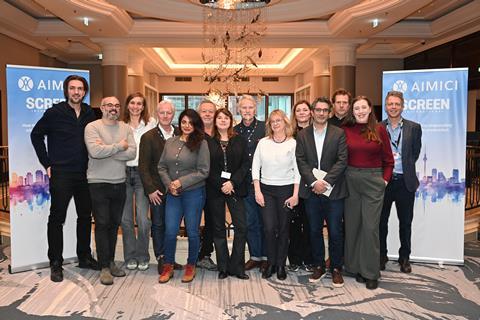

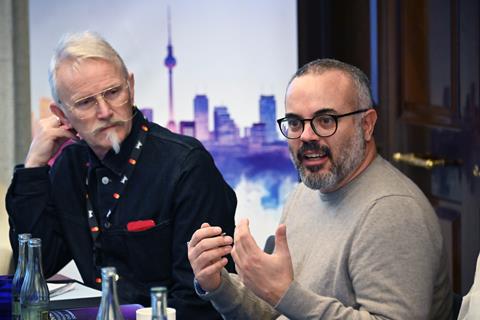
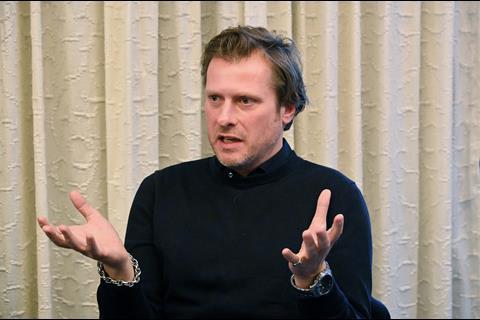
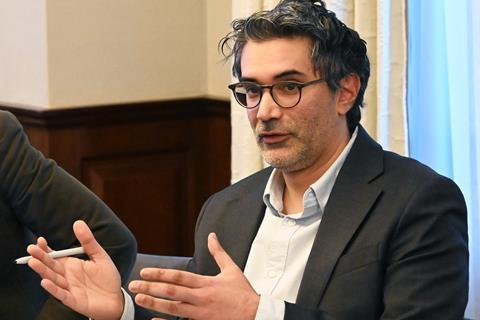
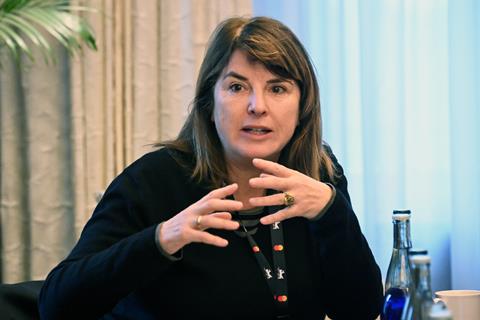
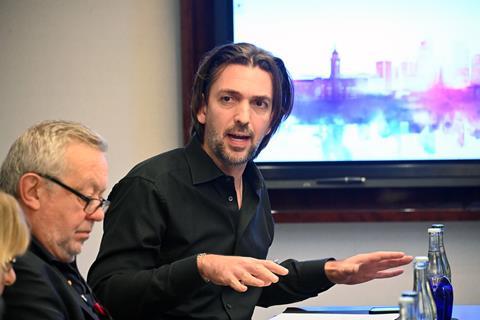
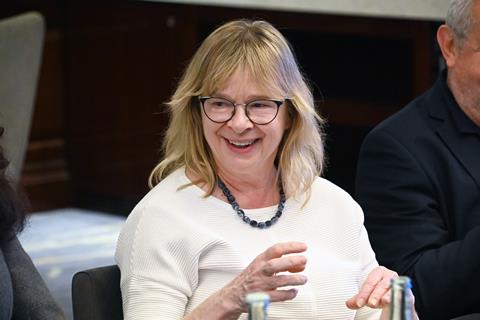
Amid continuing concern about the impact of generative AI on the independent film business, speakers at Screen International’s ‘How to innovate responsibly with Al in film production’ panel in Berlin shared views on the opportunities and threats posed by the technology.
The roundtable was hosted by UK-based consultancy and educator AIMICI, which helps to train and guide production professionals, and equips them with the right tools, strategy and governance to use AI responsibly on their productions. AIMICI has prepared a new paper, AI Transparency for UK Film and TV Production, and is working on a new worldwide AI responsibility pledge for production companies.
Most speakers agreed that help and clear frameworks are needed by filmmakers for dealing with the creative, legal and ethical questions surrounding AI in production.
“Nobody can use AI if they don’t have clear and responsible guidelines,” said Max Wiedemann, chief production officer at Leonine Studios and head of AI at its parent company Mediawan. “We are now seeing one of the most profound changes, not only in our industry but in society and all the other industries as well. The wave is coming whether we want it or not — and the only thing we can do is get our surfboards.”
However, Wiedemann also called for “full transparency” about what the AI models are being trained on.
Agnieszka Moody, head of international relations at the British Film Institute, reminded panellists that the UK government initially “sided with tech” and proposed allowing AI firms to scrape copyrighted material without compensating creators. The creative industry reacted furiously and the government backtracked. It now favours a “permission-first” approach with an emphasis on “endorsement and transparency”.
Los Angeles-based independent producer Neerja Narayanan, speaking fresh from the Sundance premiere of AI documentary Ghost In The Machine, which she executive produced, urged extreme vigilance.
“After the documentary, I am a little terrified… we are outsourcing our curatorial ability to big tech,” she warned. “A large amount of consent has been taken away from us.”
Slippery slope
Some panellists worried that filmmakers are already losing their ability for critical analysis and thinking as they begin to rely more on AI.
However, Chris Auty, director of the London Film School, expressed his confidence the “healthy egotism” of the school’s filmmakers should safeguard their artistic independence. “The idea they are going to subcontract their creativity anywhere… I think is for the birds,” commented Auty.
Others flagged concerns about potential job losses and the rapidly diminishing opportunities for new entrants to the industry. Many noted it is becoming ever more difficult for young people to secure apprenticeships and learn key skills when AI is helping established filmmakers cut so many corners. The impact on costume departments was given as an example. “More and more, we are creating extras in post — they’re not real people. The costume department learn by dressing extras, that’s how they start. If they haven’t had that grounding, they can’t move up,” noted UK producer Jeremy Campbell of Absinthe Film Entertainment, whose credits include Anemone starring Daniel Day-Lewis.
On the plus side, panellists noted the many ways AI can help in the filmmaking process, from market research through to script analysis, forecasting, pitch decks and post-production.
AIMICI’s new pledge and its paper on AI transparency, which offers an action plan for production businesses, will be published later this month.
“This paper and pledge are spun out from our work with production companies and industry bodies across the UK and beyond. We hope they enable teams globally to commit to responsible AI use,” explained AIMICI managing director Kathryn Webb, who was joined on the panel by AIMICI founder and executive director Ahsan Mallick.
The roundtable panellists also included Olivia Sleiter, head of production at Fremantle; Martin Persson, founder of Swedish production company Anagram; Giovanni Pompili, head of Italy’s Kino Produzioni; Jacobine van der Vloed, director and head of studies at ACE Producers; Nira Bozkurt, AI officer at Filmakademie Baden-Württemberg; and Mikael Fellenius, CEO of Swedish film fund Film i Väst. The panel was moderated by Screen International’s Europe editor Tim Dams.