









“Overall, I’m pleasantly surprised with the Bafta longlists,” said one film awards campaigner, speaking to Screen.
“Included across the lists are the front-runners in the main Oscar and Bafta campaigns this year. But it’s also great to see Bafta recognising British indie films in some of the key categories, such as I Swear and The Ballad Of Wallis Island, alongside Hamnet, which is British but a bigger film.”
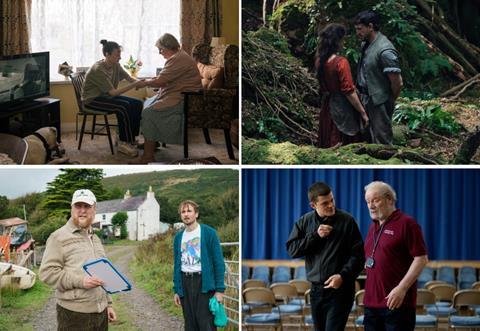
I Swear, The Ballad Of Wallis Island and Hamnet all made the longlist of 10 in best film, joining five US titles, international co-production Bugonia and Norwegian drama Sentimental Value.
Hamnet ranks second – behind One Battle After Another – in terms of most longlist inclusions, with 14. I Swear and Pillion both made six longlists, with The Ballad Of Wallis Island on five.
“In any given year, you will see maybe one of those critically acclaimed smaller British indie films get into the best film longlist, like Aftersun in 2023 and Kneecap last year, but to see two in there this year – with I Swear and The Ballad Of Wallis Island – is very good,” said the campaigner.
(Ultimately, neither Aftersun nor Kneecap were nominated for best film, instead achieving nominations respectively in four and six other categories, and both winning outstanding British debut.)
Screen spoke to three awards campaigners, and all had positive things to say about the appearance of British films in the best film list, as well as the strong showing for British and Irish actors across the four performance lists.
These include Hamnet’s Jessie Buckley, Paul Mescal and Emily Watson; I Swear’s Robert Aramayo and Peter Mullan; Dragonfly’s Andrea Riseborough and Brenda Blethyn; Sinners’ Wunmi Mosaku and Delroy Lindo; Wicked: For Good’s Cynthia Erivo; The Ballad Of Wallis Island’s Carey Mulligan; Pillion’s Harry Melling; Steve’s Cillian Murphy; and Blue Moon’s Andrew Scott.
The Dragonfly actresses both achieved longlist places despite modest UK and Ireland box office for the film (£84,000/$113,000), and the lack of an evident splashy awards campaign from distributor Conic.
Outstanding British film
The campaigners had more mixed reactions to the “mainstream-skewing and rather middlebrow” longlist of 15 titles for outstanding British film. Only one film, Pillion, made the longlist for both outstanding British film and outstanding British debut. Commercial hits or titles with a more conventional or mainstream sensibility on the longlist for British film include Bridget Jones: Mad About The Boy, 28 Years Later, The Roses, The Choral, Mr Burton and Goodbye June.
“There are the British films that festival programmers and critics tend to like, like a Dragonfly or an Urchin or My Father’s Shadow or Wasteman, which I expected to see on this list for outstanding British film,” said the second campaigner Screen spoke to. “The list is increasingly mainstream and decreasingly aligning with the taste of festival programmers and critics.”
The outstanding British film category is no longer voted for by an opt-in chapter. Since the 2025 awards, all Bafta Film Awards voters automatically vote in the category, as they do in best film. A jury takes over in round two for outstanding British film. The top five titles in round-one voting are automatically nominated, and the jury adds five more from the remaining 10 on the longlist.
Our third campaigner is not surprised by the British film longlist. “It’s just like best film,” she observed. “It’s the films that are being watched by the most people.”
The campaigner added: “Outstanding British film lends itself to votes for films that people like as a general audience member, rather than as a prestigious choice or auteur films. These are films that people enjoy in a big way. I like that.”
Since Hamnet, I Swear and The Ballad Of Wallis Island all made the best film list, they are seemingly the three most popular British titles this year among Bafta voters – and this campaigner thinks it’s a safe bet that they are already nominated for outstanding British film.
“It’s Hamnet, Ballad and I Swear, for sure, and I would also say Pillion in the top five,” she said. “For the fifth slot, I’d guess it will be 28 Years Later, or perhaps Die My Love because of Lynne Ramsay.”
If that analysis is correct, the remaining nominations for outstanding British film lie in the hands of the jury.
Foreign-language films
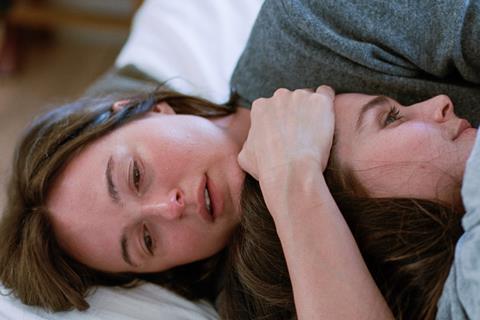
This year’s awards season had been talked up as potentially a breakthrough year for films primarily or wholly not in the English language, including Sentimental Value, The Secret Agent, It Was Just An Accident, Sirat, No Other Choice and The Voice Of Hind Rajab. Awards tipsters and analysts had talked up the chances of these titles in director, screenplay, acting and craft categories.
But so far, votes from the US guilds have not stacked up: the DGA nominated five English-language films for best director of a theatrical feature film; the PGA nominated Sentimental Value and nine English-language films in its best picture category; and SAG-AFTRA’s newly named Actors Awards nominated a clean sweep of performers in English-language films across its theatrical feature categories.
At Bafta, Sentimental Value landed on eight longlists, including best film – the only film primarily not in English among the 10 on that list. No other foreign-language film achieved more than two longlist inclusions at Bafta.
“Going into it, we expected to see, especially in the performance categories and maybe even the director category, more of a showing from the five or six very strong foreign-language films this year,” said the second campaigner.
“That hasn’t transpired, except for Sentimental Value. Having said that, most years there is one breakout foreign-language film, and then the others stay largely within their own category [film not in the English language]. It felt that this year was stronger, but the voting hasn’t gone that way.”
For the first campaigner, the number of strong titles not in English could be a key factor in the outcome. “Because all of them are quite noisy films and hoping to be big hitters, perhaps the vote split between them outside of the film not in the English language category,” he observed.
“Sentimental Value is probably the most accessible out of all those international titles which are in contention. The Secret Agent does have quite a long run time. Sirat is very bold and different. And The Voice Of Hind Rajab mostly takes place in one room.”
The third campaigner noted that most voters in the US guild awards are American, and that Bafta is not as international as Ampas. “I don’t think they have 200 members in France, they don’t have 125 in Spain. They don’t have that volume of votes.”
Having said that, history has often told a different story. “Bafta has celebrated international film before,” she added. “They gave best film to an international film before the Oscars ever did, before Parasite. They definitely aren’t allergic to it.”
In recent years, Bafta awarded best film to both Roma and All Quiet On The Western Front (neither won the best picture Oscar), and in earlier times to the likes of Claude Berri’s Jean De Florette, Louis Malle’s Lacombe, Lucien and François Truffaut’s Day For Night.
Still, this campaigner expects films not in the English language to flourish a bit better at the Oscars this year, following the close of voting today (January 16). All will be revealed when Oscar nominations are announced on January 22.
Second-round Bafta voting closes on January 20, and Bafta nominations are announced on January 27.





No comments yet