









Competition for the two British-only feature categories at the Bafta Film Awards is always intense — and many contenders are already making waves at awards ceremonies. Screen assesses the titles vying for nomination
A year ago, one British film pulled ahead of its competitors to become the homegrown success story of awards season: Conclave. Whichever way you measure it, Edward Berger’s papal thriller was the top Brit flick: 12 Bafta Film Awards nominations and four wins; eight Oscar nominations and one win (adapted screenplay). Conclave was the only British film to earn a best film nomination at Bafta or best picture nomination at Oscar, and at Bafta it won both best film and outstanding British film.
Among the other nine films nominated for outstanding British film last year, Kneecap ranked second in terms of most Bafta nominations overall (six), with a trio of titles earning three nods apiece: Blitz, Gladiator II and Wallace & Gromit: Vengeance Most Fowl. A pair of films were nominated for outstanding British film and also lead actress (Hard Truths, The Outrun), and then there were three for which the British film category was their sole nomination: Bird, Lee and Love Lies Bleeding.
This year, the film that looks most likely to achieve success along similar lines to Conclave is Chloé Zhao’s Hamnet – seemingly on course for a wide set of nominations at both Bafta and Oscar. A slot among the 10 titles nominated for outstanding British film – one of the very few categories that all Bafta Film Awards voters can vote for in the early rounds – looks guaranteed.
There are two paths to achieve a nomination in this category. A film could be among the top five titles after round-one voting – that would yield an automatic nomination. Or else it could rank between six and 15 after the first round of voting, and then be among the five films selected by a nominating jury.
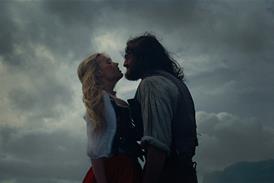
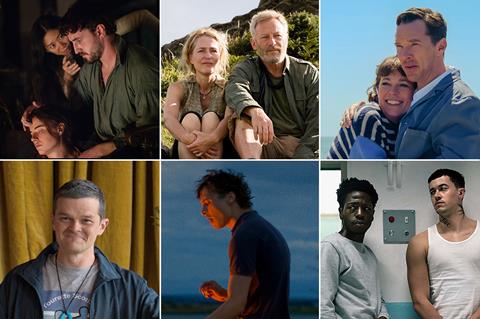
Standing a good chance of landing the nomination by virtue of being among the voters’ five British favourites is The Ballad Of Wallis Island, directed by James Griffiths from a screenplay by the beguiling comedy drama’s lead actors Tom Basden and Tim Key. UK and Ireland box office of £2.5m ($3.3m) for Universal Pictures reflects audience warmth for the gentle crowdpleaser, and Basden and Key won two prizes at the British Independent Film Awards (Bifas) – for screenplay and joint lead performance.
An even bigger hit with UK audiences is Studiocanal’s I Swear, Kirk Jones’ film about Tourette’s campaigner John Davidson, and starring Bifa lead performance winner Robert Aramayo, alongside Maxine Peake, Peter Mullan and Shirley Henderson. I Swear has grossed £6m ($7.9m) at UK and Ireland cinemas, and has appealed to both audiences and critics.
At the UK and Ireland box office, it is early days for Harry Lighton’s gay BDSM relationship tale Pillion. This adaptation of Adam Mars-Jones’ novella Box Hill opened on an encouraging £348,000 ($463,000) including previews from 160 sites. Awards heat is rising thanks to four Bifa wins including best film and debut screenplay, plus a Gotham win for adapted screenplay. Picturehouse Entertainment distributes.
In the mainstream
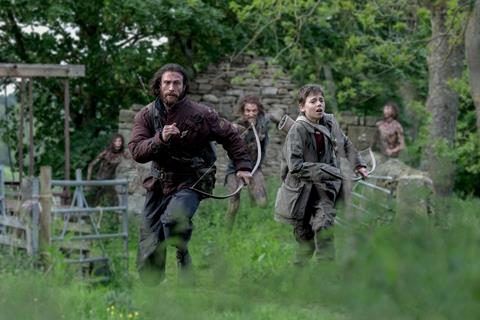
If the above four features all achieve an outstanding British film Bafta nomination by virtue of member vote, that leaves a fifth slot open for another film to take this path. Might that be a more mainstream hit such as Danny Boyle’s belated horror sequel 28 Years Later for Sony, or Jay Roach’s comedy The Roses for Disney? A rule change for this year means the director or a screenwriter must be British (or resident in the UK for six years) for a title to be eligible in the outstanding British category… and The Roses has presumably qualified by virtue of Australian screenwriter Tony McNamara’s UK residence.
The Netflix-backed, family-themed comedy drama Goodbye June, directed by Kate Winslet and boasting a strong cast, is another potential crowdpleaser and a lot of voters will watch the film on Bafta View in the run-up to Christmas.
A proven hit with audiences but a question mark for voters: Working Title/Universal’s Bridget Jones: Mad About The Boy, a £46.4m ($61.8m) UK and Ireland box-office success earlier this year for director Michael Morris. Bridget Jones’s Diary was nominated for four Baftas in 2002, including for best film, but sequels Edge Of Reason and Bridget Jones’s Baby were not Bafta-nominated in any category.
As for Universal/Focus Features’ Downton Abbey: The Grand Finale, the previous two films in the series achieved zero Bafta nominations. Edgar Wright has fared better – both Shaun Of the Dead and Last Night In Soho picked up nods for British film, but this year’s The Running Man (Paramount) might not be the film to land him another.
The joker in this particular pack is surely Marianne Elliott’s The Salt Path, adapted from Raynor Winn’s bestselling memoir, and a bona fide box-office hit for Black Bear: £8.1m ($10.7m) in the UK and Ireland. The Salt Path failed to land a single nomination at the Bifas, but the film seems better aligned with Bafta voter taste. The negative fallout from an evident glossing of inconvenient truths by Winn in the source material could prove a hazard.
Perhaps Lionsgate’s H Is For Hawk – adapted from Helen Macdonald’s memoir – will have an easier path to a nomination. Claire Foy stars as a Cambridge academic who spirals downwards after the death of their father (Brendan Gleeson) and rebuilds by focusing on training a goshawk.
Reactions have been mixed for British films adapted from a quartet of fiction works – Deborah Levy’s Hot Milk, Max Porter’s Grief Is The Thing With Feathers, Lawrence Osborne’s The Ballad Of A Small Player and Jim Crace’s Harvest – directed respectively by Rebecca Lenkiewicz, Dylan Southern, Edward Berger and Athina Rachel Tsangari. The films will likely need the support of the outstanding British film jury to land a nomination in the category.
Lynne Ramsay’s Die My Love, adapted from Ariana Harwicz’s novel of the same name, may have an easier ride from voters. The Mubi release is eliciting passionate reactions, and UK and Ireland box office has hit £1m ($1.3m).
Chris Columbus’s The Thursday Murder Club, adapted from the bestselling book series by Richard Osman, was a cinema hit for Netflix, but it is hard to imagine a jury selecting it. Nicholas Hytner’s The Choral is a rare original from Alan Bennett, and the First World War Yorkshire-set tale is a crowdpleaser with heart.
Indie contenders
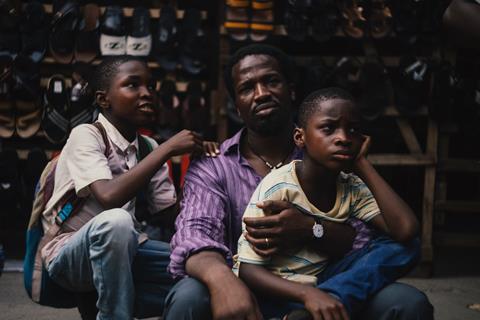
A number of strong British indies are in the mix, including Akinola Davies Jr’s largely Lagos-set My Father’s Shadow, winner of best director at the Bifas, breakthrough director (and best lead performance for Sope Dirisu) at the Gotham Awards, and the UK’s submission to the international feature Oscar (Mubi distributes). Then there is Bifa debut director winner Wasteman (Lionsgate), Cal McMau’s stylish and superbly acted prison drama starring David Jonsson and Tom Blyth.
Or perhaps the nominating jury will be pulled towards another admired directing debut, Harris Dickinson’s Urchin (Picturehouse Entertainment), starring Frank Dillane as a man with substance abuse issues navigating life after prison. Urchin earned six Bifa nominations and is considered unlucky to convert none of them into a win; a better fate may await courtesy of Bafta. Hoping for some decent Bafta love after relatively little support from Bifa voters will be Universal’s Anemone, directed by debutant Ronan Day-Lewis and scripted by him with his father Daniel, who stars alongside Sean Bean, Samuel Bottomley and Samantha Morton.
Tim Mielants’ Netflix-backed Steve, starring Cillian Murphy as the head teacher of a residential school for teenage boys with behavioural problems, won the Bifa for Jay Lycurgo’s supporting performance. Alex Garland and Ray Mendoza’s Warfare (A24) won the Bifa for best ensemble performance as well as three craft prizes, and the Iraq War drama achieved a decent £2.2m ($2.9m) at UK and Ireland cinemas.
Two biographical sports stories likewise vie for voter attention: Rowan Athale’s Giant (True Brit), starring Amir El-Masry as boxer ‘Prince’ Naseem Hamed and Pierce Brosnan as trainer Brendan Ingle; and Lisa Barros D’Sa and Glenn Leyburn’s Saipan (Vertigo), detailing the spat between Irish footballer Roy Keane (Éanna Hardwicke) and the team’s manager Mick McCarthy (Steve Coogan) ahead of the 2002 Fifa World Cup.
Another biographical tale is Mr Burton: Marc Evans’ BBC Wales-backed film about the transformation of alcoholic miner’s son Rich Jenkins (Harry Lawtey) into world-famous actor Richard Burton under the mentorship of the schoolteacher who leant the youngster his surname, Philip Burton (Toby Jones).
As is clearly evident, there is a preponderance of male-dominated British stories in the mix this year. Flying the flag for stories driven by female characters are Daisy-May Hudson’s Lollipop, which won Posy Sterling the breakthrough performance Bifa; Nadia Fall’s Brides, about two northern English teenage girls heading for what they believe will be a more purposeful life in Syria; and Paul Andrew Williams’ Dragonfly starring Andrea Riseborough and Brenda Blethyn as neighbours whose lives become entangled.
There are 18 documentaries among the 69 titles submitted for outstanding British film. It has been six years since a doc (For Sama) managed a nod in the category, and this year’s contenders include box-office hits Ocean With David Attenborough (from a trio of directors) and Bernard MacMahon’s Becoming Led Zeppelin. British documentary films from directors with awards track records include Iain Forsyth and Jane Pollard’s Broken English (about Marianne Faithfull), Kevin Macdonald’s One To One: John & Yoko and Asif Kapadia’s Kenny Dalglish. Will this year end a five-year cold streak for docs seeking a nomination at the outstanding British film Bafta?
OUTSTANDING BRITISH DEBUT
First features vie for jury-determined honour
Last year Rich Peppiatt scooped the Bafta for outstanding debut by a British writer, director or producer with Kneecap, a film he directed and wrote from a story by the Irish rap trio. Kneecap was nominated for the award alongside Luna Carmoon’s Hoard and three films set in India: Dev Patel’s Monkey Man, Sandhya Suri’s Santosh and Karan Kandhari’s Sister Midnight.
This award is determined solely by a jury – which picks the 10-strong longlist, five nominees and winner – and is known for confounding expectation with unpredictable outcomes. The jury this year faces an embarrassment of riches, including a trio of Bifa prizewinners: Harry Lighton’s Pillion, Akinola Davies Jr’s My Father’s Shadow and Cal McMau’s Wasteman. Those three films were all Bifa-nominated for debut director, alongside Harris Dickinson’s Urchin and Laura Carreira’s On Falling. (The latter film was submitted to Bafta a year ago, making the longlist of 10 for outstanding British debut, and is no longer eligible.)
The jury can determine which individual debutants to include among the nominees of a given film, and if My Father’s Shadow makes the cut, the director would likely be joined by his brother Wale Davies, who has screenplay credit. (Akinola is designated as co-writer.) Other writers in the mix include The Ballad Of Wallis Island Bifa winners Tom Basden and Tim Key. Steve, directed by Tim Mielants (Small Things Like These), is scripted by debutant Max Porter, adapting from his own novel Shy. And Maggie O’Farrell is in a similar boat – a debut screenwriter having adapted her own novel Hamnet, but in her case co-writing with Chloé Zhao, so the jury would have to determine her input, which is no easy task.
Both Anemone and Goodbye June present the jury with a conundrum. Anemone comes from a pair of debut screenwriters – Ronan Day-Lewis and Daniel Day-Lewis – with Ronan also a debut director. Goodbye June comes from debut director Kate Winslet and debut screenwriter Joe Anders. Daniel Day-Lewis has four Baftas for acting and three Oscars, while Winslet has three Baftas for her film acting work and an Oscar – but these successes should not impact the conversations around these debut writing and directing achievements.
Daisy-May Hudson is a debut screenwriter for Lollipop, and her eligibility as debut director would depend on Bafta’s view on the release status of her 2015 documentary feature Half Way. There are two films directed by women with a rich track record in the theatre: Brides, from a screenplay by fellow debutant Suhayla El-Bushra and Marianne Elliott’s The Salt Path. Fall is artistic director at London’s Young Vic and Elliott is lauded for theatre productions including War Horse.
Other debuts in the mix include Dreamers, the feature writing and directing debut of producer Joy Gharoro-Akpojotor; Hot Milk, the directing debut of screenwriter Rebecca Lenkiewicz (a previous Bafta nominee for her 2022 She Said screenplay); boxer drama Heavyweight from Christopher M Anthony; and The Thing With Feathers, showcasing a screenwriting debut from Dylan Southern, who also directs.
Although no documentaries were nominated for outstanding British debut last year, they regularly are, and Bart Layton’s The Imposter won in 2013. Strong British debut documentaries this year include Victoria Mapplebeck’s Motherboard – her portrait of two decades as a single mother raising son Jim – which earned three Bifa nods.






No comments yet