









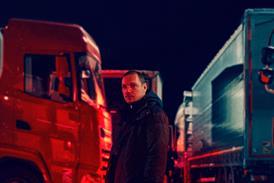

European Film Promotion (EFP) and CPH:DOX have selected six documentaries for the Europe! Docs showcase, spotlighting European documentary features for the North American market.
The online showcase consists of a presentation to US buyers and distributors, as well as an online press event and preparation for participating filmmakers on US market strategies and targeted introductions. The programme is backed by Creative Europe – the Media Programme of the European Union, the Danish Film Institute, Belgium’s Flanders Image, Romanian Film Development, the Swedish Film Institute, Swiss Films and Unifrance.
The six selected titles – Amazomania, Arctic Link, Christiania, The Cord, Mariinka and Something Familiar – all have their world premieres at CPH: DOX, which runs from March 11-22.
Screen meets the filmmakers behind the projects.
Amazomania (Swe-Den-Fr)
Dir. Nathan Grossman
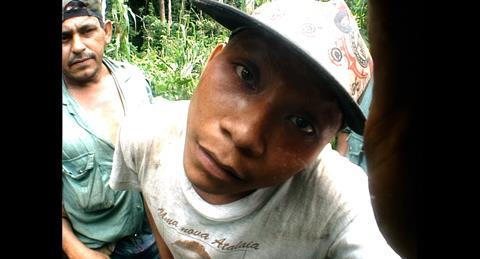
A tip-off from a friend led Swedish documentary filmmaker and photographer Grossman to unearth old tapes of a programme made in 1996 by Swedish journalist Erling Söderström. They presented his journey deep into the Amazon to meet the Korubo tribe, one of around 200 Indigenous groups living in voluntary isolation. The expedition ends in a first encounter, and the footage was hailed as a sensation at the time: rare images from a hidden world that no one had ever seen before.
“When I was able to digitise the tapes and compared the 60 to 70 hours of rushes and material with the film that was made in the past, I felt there were interesting discrepancies left on the editing room floor,” says Grossman, who set about contacting the Korubo tribe.
Six years in the making, Amazomania is the result. Interrupted first by the Covid pandemic and then blocked for months by Brazilian government red tape, Grossman held his nerve to realise his ambition, journeying back to the tribe 30 years later.
The first half of Amazomania consists of the original material, while the second half follows Grossman meeting the tribe, who demand compensation and insist on the right to tell their own story. The film examines documentary method and ethics, asking the audience to be the judge.
“Why are these western filmmakers there and why are commercial media so interested in these stories? It is because the adventure narrative is strong and audiences are fascinated by this kind of storytelling,” says Grossman. “We need storytellers who examine stories together with communities. It’s not either/or, it’s both – different stories need different approaches.”
Cecilia Nessen, who shepherded Grossman’s previous documentaries I Am Greta and Climate In Therapy, produces.
Contact: Autlook Filmsales welcome@autlookfilms.com
Arctic Link (Switz)
Dir. Ian Purnell

A visit to submarinecablemap.com – a global map showing the internet pipelines that connect countries – piqued Berlin-based filmmaker Purnell to begin work on his debut feature documentary Arctic Link. He was struck by the simplicity of the cables and pipes that deliver the complexity of the internet.
Ten years in the making, Purnell’s film chronicles a ship and crew in the Arctic Ocean as thousands of kilometres of fibre-optic cable slide from the deck, before detailing the impact of the internet finally reaching a remote island in Alaska – one of the last communities on Earth that was not yet online.
“There have been many attempts to make the film since seeing the map. It was very challenging to get access to these cable-laying vessels,” says Purnell. The pandemic disrupted one shooting window, and the production process was spread out between a cable-manufacturing factory in France, the ship and the Alaskan island.
“We filmed around three weeks on the ship and around three weeks on the islands, two years after the ship,” says the director. “We had an extra week on the ship last year and also a shorter shoot in the cable factory.”
Purnell, who studied documentary film at the Academy of Media Arts Cologne (KHM) and film editing at Filmuniversität Potsdam-Babelsberg and has mounted visual arts projects and edited documentaries, has a different relationship with the web now.
“Do I feel more connected with the internet? Can I even imagine a place without internet? And would I want that?” he asks. “Filming this gave me the possibility to look at it from outside and have a bit more agency about the actual fragile network that I am dependent on while being able to see it as a physical thing.”
Contact: Ensemble Film info@ensemblefilm.ch
Christiania (Den)
Dir. Karl Friis Forchhammer

Everybody in Denmark knows about Christiania, the anarchist commune set up half a century ago in abandoned military barracks in Bådsmandsstræde, Copenhagen. It is a place with a very personal resonance for debut feature filmmaker Forchhammer, a graduate of the UK’s National Film and Television School: he was born there.
He grew up elsewhere when his parents moved out, but now he has returned to make a nostalgic, humorous and insightful film telling the story of an initiative regarded by its supporters as heaven on earth and by opponents as a drug- and crime-ravaged den of iniquity.
“I always wanted to make the documentary, but it is quite a daunting task to make a film about this place. It’s a 50-year-long, complex story and something that everybody has an opinion about,” reflects Forchhammer.
After speaking to one of his parents’ old friends, he realised that Christiania’s original inhabitants were now very old, and not going to be around for much longer. “I thought to myself, ‘Well, if I have to make this film, I have to make it now,’” he says.
Forchhammer’s intention was always to “demystify” Christiania, which he describes as the world’s biggest “democratic experiment” – a place where more than 1,000 people have to reach agreement about everything “from how you organise your garbage disposal to how you get your heating”.
While not the first filmmaker to tackle the subject, Forchhammer felt “my currency was time”, and he spent six years making the feature, earning the trust of Christiania’s current residents along the way. His partner throughout was producer Rikke Tambo of Tambo Film, whose credits include 2024’s About A Hero.
“She is great at giving a chance to young filmmakers because from the outside this is an idea that could look overly ambitious,” says Forchhammer.
Screening in CPH:DOX’s main competition, Christiania’s theatrical release in Denmark, which began on February 19, was also overseen by the festival.
Contact: Jasmina Vignjevic, Verita Films jasmina@verita-films.com
The Cord (Fr)
Dir. Nolwenn Hervé

French filmmaker Hervé is in competition at CPH:DOX with her first feature-length documentary The Cord, produced by Estelle Robin You for Grande Ourse Films. It tells the story of Carolina, an activist and “maternity warrior” fighting for women’s rights in Venezuela, where the health system has collapsed and the rates of infant and maternal deaths have soared.
Hervé first visited Venezuela in 2016 while working as a journalist for French TV in Latin America. “The country was already in the middle of the [economic] crisis, and I was doing a story on oil smuggling,” she says.
As Hervé travelled into the country, she kept meeting Venezuelan woman heading in the opposite direction, toward Colombia, “to save their lives and the lives of their babies. They were afraid of giving birth in Venezuela because the health system had collapsed.”
Hervé decided she wanted to tell the story of these women, but not as a journalist. “I wanted to tell it from a more intimate perspective,” she explains. It was during this period that Hervé was introduced to Carolina, and decided she was the perfect protagonist for her film.
One challenge for the director was staying inconspicuous. She was filming undercover and could not go into hospitals – and nor could many of the Venezuelan women whose predicament her film details. To gain admission, they are often asked to provide their own medical supplies.
The Cord won the IDFA Forum award for best rough cut project last November.
“It’s not only a Venezuelan story, it is today’s world,” says Hervé. “In France, in Europe, you can see conservatism increasing. As a woman, I’m afraid of seeing my sexual reproductive rights being threatened. In France, when there are healthcare cuts for women, we can already see the consequences.
“In times of crisis, women’s rights are even more threatened,” she concludes.
Contact: Estelle Robin You, Grande Ourse Films estelle.robin@grandeoursefilms.fr
Mariinka (Belg)
Dir. Pieter-Jan De Pue

Belgian director and photographer De Pue has spent close to a decade making Mariinka, which was selected to open this year’s CPH:DOX. The title comes from the eastern Ukrainian town bombed out of existence by the Russian army following 2022’s full-scale invasion.
De Pue, whose Afghanistan-set debut feature documentary The Land Of The Enlightened was a prize winner in Sundance a decade ago, was working on the project long before that. He had discovered four brothers who spent much of their youth in an orphanage. Two, Ruslan and Mark, ended up fighting for opposing armies, the former for the Russians and the latter for Ukraine.
De Pue is known for his poetic approach and for shooting on 16mm. In 2014-15, he was working with the International Red Cross in Donbas when Russia-backed fighters fomented an uprising against the Ukrainian government.
“For me, it was a way to discover this area. Very often through humanitarian aid organisations, you get very deep into how local people survive and how they are dealing with the struggle of war,” he says. “That’s how I found the story of Ruslan, the brother who was fighting on the Russian side at that time.”
As on The Land Of The Enlightened, De Pue worked with Bart Van Langendonck of Savage Film as his producer. He rethought parts of the film after the full-scale invasion, now focusing not just on the brothers but on Natasha, a young medic with the 59th brigade, and Angela, a smuggler.
Although the documentary has been warmly received at co-production events and is supported by a host of co-producers and broadcasters, there were moments when De Pue thought he might have to give up.
“I had to sacrifice a lot,” he says. “At some point, there was no money left but you believe in the story, you believe in the film, and you only want to go forward.”
Contact: Julien Razafindranaly, Films Boutique julien@filmsboutique.com
Something Familiar (Rom-UK)
Dir. Rachel Taparjan
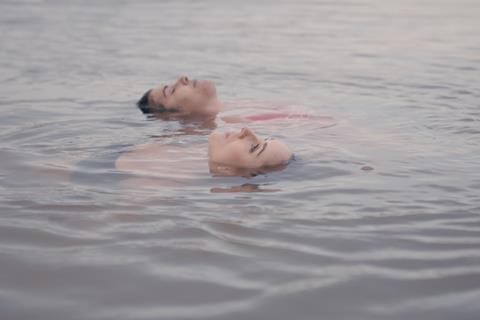
UK-Romanian filmmaker Taparjan was on her computer one evening, working on a PhD in social work while lecturing at Teeside University in northeast England where she lives, when an e-mail from a stranger landed in her inbox. The person said she had been adopted from the same Romanian orphanage [in Braila, a port on the Danube] at the same time as Taparjan. She wanted to go back, see the place and find her birth family.
Some five-and-a-half years later, Taparjan’s feature directorial debut is enjoying its world premiere in the international competition at CPH:DOX. “I realised how intertwined our stories were. It was this whole sliding doors thing, and we got deeper and deeper in,” explains Taparjan.
During the project’s development and writing stage, Syrian documentary filmmaker, editor and screenwriter Diana El Jeiroudi, who Taparjan met at a film-writing workshop, told her the film was not about the other woman. “She said, ‘You can’t use her as a shield. This film’s about you’,” she recalls.
The result is a story that sees Taparjan drawn into her own family history, uncovering a painful legacy of abuse and exploitation. “For any adopted people watching it, I hope it’s a non-stigmatising narrative for them,” she says.
Something Familiar received production support from the BFI Doc Society Fund and the Romanian Film Centre, and development support from Creative Media Europe. It also won the Chicken & Egg Vision Award when presented as part of the Circle Docs-in-Progress showcase at Cannes Docs last year.
The film is produced by Monica Lazurean-Gorgan and Elena Martin for Romania’s Manifest Film, with Aleksandra Bilic for the UK’s My Accomplice, and co-produced by Dermot O’Dempsey of Shudder Films.
Contact: Tijana Djukic, Stranger Films Sales tiana@strangerfilmssales.com


No comments yet