

















“Arthouse can become the new mainstream and France is leading the charge,” says Bruel as France’s national film board celebrates its 80th anniversary this year
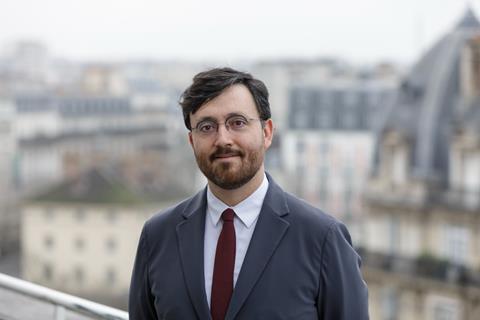
France’s national film board the CNC (National Centre of Cinema and the Moving Image) is celebrating its 80th birthday in 2026, one year since the now 37-year-old Gaëtan Bruel stepped up to become the youngest president in the organisation’s history.
CNC, which distributes around €800m each year in support funding, is supervised by the country’s ministry of culture and is financially autonomous, funded by taxes on cinemas, TV channels and streaming platforms.
Since Bruel took office in January 2025, however, CNC has faced threats from within France, with a few right-wing politicians seeking the agency’s abolition, and from without, as streamers continue to apply pressure on the country’s strict theatrical windowing system, amid wider global challenges around AI and financing models.
Bruel spoke to Screen International about his optimistic vision of cinema as the “antidote” to such threats and why he believes “this may be a new golden age for French creation”.
How big are the stakes facing you and CNC since taking the role?
We are living through a moment as defining as the invention of cinema 130 years ago, because we are witnessing a true reinvention of the moving image in three distinct ways: there’s a revolution in distribution models, where all forms of premium content are being challenged; a revolution in the nature of the image itself, driven by AI; and a revolution in the global governance of the industry.
Ten years ago, we wondered whether streaming would make movie theatres obsolete. Today, every premium model – cinema, television, streaming, even video games – is being disrupted by a faster-than-expected shift of audiences towards free social platforms like YouTube. But an even greater disruption is emerging. In a post-platform world, instead of navigating dozens of apps, we may rely on a single interface – our AI companion – to decide everything for us, including what to watch. In that world, discoverability becomes an existential challenge.
Does this mean the end of theatrical distribution as we know it?
Cinema is becoming a spectator in the battle for attention. But it has not said its last word. The central challenge is to keep a cool head in the face of this revolution, and to wager that, in a world of endless flows of low-cost, standardised, mass-produced content, creative singularity will become the new strategic resource.
The message from audiences worldwide is unmistakable: while financiers push for cheaper films and AI-driven productivity, viewers are asking for bold, distinctive works, full stop. Responding to this expectation is what truly matters most. Arthouse can become the new mainstream and France is leading the charge.
What about the third revolution in global governance?
The unprecedented weakening of American leadership. And I am thinking here less of Donald Trump, whose tariff threats are consistent with a longstanding American tradition of criticism and attacks that have punctuated the sometimes turbulent relationship the United States has had with cinema around the world. We are used to this. What is new and deeply concerning is the shift in the balance of power between Los Angeles and Silicon Valley. We now find ourselves dealing with major players from the tech sector, for whom creation is often just one activity among many others. The very necessity of cinema is beginning to waver.
After a century of unchallenged dominance over global cinema, which has made countries around the world deeply dependent on American productions, the US is now questioning whether it will continue to make films for movie theatres at all. Our longstanding effort has always been to ensure American films have their rightful place, but not the entire place. In a dizzying reversal, we now find ourselves hoping they will, at the very least, retain a place.
Last year, a representative of the far-right party National Rally presented an amendment to France’s National Assembly calling for the abolition of CNC. Why is it important that CNC exists?
The CNC is one of the clearest symbols of France’s longstanding ambition for culture and creation. Each year, we distribute around €800m [$950m] in support, yet this does not cost the state a single euro. The principle is simple: those who distribute works – movie theatres, television channels, streaming platforms – pay a small tax that finances both the quality of the works themselves and, more broadly, the entire creative ecosystem. If you do not go to the cinema or watch television, you do not contribute to the CNC.
This system supports films, but also the renovation of movie theatres, film schools, festivals, educational programmes, and much more. It is virtuous, efficient and effective: virtuous because it is funded by audiences themselves; efficient because it has helped to create the most dynamic film market in Europe where works are far more self-financed than elsewhere on the continent; and effective, as demonstrated by the exceptional results of this model. French films achieve an annual 40% market share and 90% of the population lives within 30 minutes of a movie theatre.
Yet you have been under attack. France is holding presidential elections next year – is it possible that an amendment to get rid of the CNC could be approved by a future government?
Nothing is ever certain, and we take all criticism seriously. We need to continue the dialogue, both educating when the attacks aren’t based on facts, and also questioning ourselves when it is justified. There is a widening gap between cultural practices and cultural convictions. People love going to the cinema, yet they ignore – or even criticise – the very model that makes the simple pleasure of that experience possible. This contradiction is shared by many of our fellow citizens. One could argue that it is shared by Netflix as well.
How so?
In recent years, Netflix has clearly discovered a genuine affection for movie theatres. After all, cinemas make it possible to compete at the Oscars, to gain prestige, media visibility, community engagement, and even a bit of additional revenue. And yet Netflix still does not seem entirely ready to do what would actually allow these cinemas to keep existing. Because a cinema that simply waits to be handed a major film for a short run cannot survive all year long. There is no retail business more complex than operating a movie theatre. If we truly love it, then perhaps we should try truly supporting it.
Another hotly debated topic both at home and among US streamers operating in France has been the media chronology.
France’s media chronology system isn’t just about protecting movie theatres. It also helps to structure financing. Films are expensive, and cinema, TV, and streamers all get their own exclusive windows to both maximise funding and exposure since each film gets another marketing boost and another way to reach more audiences when released in each window. Without this, the financing model would look like that of Spotify – everything available all at the same time, for anyone, with little revenue. Without this system, films just sit online in catalogues. In the French system, on the other hand, each window has a real incentive to actively promote each film.

The media chronology has faced years of resistance from US streamers, in particular Netflix, which has lodged a formal appeal with France’s council of state to protest the current regulations. What is your stance on this?
Both [Netflix co-CEO] Ted Sarandos and [Paramount Skydance CEO] David Ellison came to France and spoke about the current media chronology in markedly different terms. Sarandos said, “It’s complicated to do business in France. But love is complicated, and we love you anyway.” By contrast, Ellison wrote in an open letter to the industry, “I understand and respect your windowing system.” Netflix is challenging the media chronology in court, while Paramount is making a formal commitment to uphold it.
What would it mean for the French industry if the Netflix-Warner Bros Discovery deal goes through?
The entire film world is holding its breath [because] Warner Bros remains one of the few major American studios that still believes in theatrical cinema, and the only one whose slate has not declined in recent years. When the merger between Fox and Disney took place, one plus one did not equal two – there were, in fact, fewer films released in theatres. We face the same concern today, intensified by the current context.
In other news impacting the international industry, the French government recently made the salaries of non-EU actors eligible for the Tax Rebate for International Productions (TRIP). What impact will this have?
Let’s be honest: for many years, the international industry didn’t come to France to shoot — they came here to relax after shooting somewhere else. France did not have a reputation for being an easy place to film, but that has changed. They are coming here to shoot, from Amazon’s Heads Of State, which recreated scenes set in seven countries in France, to Jim Jarmusch’s Father Mother Sister Brother, to Emily In Paris, and the next season of The White Lotus.
The France 2030 plan has doubled our production and training infrastructure in just five years, and we benefit from a strong mix of domestic and international productions that keeps crews working year-round.
You signed a partnership last July with the BFI. What has this partnership meant in practice?
The BFI is a remarkable partner for the CNC. We share the same commitment to cultural diversity and a common vision for cinema and audiovisual policy. This agreement formalises an already close relationship and takes it further: we will hold annual professional meetings alternating between London and Paris, join forces on film education and film preservation, and continue exchanging best practices in supporting and regulating the industry.
Every time I meet [BFI CEO] Ben Roberts and we talk about our vision and projects, I am delighted to feel as though Brexit had never happened. Our two countries, and our two institutions, are true allies when it comes to cinema, and we can do much more together in the future.
How do you see CNC’s role extending to international cinema?
Cinema is international, and at a time of major challenges, France does not see itself as a fortress, blind to the transformations underway. On the contrary, we aspire to be a welcoming land for talent, and a hub for ideas and solutions to shape the future of the industry. This year at the Oscars in the best international feature film category, out of 86 eligible films, 27 were co-productions with France, and 20 of those received support from the CNC. All five final nominees are French co-productions, and four were backed by the CNC through our Aide aux Cinémas du Monde (World Cinema Support Fund), which has become a flagship initiative for international co-production. It is unique in providing up to €500,000 ($590,000) to dozens of projects each year.

France is a major presence at the 98th Oscars, but none of the films is in French – even France’s submission for best international feature, Jafar Panahi’s It Was Just An Accident, is fully French-produced but shot in the Persian language with Iranian actors. So what is a “French film” today?
It would be absurd to claim that a film is French only if 100% of its cast and crew were born in Paris and its subject matter were purely French. Consider French producers such as Philippe Martin, without whom Jafar Panahi would not have been able to make his film. This, too, is part of France’s DNA: the many producers, sales agents and distributors working here to support cinema from all over the world.
We continue to attract international talent eager to create in France – Richard Linklater with Nouvelle Vague, Jim Jarmusch with Father Mother Sister Brother, Wes Anderson, who lived here for many years, and Brad Pitt and Margot Robbie, who are now establishing their companies here with Mediawan. France has become a rallying point for independent filmmaking worldwide.
The same argument could be made for France’s presence at this year’s Berlinale.
We have three majority French productions in Berlin’s Competition and five additional minority co-productions. Nearly 40 French films are presented across all sections. Festivals such as Berlin demonstrate how, even in a deeply divisive global context, cinema continues to bring together talents, countries and languages. It is clear that festivals like Berlin, Cannes and Venice, awards like the Oscars, and audiences around the world increasingly value singular, arthouse-driven films. Even countries once centred on purely commercial models are now embracing auteur cinema.
The more the world becomes standardised, the more distinctive forms of creation stand out. And this is precisely what France does best: singular works, auteur films, series with a strong identity. So yes, even in a period filled with challenges, this may well be the moment of a new golden age for French creation.





No comments yet