



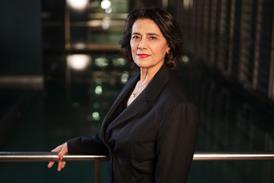










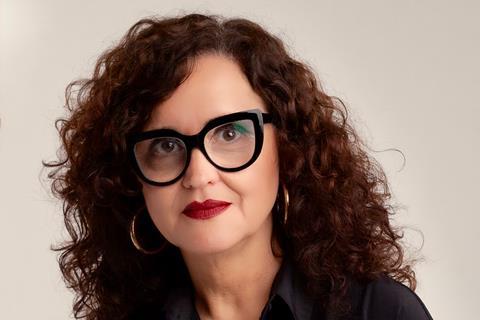
For 28 years, the final days of September have always left Ilda Santiago breathless.
As the Festival do Rio (October 1-11) kicks off on Thursday, its artistic director says the frantic run-up to opening night and the size of her team reflects the scale of running one of the most significant film festivals in Brazil and Latin America.
In those days and weeks leading up to the festival, Santiago typically arrives early at her office in the Flamengo neighborhood, having already made about 10 calls to Europe.
“I have to race against the five-hour time difference before they wrap up their day,” she says. “Or, worse, before they head off on a two-week vacation, while my festival is about to start.”
Santiago says the door to her office is constantly swinging open as staff call on her to make crucial eleventh-hour decisions.
“Hold on! A new film just came in, the one we were waiting for until the very last minute because it’s by Mike Leigh,” she recalls saying, in reference to the UK filmmaker’s Tender Loving Care, which was added to the lineup after it won three Golden Shell awards at San Sebastián including best film.
Working to a budget of $2.3m (BRL 12m), Festival do Rio will screen more than 357 titles this year. The 2025 edition drew 124,000 attendees.
Over the years, the festival has established itself as an industry business hub bringing together major players. South Korea is the focus of this year’s RioMarket, which connects global filmmakers, producers, distributors, industry executives, streaming platforms, overseas delegations, and investors.
Platform for Brazilian cinema
Rio is also the largest platform for Brazilian cinema, thanks to Première Brasil. This 28th edition alone will present 110 features and shorts, and the competitive section is a big draw as selections vie for the Redentor trophy, named after the Christ the Redeemer statue that towers above the city on its “Corcovado” granite mountain perch. Première Brasil also brings commercial relevance by showcasing films with popular appeal and serving as the main launchpad for national productions in the second half of the year, both in Brazil and abroad.
Another factor that reinforces the festival’s status is the city gets to stage premieres of major Hollywood productions alongside award-winning arthouse films from global festivals. Every selection benefits from Rio’s positioning as a “red carpet” affair, attracting national and international stars and garnering extensive media visibility.
“Rio de Janeiro is a city with the capacity and charm to attract the audiovisual industry from all over the world,” says Santiago, adding that the strength of Brazilian cinema today also helps boost its image. Even more so after international acclaim for Walter Salles’s 2025 Oscar winner I’m Still Here and Kleber Mendonça Filho’s Academy Award nominee The Secret Agent last season.
“The presence of Brazilian cinema at the Oscars, Cannes, Berlin, Venice, or Toronto feeds back into the Brazilian market and, consequently, Festival do Rio,” she says. “This also increases the interest of international directors and producers in showing their films here, considering that Brazil is one of the largest markets in the world.”
International flavour
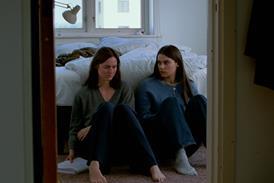
In the past, Santiago would struggle to secure talent from far-flung locations. However the distance didn’t seem to matter to Iranian filmmaker Asghar Farhadi (Parallel Tales, World Panorama, October 2), Brazilian-American director Beth de Araújo (Josephine, World Panorama, October 9) or Berlin-based Brazilian Karim Aïnouz (Rosebush Pruning, World Panorama, October 3). All are bringing their latest films to the “Carioca” audience of Rio residents.
“But we recognise that Brazil is far away,” Santiago says. “It is easier for a talent to visit five European countries in 10 days than to come here.”
Being able to scoop up the big titles from the major festivals and present them to the local audience has become a badge of honour for Santiago. “But my greatest passion is taking Brazil to the world, which I do through cinema,” says the artistic director, highlighting that the festival has registered a record 1,426 Brazilian features and shorts submissions.
“Brazil today has a powerful audiovisual industry and stories that interest the world,” says the industry veteran of more than 30 years. “I attribute this to public policies, which are essential for our industry to renew itself, but also to the understanding by our producers and filmmakers of the importance of reaching an audience both domestically and internationally. And this is a consequence of the transformations in the sector, especially with streaming.
“If there’s a trend at Première Brasil this year, it’s the lack of a trend,” Santiago adds with a laugh. “We have options that cater to all audiences, including genre films like horror, documentaries, and films aimed at young people. This is very important since they represent the large audience of cinemas worldwide today.’’
With this in mind, Rio presents, for the first time, the Nova Geração showcase within Première Brasil, dedicated to domestic works aimed at younger audiences and families. “These are films that speak to teenagers, which is a very specific cinematic language. They are called coming-of-age films, a term we don’t even have in Brazil, since the segment has been largely dominated by American cinema,” she says.
Another piece of good news, “perhaps the best”, is the fact that Brazilian productions no longer fit only in Première Brasil. “They are spreading to the other sections of the festival as well, such as Première Latina, Expectativa and Clássicos & Cults,” she says, referring to films such as Ana Vaz’s Fire Flower (Expectations, October 1) and Dominga Sotomayor’s La Perra starring Selton Mello (Latin Premiere, October 6).
The public’s confidence in Festival do Rio keeps Santiago motivated, even when the clock strikes 8pm and she still has “30 emails to answer”. She says: “That’s what makes me fight for each film and for a programme that makes sense.”
And no matter the time, she knows what she will do when she gets home after a long day at the office: “Watch at least one more film.”






No comments yet