



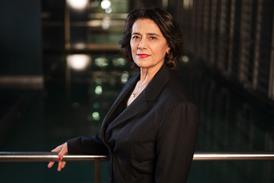




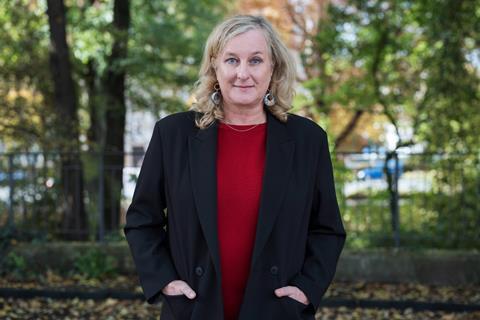
When Ola Staszel took over the reins of DOK Leipzig from Christoph Terhechte in January, she was both excited and nervous.
“I was thrilled but also completely unsure of how easy it would be to invite films to the festival,” Staszel says of the challenge of overseeing Germany’s most important documentary festival.
After all, DOK Leipzig, which kicks off today (October 26) and runs until November 1, takes place in the middle of a crowded autumn festival calendar that also includes International Documentary Film Festival Amsterdam, Ji.hlava International Documentary Film Festival in Czechia and Portugal’s Doc Lisboa.
The Polish-born Staszel is no novice, though: she arrives at DOK Leipzig having already served for more than a decade as director of the Neisse Film Festival which showcases films from Germany, Poland and Czechia. That experience, along with insights and tips shared by Terhechte, paid off with her first edition boasting a healthy total of 30 world premieres.
“I was happy and positively surprised that the filmmakers trusted us,” she says. “What can I say? It wasn’t a problem to invite films.”
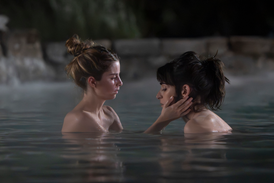
One coup is to have secured the premiere, in the international competition section, of Bára – Diary Of A Rockstar, the latest – and possibly last – feature from legendary Czech filmmaker Helena Třeštíková. This is a project that Třeštíková, famous for her time-lapse observation documentaries, spent an astonishing half century making, following her subject from her youth until well into her 60s.
“She started filming in the 1970s,” Staszel says of the film. “I am a huge fan of hers. She is one of the masters of the long-term documentary.”
Třeštíková is also the subject of an homage and will give a masterclass.
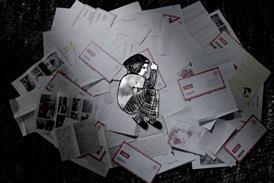
DOK Leipzig, which received over 3500 submissions this year, is also holding the world premiere of The Masturbator – The Adventures Of Edgar Hilsenrath, an animated documentary from director François-Xavier Destors. The film isn’t as prurient as it sounds: Leipzig-born author Hilsenrath was a Holocaust survivor. “He was the first one to make jokes about the Holocaust,” notes Staszel.
New strands
Destors’ film is screening in Positions, intended to be a starting point for debate and dialogue involving extended moderated discussions after screenings.
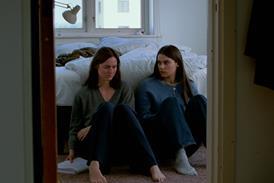
It is one of the new initiatives Staszel has introduced to the festival. Another is Fokus Ost, a programme curated by author and filmmaker Grit Lemke which foregrounds work by East German voices and those of women in particular. The festival’s opening film, Ina Bormann’s Good Evening, Beautiful, is part of this new section.
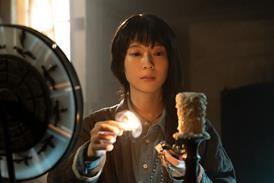
In the documentary, Bormann speaks to some of the same East German women who were first interviewed 40 years ago by Maxie Wander for her book Good Morning, Beautiful, for which she asked probing questions about their lives and aspirations. “They spoke very openly about their life, sexuality and gender,” Staszel says.
“It’s maybe not the usual decision to open [the festival] with a German film,” adds Staszel, but she felt it was an important choice given the shift to the right in German politics and the increasingly polarised nature of German society.
“Leipzig has always been an important point for filmmakers from the west and east to meet,” she continues. “Filmmakers from the eastern part of the country feel they are not heard. Showing this film, we can put this topic on the agenda of what it means to live here and now.”
Overall, Staszel has “tried to strike a geographical balance. I had a great and very experienced selection committee. It was important for us to bring different cinematic voices and to look for young filmmakers.”
Funding concerns
One practical consequence of the rise of right-wing parties in Germany is that DOK Leipzig faces uncertainty about funding. Its current budget is €2.6m but looks certain to be reduced next year as politicians try to cut cultural spending.
“It makes our plans for the future very unsure. But we are not alone. The whole cultural sector [is] in the same boat,” says Staszel.
Notwithstanding that, she remains in an upbeat mood as the 69th edition of the festival gets underway. “These films are like your babies,” she says. “To see them on screen with their filmmakers behind them is a gift.”


No comments yet