







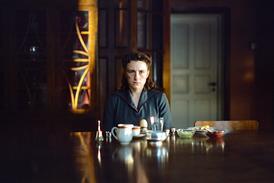

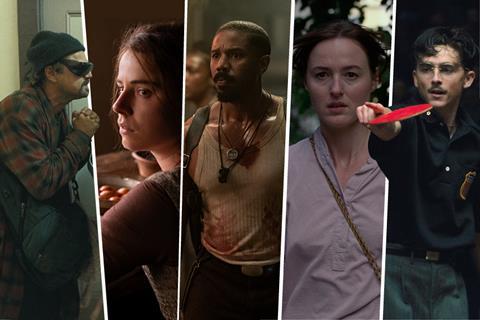
This year, for the first time since the Bafta Film Awards ceremony was moved up ahead of the Oscars (in 2001), Bafta announced its film nominations after Ampas — a quirk seemingly caused by the UK film academy’s wish to give voters more time to view and consider films after Bafta longlists were announced.
The two sets of nominations announced in January — by Ampas and Bafta — show the two academies in broad alignment, with both expressing their fullest and broadest enthusiasm for Sinners, One Battle After Another, Hamnet, Marty Supreme and Sentimental Value. Those are the five titles nominated for Bafta’s best film, and of course they all made Oscar’s 10-strong line-up for best picture — which also has Bugonia, F1, Frankenstein, The Secret Agent and Train Dreams.
The Bafta best film five are Ampas’s picks for best director, and at Bafta you can add in Bugonia, since Yorgos Lanthimos rounds out the UK academy’s six nominations in the category. Frankenstein is also among the most-nominated titles at both awards, but Guillermo del Toro was a miss in director for both Bafta and Oscar, and a miss for adapted screenplay at Bafta.
“I thought overall, it was a good year,” says an awards campaigner — one of four who spoke to Screen International anonymously, offering analysis and commentary on the nominations. “I think it’s a very credible list of nominations.”
The other three campaigners had similar things to say about the nominations. “I mean, given that one has to accept that certain films are going to get through, I was pleased in certain cases that they didn’t sweep every category,” says another campaigner. “And then there’s Sinners. I like Sinners. For me, it’s a big-budget vampire film, and one that wears its message very clearly on its sleeve. It’s fine. It’s a bit odd that it’s the highest-nominated film of all time at the Oscars.”
“The top five that are in there are the five that keep coming up for people that they love a particular film,” says our third campaigner. “It feels legitimately competitive.”
While the Bafta and Oscar nominations showed a broad degree of overlap, Bafta was notable for also finding room for a trio of UK indie films — I Swear, Pillion and The Ballad Of Wallis Island, with a combined 11 nominations, including all three in their respective screenplay categories — while Ampas earns points for films predominantly not in the English language popping up in the widest set of categories. All four of our campaigners expressed enthusiasm for these outcomes. “I think that’s great,” says the fourth of our quartet. “I’m happy to see the British indie films represented so well across the Bafta nominations.”

In the four performance categories, seven of the 24 slots have gone to British or Irish actors: Jessie Buckley, Paul Mescal and Emily Watson for Hamnet; Robert Aramayo and Peter Mullan for I Swear; Carey Mulligan for The Ballad Of Wallis Island; and Wunmi Mosaku for Sinners. Out of those seven, only Buckley and Mosaku are nominated for Oscar.
“It adds the stamp of the local award, of what Bafta is, and what it represents, while still celebrating Hollywood and international films, so I’m very into that,” says our third campaigner.
“There’s always those unexpected homegrown talents that get an extra lift by it being a British audience that either sees more British films, or has more of an appreciation,” reckons another. “I love that our categories do that, and nothing made me happier than the year when Joanna Scanlan won for After Love.”
This campaigner also points to the local love for Hamnet, which has 11 Bafta nominations — three more than at Oscar. “That was the film this year that I watched, and regardless of my own feelings towards it, I thought, ‘That is a Bafta movie, if ever I saw one’,” she says.
Both Pillion and The Ballad Of Wallis Island have been released in the US — by A24 and Focus Features respectively — and qualified for the Oscars, earning zero nominations. I Swear releases in April courtesy of Sony Pictures Classics and will be eligible next year. “Now I Swear is nominated, one would like to think that all those Bafta voters in other countries will watch it,” comments one campaigner — the implication being that this is not guaranteed, even though voters should watch all nominees to vote in any category. “I’ve been telling friends in other countries to watch it because even people who are quite cine-literate, it wasn’t on their radar.”
Missing from both the Ampas and Bafta lists: UK actress Cynthia Erivo, star of Wicked: For Good — and the film’s total Oscars wipeout may be considered one of the surprises this awards season. After all, Wicked scored 10 Oscar nods, winning in two craft categories. “It’s a sequel. It’s a musical. It wasn’t as good as the first one,” says one campaigner. “I think the zero Oscar nominations is maybe the surprise. It feels intentional.” (Wicked: For Good has two Bafta nominations — in costume and make-up & hair.)
Outstanding British film
Bafta’s outstanding British film category gives room for 10 titles: automatically nominated are the top five from first-round voting, plus five more chosen by a jury from the films ranked six to 15 on the longlist. Nominated are franchise blockbusters Bridget Jones: Mad About The Boy and 28 Years Later, and plucky indie Pillion, and all points in between.
“I’d describe it as a broad church. There’s a lot on there, isn’t there?” comments one campaigner, who adds: “Because there’s 10 nominations, I think there’s room for Bridget Jones to be on there. It’s celebrating all British film. But there’s definitely one or two nominated films that you wouldn’t associate as a jury pick.”
It is perhaps surprising that Alex Garland and Ray Mendoza’s Warfare, which made the longlist of 15, was not selected by the jury — which instead found itself drawn to the likes of biographical drama Mr Burton, and book adaptations H Is For Hawk, Steve and Die My Love.
All four of our awards campaigners mention Harris Dickinson’s Urchin as a sad omission from this year’s Bafta nominations — not on the longlist of 15 for outstanding British film (and so unavailable to be chosen by the jury), and not nominated by the outstanding British debut jury, which instead plumped for Pillion,My Father’s Shadow, Wasteman, The Ceremony and documentary A Want In Her.
“I don’t know if it’s because the director is so famous, but it’s interesting not to see Urchin on there, because I don’t believe there’s been five better debuts this year,” offers one campaigner. “Having said that, I don’t want to be too critical, because it was a strong year, and they picked five good films. It’s hard to please everyone in that particular category.”
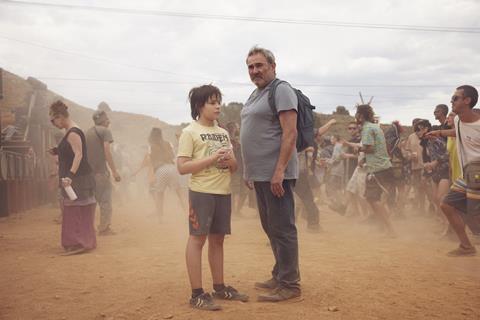
This year’s five nominees for the international feature Oscar are the country submissions of Norway, Brazil, Spain, France and Tunisia: Sentimental Value, The Secret Agent, Sirât, It Was Just An Accident andThe Voice Of Hind Rajab. Bafta’s nominees for its equivalent film not in the English language are exactly the same.
The surprise here arises from the very different eligibilities — there is no country submission at Bafta, and films must instead achieve a timely UK theatrical release. Usually, Bafta nominates at least one film in the category that was not submitted by any country to the Oscar — and in recent years they have included All We Imagine As Light, Anatomy Of A Fall and Past Lives.
“They have never matched all five nominees,” suggests one campaigner. “Never, never, never!” From his perspective, “This year, there were six unbeatable films chasing five places, and on both lists No Other Choice dropped out.” He points out that the film’s director Park Chan-wook has never been nominated for an Oscar, but has three Bafta nominations, winning in 2018 with The Handmaiden for film not in the English language. “I wondered if that might be the one film at Bafta that was different from the Oscar list, but they matched each other. But you can’t say that’s not a good list — that’s five really good films.”
“I think No Other Choice was probably number six,” suggests another campaigner. “And I imagine Left-Handed Girl was number seven.” Both of these titles were submitted by their countries (South Korea and Taiwan) at the Oscars, and it seems that this year has lacked a major film not chosen by any country for Oscar but released into UK cinemas, and captivating Bafta voters. Richard Linklater’s Nouvelle Vague — which earned 10 César nominations including best film, director and original screenplay — may have been the one that came closest.
Documentary pivot
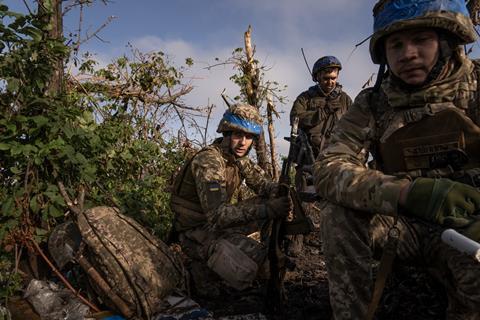
This year Bafta sent a strong signal with its documentary chapter, asking voters to opt in only if they have ‘specific documentary/non-fiction experience’ — the aim evidently to have only experts and practitioners casting votes, and move away from past years that have seen biographical and celebrity titles dominate the longlist and pepper the nominations. The aim may also have been to bring the category into closer alignment with Oscar’s well-respected documentary category, for which the shortlist of 15 and the five nominees are chosen by a chapter of practitioners.
If alignment is the goal, Bafta has succeeded this year more in spirit, since the Ampas and Bafta documentary nominees overlap with only two titles: The Perfect Neighbor and Mr Nobody Against Putin. Ampas also nominated The Alabama Solution, Cutting Through Rocks and Come See Me In The Good Light, while Bafta chose 2000 Meters To Andriivka, Apocalypse In The Tropics and Cover-Up. In other words: no Wham! this time around.
“I don’t know whether it’s the films this year, or whether it’s the system that Bafta have made a lot of effort to adjust, because of what’s happened previously in this category, but I feel we have hit a better balance with the documentary nominations,” suggests one campaigner. “There’s no embarrassing omissions where you just think, ‘How many documentary filmmakers are actually voting in this category?’ Credit to Bafta that they’ve listened to the feedback and worked to make those adjustments.”
While Bafta may have now arrived at a good place with documentary, the children’s and family film category — added to the Film Awards a year ago after Bafta’s Children’s Awards ceremony was axed — is still struggling to find its feet, suggest our campaigners.
“I don’t pay attention to that category,” is the verdict of one. That may partly be because it is fully juried, so not on campaigners’ radars. Another says: “I said out loud when the nominations were announced, ‘That category is still trying to find its identity.’ I think that it could be more interesting, potentially, if it were voted for more broadly.”
Nominated this year for children’s and family film are animations Zootropolis 2 and Arco, and live-action tales Lilo & Stitch and Boong — chosen from a list of 14 titles submitted to the category by distributors.
“I know what they’re trying to do, but I don’t know how distributors are ever going to give them films — if you want to win best film, are you going to go in that category?” comments a campaigner. “I just don’t see it. I think people are worried that it changes the perception of the film.”
One point all the campaigners agree on is that the sequencing of this year’s nominations announcements — Bafta following Oscar — has had an impact on perception and attention. “Not that we need to be catering to the Americans, but I do think Bafta is looking for global profile and relevance,” suggests one campaigner. “And I think that it has somewhat diminished its position in the journey by going post-Oscars.” Chimes in another: “There’s no denying the Oscars is the biggest ceremony, so it makes more sense if everything builds up to that.”


No comments yet