









Open Doors, the Locarno Film Festival’s co-production platform and talent development programme, is marking its second year of a four-edition cycle focusing on African filmmakers and producers.
The participants — producers and filmmakers chosen from 42 countries across Africa — were selected by a five-strong selection committee, the majority of whom are themselves based on the continent.
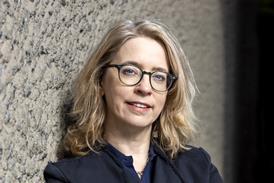
They include South Africa- based filmmaker Tiny Mungwe, who says that by including decision-makers from Angola, Senegal, Kenya and Nigeria alongside one from Brazil, Open Doors comes much closer to achieving its mission to build audiences for African film inside and outside Africa.
“Open Doors is one of the few European programmes built for regions in the global south that have taken this approach,” says Mungwe. She credits the leadership of Zsuzsi Bánkuti, the head of Open Doors, for this.
It aims to provide a meeting point for African filmmakers outside of the continent and to create an opportunity for African cinema-makers to connect with collaborators from the rest of the world.
“Historically, international co-production has been beset with inequalities in how those co-productions take place,” Mungwe notes. “We’re trying to create opportunities for African producers to understand how the European systems work, but not with the intention of them falling in line with those systems. Should they want European partners for their films, we hope they will know how to get more out of the co-production set-up.”
Mungwe worked at Cape Town-based STEPS, where she produced Generation Africa, a collection of 25 films from 16 African countries on migration and a collection of 11 short films in a time of Covid. Through her production company CTRL ALT Shift, she has made feature docs, short films and TV work. She has also organised and programmed strands for the Durban International Film Festival and previously worked in the pre-selection and scouting team with Locarno.
Participants are encouraged to think about what international co-production can look like between companies operating in the Global South. “For us, the essential thing is to recognise that it’s called creative producing,” she says. “You have to be creative about the partnerships you’re building and the basis on which you go about imagining the map of the world your content can actually end up in.”
This year’s edition returns with its three established strands — Projects, Producers and Directors — offering hands-on training, mentoring and networking alongside public screenings and industry events during the festival and its industry arm, Locarno Pro.
New for 2026 is Open Doors Connect, an initiative designed to strengthen long-term international collaboration among producers, with a particular focus on South-South exchanges.
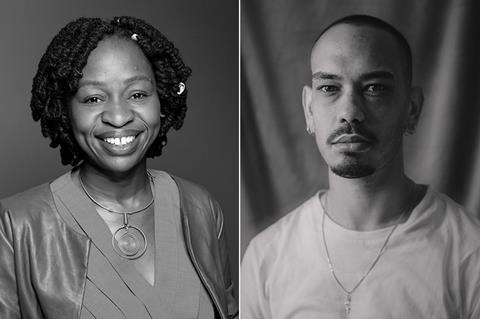
Candy Radifera (Madagascar), Frédy Agblo (Benin), Talita Arruda (Brazil) and Nomintuya Baasankhuu (Mongolia) will take part in a two-month hybrid programme — online and on-site during the festival — mentored by producer Fibby Kioria (Kenya) and South Africa-based curator, producer, arts manager and consultant Mitchell Harper.
“Bringing together film professionals from Benin, Madagascar, Brazil and Mongolia, Open Doors Connect aims not to act only as a platform for professional development for those participants,” Harper says, “but also to facilitate opportunities for South-South collaborations, drawing on knowledge, experiences and models from each of their regions.” Harper is also one of the Open Doors’ artistic team.
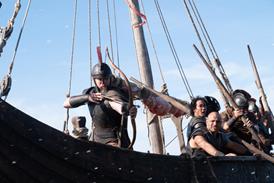
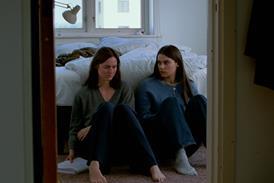
Drawn from nine countries across the continent, this year’s Projects strand showcases six first and second features in development, spanning portraits of music and memory to explorations of womanhood, urban life and the long shadows of colonialism.
The Producers strand has selected six participants for its career-building track: Mamounata Nikiema (Burkina Faso), Natasha Craveiro (Cabo Verde), Adja Mariam Mahre Soro (Ivory Coast), David Ikeata (Nigeria), Rua Osman (Sudan) and Tapiwa Chipfupa (Zimbabwe).
On the Directors’ side, five filmmakers are taking part: Fagamou Fama Ndiaye (Senegal), Rediet Haddis Yalew (Ethiopia), Poças Pascoal (Angola), Judith Nini Kibinge (Kenya) and Ariel Añez (Mozambique). Each has a short film screening as part of Open Doors Screenings, an official section of the festival.
Women filmmakers are well-represented within this year’s selection of producers and directors. Zsusi Bánkuti, head of Open Doors, says the programme’s ambitions extend beyond the slate itself.
“One of my hopes for this edition, and for Open Doors more broadly, is to keep amplifying female voices, both behind the camera and in the producer’s chair,” she says. “Gender parity in our industry isn’t just a goal for the screen; it has to be lived in the way we work and who we support.”
Open Doors runs during Locarno Pro, the festival’s industry strand, from August 5-10.




No comments yet