













Director Marc Munden and writer Jack Thorne’s latest collaboration Lord Of The Flies marks the end of their first decade of creative collaboration. The British pair discuss critical response, narrative longevity and potential future projects.
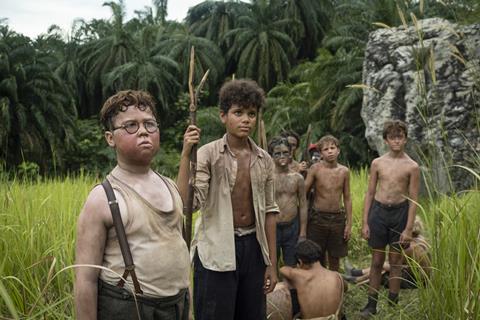
Jack Thorne and Marc Munden have taken viewers to some of the darkest corners of British life. In their first collaboration, the Bafta-winning 2016 Channel 4 miniseries National Treasure, they delved into sexual abuse in the world of entertainment. In 2021’s Bafta-nominated feature-length drama Help, also for Channel 4, they took viewers to the harrowing frontlines of the Covid pandemic. And this year, for the BBC, they imbued William Golding’s 1954 novel Lord Of The Flies with a sense of contemporary urgency, resulting in a vivid, intimate depiction of civilisation dissolving, as played out by schoolboy survivors of a plane crash.
But their work never feels like a slog. Thorne’s naturalistic dialogue and humanistic characterisation (honed on his three This Is England series with Shane Meadows and exemplified by the award-winning success of Adolescence) blends perfectly with Munden’s sensitively stylistic approach (as seen in The Devil’s Whore, Utopia and The Sympathizer). The results are always vital, vibrant and accessible.
As are Thorne and Munden, speaking to Screen international during a publicity blitz for Lord Of The Flies in Los Angeles (“We’ve been dancing in front of various groups of people,” says Thorne). The writer and director share a sense of humour, a passion to tackle important issues, and a heartfelt appreciation for their creative partnership, which this year reaches its first decade. And which, judging by their mutual enthusiasm, will not be ending anytime soon.
When did you first meet?
Jack Thorne: It was at the BBC TV Drama Writers Festival [in 2013]. Marc was talking about making Utopia with Dennis [Kelly], who is a mate of mine.
Marc Munden: It was a session on directors working with writers. About three years later we did National Treasure. The first episode of that was the best script I’d ever read. I was blown away by it. It had this 10-page scene of dialogue, which is unheard of.
At what point did it become clear your collaboration had legs?
Thorne: It was the work Marc did on National Treasure. The poetry he found in telling that story was not the poetry I was expecting. He says, “I am going to take you beyond the realm of the real at times, even though this is going to be starkly realistic.” And he does it so effortlessly, with the strangest choices.
Munden: The first thing I do when I read anything is try to find the grammar for it. The essence of that piece was all about scrutiny: did Robbie Coltrane’s character do it? It was about inviting the audience to scrutinise each of those characters for the truth. That really defined the grammar. It’s my job to dig into all that stuff and make it live in some way. It was alchemy, in that weird way that writing and filmmaking go together.
How did Lord Of The Flies come about?
Thorne: It started with Joel Wilson, who is our exec producer. He asked me, “What’s the one book you’re desperate to do?” And it’s always been Lord Of The Flies. I had tried and failed before, and he said, “I think I can make that happen.” We developed it, got the [Golding] estate on board, and we wanted Marc to do it. But he’d just done a shoot abroad, and I knew he wasn’t very keen on being pulled away from his lovely life into slightly more barbaric circumstances. And it wasn’t just a shoot abroad; it was a shoot abroad involving children. It wasn’t going to be an easy job. We played our cards very carefully to try to entice him slowly towards us, and eventually he fell prey to our advances.
Munden: No, no, it wasn’t at all like that. I’d just got back from doing The Sympathizer with Park Chan-wook and Fernando Meirelles, and there were all these rumours about Jack writing Lord Of The Flies. I just assumed they were trying to get Sam Mendes to do it, or someone a little bit more glam than me. But I was so pleased when we got together to do it.
Did you look at any previous adaptations?
Munden: It was daunting to try and follow the [1963] Peter Brook film, which is an iconic piece that follows in the steps of the nouvelle vague. But what I loved about Jack’s script was just how well he defines each of the characters. This goes for National Treasure and Help, too: he just understands human frailty, he understands how we fail, he understands bad behaviour. Yet he manages to put that in the bodies of living, breathing, beautiful people. And Peter Brook’s film didn’t have that. I thought because Jack had written it as a ‘relay race’ [between the characters], we’d have a good time making this really different and modern as well.
How was the experience of shooting in Malaysia?
Thorne: I was there for rehearsals in Kuala Lumpur, and then when they got to the island…
Munden: He disappeared! I never saw him until the following year [laughs]. In his defence, he doesn’t like the heat.
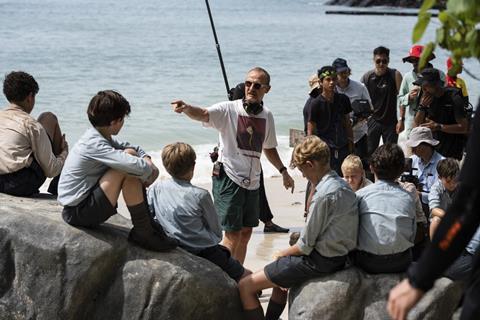
Thorne: In my defence, how often was I on set for National Treasure? Twice? A day? It’s partly that I struggle with people. But it’s also that I don’t think I’m useful in those circumstances. When it gets to the shooting, I know how I’ve written it, and that’s not always useful. Because of course it shouldn’t be how I’ve got it in my head. It’s why I struggle with the term ‘showrunner’. The idea there’s someone who controls the whole thing is not helpful. Shared authorship is the heart of making something. You don’t just walk into a room and say, “This is how you should do it.”
Munden: Having Jack at rehearsals was useful, because we could interrogate the script with the boys. And that was an interesting process because none of the boys had really acted on screen before. So it was just about trying to get them to inhabit those characters.
Thorne: But if you’re asking about how filming was, it was impossible: monsoons, uninhabited islands. Marc was amazing to survive it.
Munden: All those choices you would normally make for a film, like filming on a beach near a hotel, we made exactly the opposite. We filmed during the monsoons, and all the boys were 12 and under — some were as young as five years old. We didn’t cast it older, which we could have done to make it a bit easier. It was pretty hellish.
The series has some impressive visual flourishes, such as the stark ‘portraits’ of the boys and the use of infrared cameras to turn the jungle a bloody red. How did those come about?
Thorne: The portraits weren’t in the script. There’s so much that wasn’t in the script that’s about Marc finding his vocabulary for telling the story. That’s all Marc’s brilliance.
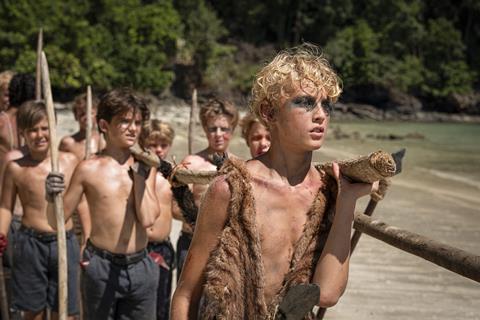
Munden: I was influenced by Goya’s court portraits, all of which are really active. If you look at those faces, they’re totally communicating with Goya as he paints. And [the infrared shooting] was born out of the circumstances, because we couldn’t film after six o’clock, so we couldn’t ever film in the dark. I’d had some experience shooting day-for-night before and it’s hit-and-miss. So I thought, “Well, if we took the infrared filter out of the camera, and it changed all the foliage to pink, then at least it might connote night rather than actually look like it.” As it went on, I liked the hallucinatory element, particularly as everything starts to degrade.
Do the two of you ever disagree? And if so, how do you resolve it?
Thorne: I can’t remember an argument. Can you?
Munden: No. I’m not sure that this is disagreeing, but Jack’s great at pointing out stuff that doesn’t work in a very clear way. As soon as I get a cut and I’m happy with it, I want notes from Jack — so he’s the first person I show it to.
Thorne: There are difficult things, like script lengths. Marc’s quite exacting about getting every bit of fat off a script. I find that tough. But I don’t think there’s ever been a cross word.
Munden: Yeah, I can’t imagine you shouting at anyone.
What do you think is the best metric of success?
Thorne: Obviously, critics matter but am I bothered when critics don’t like something? I struggle and it keeps me awake and I start trying to work out how to change things. Audience numbers matter, too, but it’s very hard to work out what a good number is anymore. So really, it’s the little conversations. It’s people coming up to you and saying, “Oh, I got that,” and “I was interested in the decision you made here,” and “I felt something here.” It’s also conversations in five years’ time. Like, the fact that every now and again, someone will say something about National Treasure to me. It’s longevity, isn’t it?
Does that happen with Help, too? Because that was so of the moment.
Thorne: Yeah. Especially with people who were in care homes, care workers. I mean, the disabled experience of the pandemic is still going on. There are still people who are largely staying at home because it was so terrifying. People were told the most appalling things about the worth of their life. We just turned away from disabled people, generally, in a really disgusting way. But I’m not allowing Marc to answer the question.
Munden: Well, I don’t spend too much time thinking about how good something is. I want to get on to the next thing. But it was nice premiering [Lord Of The Flies] at the Berlinale. And this is great — speaking with Screen International. I like people having an intellectual or cerebral response. The interesting thing about Lord Of The Flies is that it’s the most popular thing I’ve made. It’s unusual. I don’t normally get that sort of response.
Do you know what your next collaboration is going to be?
Thorne: Not yet. There will be something very soon, I suspect. When I manage to persuade Marc.
Munden: We should develop something together. We’ve never developed anything together before. [To Screen] I’m very jealous of his relationship with Shane Meadows [laughs].
Thorne: I’d like to make a film with Marc. That’s what I’d really like to do.
Munden: Yeah. It was glorious seeing episodes one and two [of Lord Of The Flies] on a big screen at the Berlinale. It holds up on the big screen. So I would love to make a film with Jack.






No comments yet