









Austrian filmmaker Marie Kreutzer is in Competition with Gentle Monster, a film that puts a relationship under the microscope when the man is accused of child abuse.
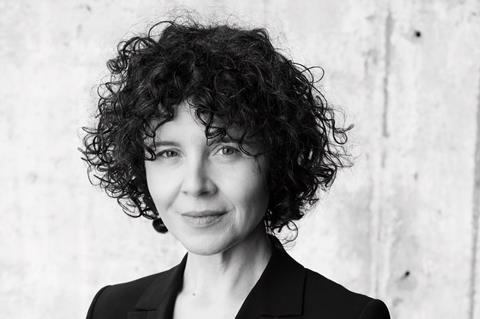
Marie Kreutzer is in this year’s Cannes Competition with Gentle Monster. Speaking to Screen International a few days before the festival begins, the Austrian writer/director is very aware that her new film is likely to provoke disquiet and controversy.
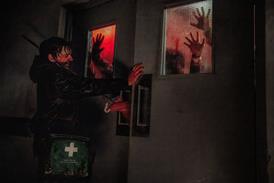
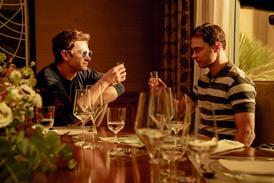
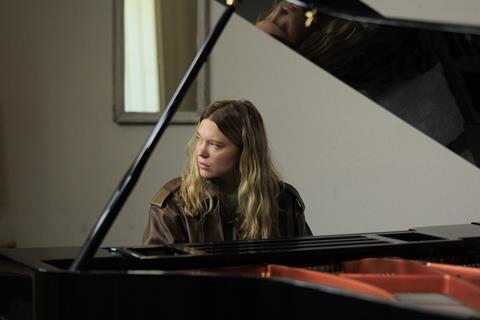
The story follows Lucy, a brilliant French musician (Léa Seydoux) who moves to the countryside with her filmmaker partner Philipp (Laurence Ruup) and young son, looking to lead a quieter life. But when the police come calling, a nightmare scenario comes into view – the man she loves and thinks she knows inside out appears to be involved in child abuse.
Gentle Monster, which premieres on May 15, was produced by Austrian outfit Film AG Produktions with Germany’s Komplizen Film and France’s Kazak Productions. Backing came from Vienna Film Fund, Eurimages, Film i Vast, the German Federal Film Fund and ZDF/Arte, among others. The project also won support through the Cannes Market’s Investors Circle. Mk2 Films handles world sales.
If you had to pitch this film to someone who might want to go and see a new movie on a Saturday night, how would you do it?
I am so bad at pitching, but I would say this is a film that asks the audience questions more than presenting them with an answer to difficult questions. It asks them to engage in thinking about how we live together, how we deal with trust and honesty issues. For me, the film is about honesty and being honest to oneself. And I would be honest and say it is not an easy watch – I was trying to make a very honest film about the problems we face in relationships when it comes to the sides of people we love that we don’t want to see.
Is it correct that you had begun working this project even before you made Corsage? (Kreutzer’s 2022 costume drama played in Cannes Un Certain Regard and the film’s co-star Florian Teichtmeister was later charged with child pornography offences.)
I had the idea for this film in 2020, during the lockdown summer, when I read an article about a big network of paedophiles being discovered in Germany. It was a gripping article about the whole police investigation. It made clear to me for the first time that I must not only know victims of the sexual abuse of children but also perpetrators. It could be anyone.
When I read that article, I was at a public pool with my daughter and stepdaughters, and afterwards I couldn’t look at the other families like I had two hours before. It did something to me reading that article. That’s where the project started and then I started to reach out to German police to try to find people to talk to for research.
How did the Corsage controversy affect you?
My first reaction when I thought about [Gentle Monster] again was that I will not be able to make the film anymore because everyone will always relate it to that case. But a few months later, I realised it was even more important I make this film because I actually experienced it. It was a conscious decision. I was aware that this would bring up the name Teichtmeister and the scandal many, many more times. I will have to deal with that, but I think the story needs to be told.
How did financiers react to such a dark project?
The first reaction from some of the Austrian partners was, “Why does she have to tackle this subject matter?” But I think I’m a good scriptwriter. When people read my screenplays, they’re usually like, “OK, I am in.”
The policewoman investigating the case has an abusive and predatory father, Lucy’s music deconstructs song lyrics written by men. Do you agree that the film an indictment of many different aspects of masculinity?
Absolutely. As women, we all grow up in a world where what we think we should be has a lot to do with the male gaze – to always be nice, be kind, be pretty, not take up much space. The patriarchy is what shapes us all. The older I get, the more I realise it and the less I can look away. Women are brought up to believe that the highest value they can have is if they’re beautiful and boys are brought up told that the highest value they can have is power. The lust for power and need to feel more than someone else is the root of it all. I am not trying to attack men, but I am trying to attack the system.
What are your hopes for the release the film? Will there be an impact campaign to raise awareness about issues around child abuse?
I am open to do that. I have also worked with child protection institutions in bringing this film to life.
What led you to cast a legendary figure like Catherine Deneuve as the very imperious mother?
It was quite simple. There was a podcast with Léa Seydoux talking about her work and she said she always wanted to work with Deneuve. My French producer said, “Why don’t we reach out to her and ask?” I thought she would turn it down, but she said yes. She had seen Corsage which helped – and she really liked the script.





No comments yet