








The Testament Of Ann Lee is an audacious musical about the founder of the Shaker religious community. Screen talks to co-writer and director Mona Fastvold.

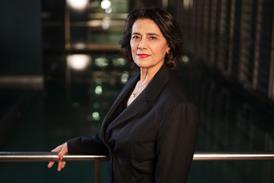
US filmmaker Brady Corbet, director of The Brutalist, was a prominent fixture of the 2024-25 awards season. And by Corbet’s side throughout the journey was his co-writer and life partner Mona Fastvold, a Norwegian filmmaker with whom he first collaborated on her 2014 directing debut The Sleepwalker. Nine months on from The Brutalist’s three Oscars and four Baftas, it is Fastvold who is generating awards chatter for The Testament Of Ann Lee, a biographical depiction of an 18th-century religious leader who leaves her birthplace in Europe to build a new life on the opposite side of the Atlantic.
Born in Manchester, England in 1736, Lee was a member of a religious sect whose ritualised practices of shouting, dancing and singing in tongues saw them come to be known as the Shaking Quakers. After emigrating to the New World in 1774, ‘Mother Ann’ established the Shakers as a utopian community based on celibacy, social equality and common ownership that considered its leader the second coming of Christ. “It’s an interesting period in history, when so many came to America for religious freedom and to experiment with new philosophical ideas,” says Fastvold. “I’d never heard of Ann before, so I wanted to lift her up and remember she existed.”
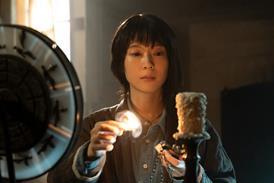
Co-scripted with Corbet and starring Amanda Seyfried as its titular heroine, The Testament Of Ann Lee began to germinate while Fastvold was finishing her 2020 film The World To Come. “I wanted to get a sense of the generation prior to the women I was telling a story about,” says the director of a drama that told of two 19th-century farmers’ wives involved in an illicit affair. “What was the experience of their mothers and grandmothers? I came across a hymn when I was looking for music to incorporate in the film. It was called ‘Pretty Mother’s Home’ by a freed slave called Patsy Williamson, and when I read about her it led me to Ann.”
Spanning Lee’s life from her childhood in northern England to her death in 1784, Fastvold’s film has an epic sweep that belies its modest $10m budget. According to its director though, it was vital the film gave a complete record of its subject’s 48 years. “I wanted to start with her in childhood and move through her entire life, so we could truly understand the ideas she was exploring,” she explains. “There is very little written about her childhood, so I did take some liberties.”
Also crucial in the director’s mind was that her film presented an accurate illustration of the Shakers’ rich musical heritage. “Because the Shakers worshipped in ecstatic song and dance, there was no way to tell the story truthfully other than to make it a music and movement-based piece.”
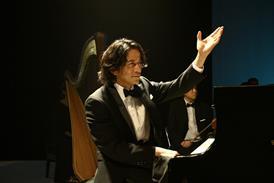
In tandem with The Brutalist’s Oscar and Bafta-winning UK composer Daniel Blumberg, Fastvold began sifting through the Shakers’ vast archive of sheet music and recordings to find the dozen or so hymns that would eventually feature in the film.
“We dove into the history of Shaker music and went digging for things that spoke to us,” she says. “Then Daniel would try and play it and sing it and we would start developing it for the characters. It was a lovely and symbiotic process. You work on intuition until something feels right.”
The hymns, viewed by Fastvold as “the heartbeat of the movie”, include embellishments by Blumberg she believes are in keeping with how they were conceived. “It’s in the spirit of folk music for it to be altered as it’s passed on, so this is our contribution to that history,” she explains.
Let’s dance
More challenging to recreate was the sect’s vigorous physicality, a feverish form of intense yet synchronised motion intended to purge sins from both body and mind. Fastvold turned to Celia Rowlson-Hall, a choreographer she and Corbet had worked with on his 2018 feature Vox Lux. “The most information we had about the movement was from drawings you can find of the Shakers dancing in these massive, circular formations,” reveals Fastvold.
“Celia was excited to dive into that and see how we could make space for the camera within the circle of movement, so that the camera could be with Amanda pushing through a crowd of 200 dancers. I’ve always yearned to find those moments where the camera and performer are moving in perfect harmony. Celia and I speak the same language, and she was excited about the same things I was.”
Having directed Seyfried in 2023 miniseries The Crowded Room, Fastvold had no doubt the actress — Oscar-nominated in 2021 for her role as Marion Davies in David Fincher’s Mank — would be up to the singing, dancing and accent-based challenges posed by the film. “I knew she would be good enough,” Fastvold says of her leading lady. “But I think she wanted reassurance that I could see all the pieces coming together. When you’re playing a character as complex as this, it’s a lot of hard work to get there. But she immediately wanted to do it and didn’t need any convincing.”
Also in the cast as one of Ann’s devoted young adherents is the New Zealand-born Thomasin McKenzie, with whom Fastvold had planned to work on another, unrealised project. “That film, Self-Portrait, didn’t get off the ground,” says the filmmaker. “But I got to work with her on this instead, which was wonderful and very different.”
Shot over 34 days in Hungary, Sweden and at the Hancock Shaker Village in Massachusetts, The Testament Of Ann Lee was financed independently — with Annapurna Pictures, Film i Väst and Mizzel Media among its backers — and had no distribution in place when it premiered at Venice Film Festival in early September. By the end of the month, Searchlight Pictures had acquired the film for North America and most international territories in a deal that reportedly ran to a mid to high seven-figure sum.
“The stories we choose to tell are radical and challenging, so it’s very moving to have this kind of support,” says Fastvold. “And it’s very exciting when people say they see a life for the film that can potentially have a wider reach. I am very proud of the film I made, but I never take it for granted that people are going to show up. So, it’s incredible that we have such a strong partner to help us bring Ann’s story into the world.”
Following its Venice bow, The Testament Of Ann Lee screened at Toronto, Zurich and London film festivals and is now gearing up for a limited US release on December 25. What would Lee have made of that scheduling decision? “I am sure she would be happy,” says Fastvold, with a chuckle. “I feel she would be tickled it’s coming out on Christmas Day.”



No comments yet