



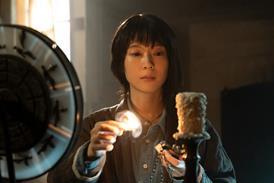
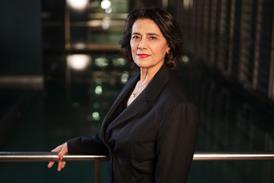
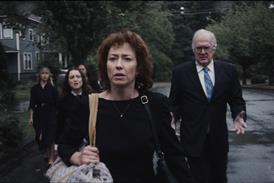
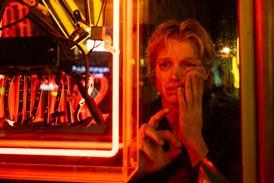



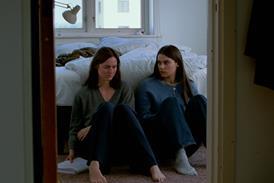

Paul Thomas Anderson’s One Battle After Another has proved a major hit with audiences, critics and awards voters alike, scooping 14 Bafta nominations – including best film, director, adapted screenplay and cinematography – and 13 Oscar nods, while grossing $208m in cinemas worldwide.
Released by Warner Bros and loosely adapted from Thomas Pynchon’s 1990 novel Vineland, Anderson’s 10th feature is a propulsive action thriller centring on Pat Calhoun (Leonardo DiCaprio), a one‑time bomb maker for the French 75 revolutionary group. After their leader Perfidia (Teyana Taylor) is arrested and rats out her comrades, Pat goes into hiding with their young daughter.
Sixteen years later, Pat is now Bob Ferguson, living off-grid in California, spending his days drunk and stoned, watching The Battle Of Algiers, and playing the overly protective father to resourceful, smart Willa (Chase Infiniti). But when Sean Penn’s overzealous Colonel Steven J Lockjaw discovers their whereabouts, he sends troops to track down and capture Willa. Father and daughter become separated, and Bob will stop at nothing to get her back, turning to Sensei (Benicio del Toro), Willa’s martial arts teacher, for help.
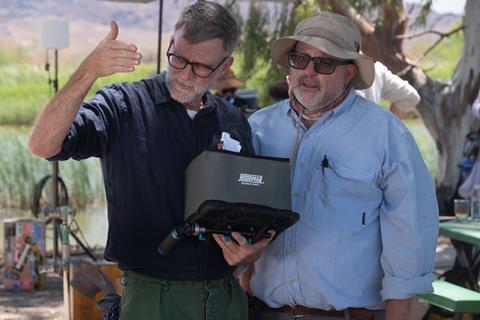
Screen International sat down in London with Anderson and his cinematographer Michael Bauman (who worked as gaffer on the director’s The Master and Inherent Vice, before shooting Phantom Thread and Licorice Pizza with him) to discuss four key sequences in the film.
One Battle After Another is dedicated to UK-born producer and first assistant director Adam Somner, who died in November 2024 of thyroid cancer.
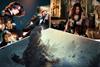
The bank heist
The scene: When the French 75 rob a bank, Perfidia kills a security guard and the group flee, leading to a police chase and, ultimately, Perfidia’s capture.
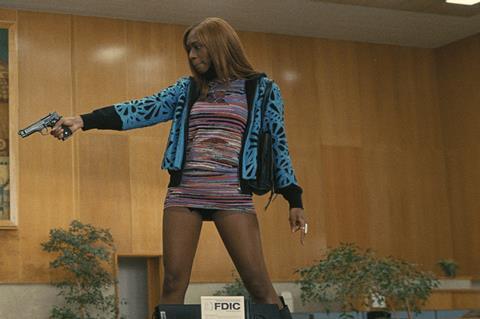
Paul Thomas Anderson: “You can see it as the beginning of the end of the French 75. Once you’re standing on a bank teller’s desk, announcing yourself, you are starting to believe your own hype. So that’s a step in the wrong direction. Not to mention the killing of the guard, an act of violence where everything changes. Before that, you’ve seen them running around with this Bonnie and Clyde energy; there’s a fun to it. Once somebody’s shot, there’s a tone change.
“No music leads us into the car chase. I hate to say ‘documentary’, because it’s pretty fucking far from a documentary, but there’s a roughness and a rawness applied to it. We wanted a city [to shoot in] that wasn’t well-known. Sacramento had a great scale and could have been any city in America. Great architecture, but nothing overwhelming. Terrific alleyways, sight lines, and we knew we would be there in the winter, which gives you an extra kind of bite.
“If you’re going to do a car chase, you have to do The French Connection. There are a tremendous number of new tools to shoot cars going fast, cranes, remote-control units – but we decided to strap the camera to the front of a car and have somebody drive really fast. And that person was [stunt driver] Allan Padelford.
“When we started shooting, there had been the Screen Actors Guild and Writers Guild strikes, so a lot of people didn’t have work. When it came time to do that scene, it was the creme de la creme of stuntmen who came to help [stunt co-ordinator] Brian Machleit and [assistant director/producer] Adam Somner. It was an all-star team, guys who can do things with those cars to give it immediacy.”
Michael Bauman: “It was all about getting the energy. So, right behind the bank, when they come running out and take off, there’s this big dip and those guys were like, ‘Oh yeah, let’s give it a bit more.’ It was insane. It was always: take it to 11. We were fortunate to have that level of talent behind the wheel. You can see it in the film.”
Bob’s frantic payphone call
The scene: As Lockjaw’s men close in, a stoned and inebriated Bob calls his old revolutionary contact to find out the rendezvous point to meet Willa. But his weed and alcohol-addled brain cannot remember the code words.
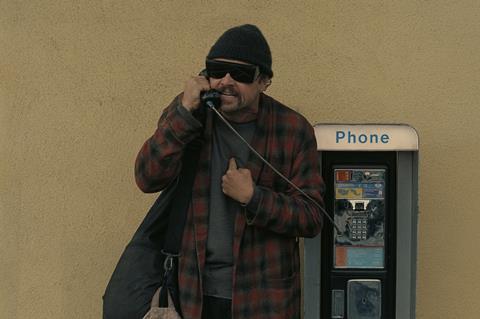
Anderson: “There was no debate about the bathrobe, hat and glasses [that Bob wears]. We were all in unison about that. However, I had seen this poncho, and the idea might be that he pulls this poncho out of his survival sack and puts it on. I was really high on it. Colleen [Atwood, costume designer] was kind of high on it. And Leo was like, ‘I don’t know. Isn’t the bathrobe working? I wouldn’t change.’ We were talking about it for days and days.
“The first thing we were going to shoot that would require a decision was the phone booth scene. I came in and our sound mixer, Jose Garcia, was picking at the poncho. He looked at me and said, ‘Cabrón, no fucking poncho.’ I was like, ‘Thank god, I don’t have to make a decision.’
“We shot Leo running into the market first. Then ran him through the market and got him outside in one shot. Then we concentrated on getting the phone call right. We shot it with two cameras – one in profile, one towards the wall. I remember feeling, ‘This is good, this is making me laugh,’ in a way that got me excited, because this was a defining moment within the movie. It felt like we got something quite strong.”
Bauman: “We did several takes of him coming around the corner, and there was one where he runs into the empty milk cartons and they all go flying. It was a lot of that, so many little things were happening. It was all about the external environment. We had the cars going by in the background. There are always layers.”
Anderson: “All credit has to go to my friend Dan Chariton, who plays Comrade Josh. He was in the office inside the supermarket, talking to [Leo] on the phone, so they’re really doing the scene together. What was nice about that was, Dan could come out, we could make notes, talk and go right back and do it again. It allowed for improv.
“There are actors who can completely lose themselves and it’s exciting to watch, but you can’t ask them to do anything technical. Leo can do it all. He can feel out of control, then hit marks that have been predetermined, which is incredibly rare. This man is like the LeBron James of acting.”
Bauman: “Every take, there would just be new stuff, little subtle things. Even how he hung up the phone and what he would say afterwards, just different every time.”
El Paso escape
The scene: Bob arrives for help at the dojo of Benicio del Toro’s Sensei. Sensei takes him to the apartment building where he is sheltering Mexican immigrants, before arranging for Bob to escape over the rooftops with Petey and his skateboard crew. Meanwhile, Sensei disappears into a hidden trapdoor.
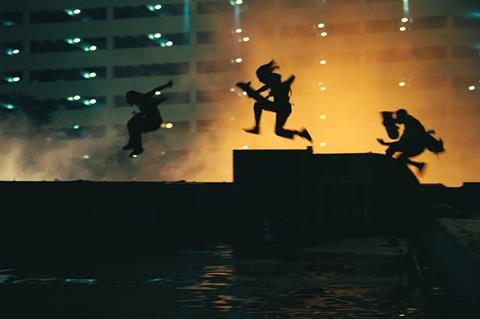
Anderson: “From Bob coming to Sensei to Bob falling off the roof, that chapter was the most under-construction for years and years and years, mainly because it was one of those things that, until you found the locations, I couldn’t quite [nail it].
“It was in the script with huge glaring holes. I had the rooftop chase, [but] the centre of the scene was more of a dramatic situation, where Bob shoots somebody because they come into the dojo and he’s panicked and doesn’t want to get caught. Someone’s dead, which was a huge shift. Sensei takes him back to his apartment, and the discussion becomes, ‘Why are we helping this guy out?’ It was just horseshit.
“Six or eight months before we started shooting that scene, Benicio went off to make The Phoenician Scheme, and said to me, ‘If [Bob] shoots somebody, I don’t know how much I can help him.’ I said, ‘Okay. That’s a good point. Let me think about that. And when you come back, we’ll figure out what we’re going to do.’ When Benicio turned up, we had five or six days before we started shooting and we invented new stuff, found the skateboarders and mapped it all out. The rooftops had been planned. You can’t just go up on a rooftop and shoot; it’s a safety hazard.
“Flo [production designer Florencia Martin] found this huge, empty space for the apartment and built the set inside, around those windows that Bob sits by and the trapdoor. It was one of the best sets I’ve ever seen, because it looked like people lived there and she made sure everything worked. Normally, there’s no water coming out of the faucet or the refrigerator isn’t plugged in. But Flo’s smart, so when Benicio improvises and gets a couple of beers out of the fridge, they’re cold, and he’s happy. And when he goes to wash his face, he’s got water.
“I could talk about that sequence forever, because for as long as I’ve been doing this, shooting it was the best time I’ve ever had. It was the most fun, free, meaningful, hilarious, and felt the most inventive. It was an incredible time in El Paso, not the least of which was watching Adam [Somner], who by that time was quite sick, guiding everything. We had a golf cart for him with a British flag on it.”
River of hills chase
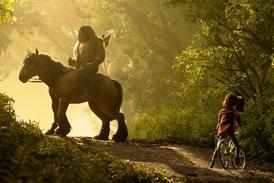
The scene: Willa speeds along a highly undulating stretch of desert highway, chased by Tim Smith (John Hoogenakker), who, in turn, is being pursued by Bob.
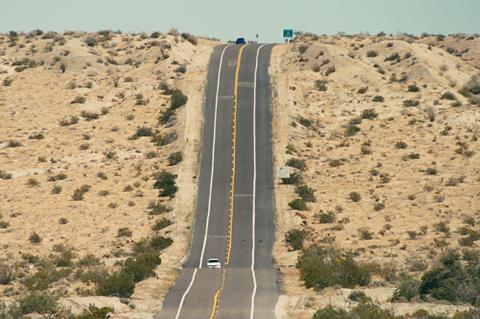
Anderson: “It was going to be a good, old-fashioned, boring car chase on a regular, flat road. But the discovery, while scouting those hills, of that stretch of road [part of California State Route 78] was purely by accident, because we were aiming towards another location in the middle of the desert. I’ve described it as a gift from the movie gods, [but] the movie gods only give you a gift if they see you scouting every fucking corner of California. Then they bless you with the gift. If you’re sitting at home, they’re not going to give it to you.”
Bauman: “It was a busy road because it was one of the few in that area and it’s not very wide, it doesn’t have any shoulders. So locking it down was critical. Then you have this 10-minute window when the road’s locked off and you’ve got to get as much as possible.”
Anderson: “We got our feet wet doing these clean points of view of the cars to get a sense of what it could feel like. We were in Allan Padelford’s car, which had a [camera] arm on it. Allan’s driving, I’m in the passenger seat. His son Kyle is raising the arm up or down, left to right. Colin [Anderson, camera operator] is next to him, tilting the camera. And Serge [Sergius Nafa] the focus puller is creating these massive focus pulls from the gravel on the road to the furthest point in the distance where one of these cars might be. We were all quite excited when we started doing it. Then we factored in the three cars.
“Chase was not driving. She did sometimes. But for safety and for how fast she needed to go, she was on a rig. The second car was a self-drive. That was Tim Smith, our bad guy. Willa has got two cameras mounted on her car. He’s got two cameras on his, on the side and in front. Leo has two as well. In the morning, we would shoot in one direction. The middle of the day we would try and do a lot of work inside the cars and wait for the sun to get in a better position.
“You can have a shot list. You can plan and plan and plan. But I don’t have the kind of imagination of an Alfred Hitchcock, who would create a situation where you’re shooting in the rearview mirror and there’s a glint of the sun off the front windshield of the cars coming after them. That was something that just happened.
“Steven Spielberg could do that. Alfred Hitchcock could do that. We had to get lucky to get it.”
Bauman: “All the natural stuff that happened was welcomed.”
Anderson: “We were editing with sound effects, music and picture simultaneously. It was a collective effort which was critical. [Composer] Jonny Greenwood’s initial contribution was a drum track isolated from an earlier cue. I laid that in and sent him the rough cut, and he layered in additional elements, strings that would get sharper and faster and play more behind the bridge of the violin, which creates this very piercing, suspenseful, agitating sound. We were constantly refining, giving different sounds to the road, seeing what was too far, if it was starting to feel like a Fast & Furious kind of thing, to keep it grounded, keep it dynamic.
“I knew [the sequence] was good. I knew people would have a good reaction. We did a screening, I think it was in Las Vegas, and somebody wrote [on the test cards] in big letters, ‘You cannot let people watch this film without warning them if they have seasickness. I was so sick during that.’”
Bauman: “All caps.”
Anderson: “I was, ‘Oh, this is the best review ever.’ It was like when my son saw Avengers: Infinity War, and they all died at the end and he said, ‘That’s the worst movie I’ve ever seen in my life.’ What he meant was, ‘It’s the best movie I’ve ever seen.’ This person was so angry. She said, ‘You cannot do this to people. You must warn them. I had so much anxiety.’ I was like, ‘Alright. That’s what it’s supposed to do.’”
No comments yet