











The director and star of One Battle After Another first mooted working together with Boogie Nights, then waited nearly three decades to actually do so
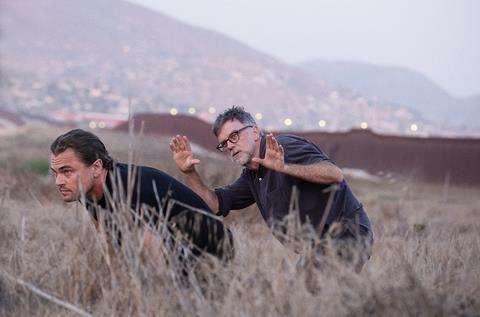
The first time Paul Thomas Anderson and Leonardo DiCaprio met was in the late 1990s when Anderson was casting his second feature Boogie Nights. The pair did not work together then, but remained friendly, waiting to collaborate on the right project.
One Battle After Another is the story of Pat Calhoun (DiCaprio), a bomb-maker for underground revolutionary group French 75. Later renamed Bob Anderson, he lives a perpetually stoned, paranoid existence off-grid with his daughter Willa (Chase Infiniti), after Willa’s mother Perfidia (Teyana Taylor) gave up the whereabouts of her fellow revolutionaries before fleeing to Mexico. Their lives are upturned once again when Colonel Lockjaw (Sean Penn) sends a battalion of troops after Willa and Bob for personal reasons.
Produced by Warner Bros and released worldwide in September, the film has grossed in excess of $200m worldwide, becoming Anderson’s biggest film. It has earned 14 nominations at the Critics Choice Awards and nine at the Golden Globes. Screen International spoke with Anderson and DiCaprio in November to discuss their collaboration.
When did you become aware of the other’s work?
Paul Thomas Anderson: I was first aware, like the rest of the world, when I saw This Boy’s Life, which I went to see for Robert De Niro and [director] Michael Caton-Jones and the other people behind the scenes. Art Linson produced it, right?
Leonardo DiCaprio: Yes.
Anderson: It had a pedigree for a film I wanted to see. And I walked out thinking, “Who the hell is that?” I remember asking John Reilly, who I had just met, “What do you think of this kid?” And he said, “I’m working with this kid right now [on What’s Eating Gilbert Grape].”
After we talked about doing Boogie Nights, Leo was nice enough to say, “Look, I’ve worked with somebody. I know you probably think he’s just the underwear model…” He was talking about Mark [Wahlberg] and he was right. He was kind enough to suggest Mark when no-one was taking Mark seriously. They were underestimating him as an actor, and Leo was the first to point that out to me.
DiCaprio: I met Paul after Hard Eight and we talked about Boogie Nights. Then the revelation of that film came out, which became a generational movie for me and my friends. I remember putting a CD into my Yukon truck and listening to the soundtrack. It was the arrival of one of the seminal filmmakers of our generation. Then I got to watch his body of work unfold. I’m a massive fan, but it was the late, great Adam Somner, who we both worked with, who was probably the greatest first assistant director of all time. I’d done four films with him, you’d done…
Anderson: Seven or eight…
DiCaprio: …who I saw worked miracles on set, who said to Paul, “I just worked with Leo. I just worked with you. It’s time you guys get together.” And we got to do this film together with him. He was the glue. [Somner produced One Battle After Another; he died of cancer in November 2024 and the film is dedicated to him.]
Had the pair of you talked about working together again in the years since Boogie Nights?
Anderson: We did, but nothing concrete. The way I was working was, I was following my impulses and stories I had to tell. And where was Leo going to fit in Phantom Thread? We would meet with the desire of, “Is there something?” But the patience paid off.
DiCaprio: I keep thinking about how he came up with this concept 15 years ago and, as Perfidia says in the movie, “15 years later, very little has changed.” He’s made a movie that deals with our times, and, in such an acute way, tapped into something — at least, people I’ve spoken to about this film [concur] — that deals with extremism and the idea none of us can agree on anything. He almost created this Star Wars-like world.
When I first read the script, I was like, “Oh my god, you have bounty hunters, you have the dark side, you have the chosen one, Obi-Wan.” There’s such history and richness to even the smallest characters. I only say that to say I’m glad this was a movie we got to do together. Because there was so much intricate thought put into it by Paul, for so many years, and then we got the band together.
Initially, you wanted to make a car chase movie, then an adaptation of Thomas Pynchon’s Vineland, then the story of a female revolutionary. How did it all finally come together as One Battle After Another? And did you have Leo in mind when you started writing it?
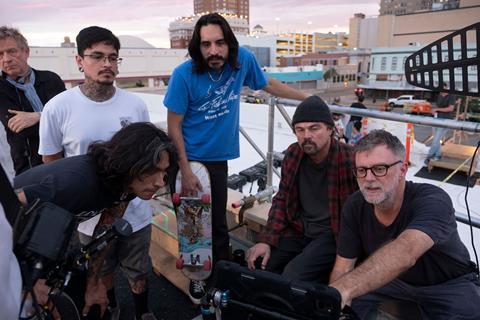
Anderson: No, when I started writing it, it was so long ago, it was a different time. Honestly, there’s pieces of this I wrote in 1999. I think the journey, the best way I can put it is, I had a great time with the material, and from time to time [I’d ask myself], “Do I have an eight-part miniseries kind of thing?” Television had started to become very fashionable. And I thought, that’s maybe an interesting way. Only to realise I didn’t have enough material, and I didn’t want to learn how to tell a story that way.
I started to get very serious about it right after Phantom Thread, which is maybe seven or eight years ago. Back then is when it started to feel a little bit more realistic, that I would have to organise all the material I had and shape it into something that was filmable. Two things happened in between: Licorice Pizza and [Leo] doing Killers Of The Flower Moon. But it was good to have that much runway — for both of us. It feels like we’ve been talking and thinking about it since that time.
How was the collaboration, Leo? I remember asking you the last time we spoke, “Are you ever going to direct?” And your reply was, “Why would I want to direct, because I can work with all these great directors and I enjoy the process of creating characters.”
DiCaprio: Less so than that, I don’t think I could do films justice in the same way. One thing I regret after working with Marty [Scorsese] for all these years is not watching his process behind the camera, because I’m so busy doing what I’m doing.
Did you get to watch Paul work?
DiCaprio: Maybe a little bit more than usual. There’s a lot of things I could say about his process that’s unique. There’s this sort of homespun, homemade approach to making movies, a very finite amount of crew members on set, workshops beforehand that are rehearsals that lead to things, that evolve into attributes of our character. We did a lot of that with Chase Infiniti and developing the father-daughter relationship. Locations being huge in this film, being on real locations that — I’m a California resident — I’ve never been to.
When I got to northern California, I understood who Bob was. When I got to sit in the house he lived in, I understood his paranoia. And going to El Paso. Being with those communities, working with real shop owners, being able to work with real correction officers and all that stuff, the ecosystems he creates — as actors, you just throw yourself into these worlds. Paul’s got a lot of talents, but his ability to listen to a multitude of different ideas coming his way, then pick one, is astounding. His bullshit detector is pretty profound.
Anderson: You got that? [laughs]
Did Leo surprise you in this movie?
Anderson: Fuck yeah. That’s what you go to any great actor for. That’s the joy of it. That’s the pleasure of discovery, every day. I already knew he was a great improviser. I learned that from John Reilly. John Reilly is an incredible improviser. So, to get a compliment from John Reilly about improvising was high, high praise.
You’ve said Leo’s character is based on an amalgamation of different revolutionaries from the 1960s. How did you craft the character between you?
Anderson: Well, the crafting is in whatever the first act is, because when you find him [later, as Bob], he’s sort of flatlined. So, you have those kinds of nuts-and-bolts realities of who this person is. The interesting thing we talked about most was that we only had one scene to see Willa and Bob together. You have one bite at the apple. And when we’re discovering them, they’re not showing each other how much they love each other. You’re seeing two people who have outgrown [each other] or she has outgrown him.
DiCaprio: There’s a generational divide there. When I got to [Bob’s] home, there were so many answers about him that were squished into these few minutes. The fact he’s watching The Battle Of Algiers for the fiftieth time, the fact he’s got a dugout tree that Paul had visualised where he has his survival kit, you feel the baked-in history with all these characters. They live a life offscreen and you pick up these small details which define the characters onscreen. We got to see some films. We got to see Running On Empty, The Battle Of Algiers, The Lion In Winter. Of course, The Big Lebowski…
Anderson: Dog Day Afternoon.
DiCaprio: Dog Day Afternoon was a big one for me. Al Pacino’s performance in that. Then the book Days Of Rage [by Bryan Burrough], where there’s a bomb-maker in it and you talk about the aftermath of what a man’s life would be like, post being a radical, a revolutionary, living in a state of paranoia and guilt for his sins of the past.
Like Paul said, we had this one slice of the apple. Somebody who read the script said, “Wow, this is a harsh relationship he has with his daughter.” Because you want to create the beatific image of a father loving his daughter unconditionally. But they’re fighting, they’re screaming at each other. She’s the mother figure. He’s drunk. He’s attacking her friends that are going to the dance. But that’s a slice of life and makes you feel, maybe that’s the relationship I have with my daughter. A lot of my friends said that when they watched it.
Let’s talk about Chase, who plays Willa. This was her first film. Did it take a long time to find her?

Anderson: About six or seven years ago, after Phantom Thread, I was looking for a girl to play that part. Just quietly moving that ball down the road, for if I just saw something, it would have been, “Drop what you’re doing, let’s go.” But I didn’t, and it probably led to me going off to do Licorice Pizza. But Cassandra [Kulukundis, casting director] had been looking for years. Chase came out fully formed. Sometimes people do.
DiCaprio: There was an incredible maturity to her. But she also retained this girl-like innocence. That draws you on a personal level to say, “I want to protect this person.” Along with the radicalism she gets from her mom and the fierce fighting spirit. So, we did workshops, she did martial arts classes.
What about Teyana Taylor who plays Perfidia? What had you seen that made you want to cast her?
Anderson: The performance that pushed it to the top for me was in a film called A Thousand And One. I was aware of Teyana and her aura. I’d seen her dance in that Kanye West video, which makes you blush and cover your eyes. Just fucking throwing her body around in a way that’s so magnetic and wild. But it’s her movie. She’s the centre of it.
DiCaprio: It’s a smaller part, but she leaves carnage for the three leads, we’re all living in the wake of her actions. I think Paul knew she needed to have an explosive impact. And the great thing about Teyana is her ability to take the reins, improvise and do things that are completely unexpected.
Anderson: To play that part requires a real fearlessness to play a character that makes such selfish decisions, [who] risks alienating an audience for the choices she makes. She’s a very self-consumed character, and, like Leo said, leaves carnage in her wake. But you need somebody who is going to hover over the film like a ghost, that everybody’s picking up the pieces. Not least her only child.
Sean Penn made some bold choices as Lockjaw. How much was him and how much you? Chase said she was terrified of his character at times.
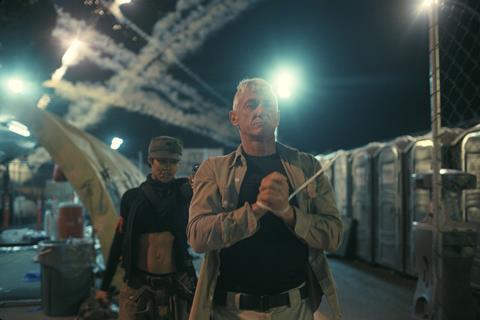
Anderson: Well, I wrote the name and I wrote the part, but it’s all Sean. Sean’s understanding of military types. He knows that world very well, and I do not. I was a bit of a tourist in that world, trying to understand some of that stuff, and he would, ironically, ground it, as kind of bizarre a performance as it is. Maybe it feels unhinged. It’s very realistic in terms of the details and military movements, how you could pull off something like he’s attempting to pull off. All that stuff made sense to Sean.
DiCaprio: I didn’t get to work with him much, except for one scene, but I remember [watching] the dailies and some of his performance really helped me because I understood the magnitude of these impending dark forces that were coming to get my daughter. It upped the stakes and the paranoia for me. Sean is one of the actors I’ve admired my whole life. He brought so many layers to that character.
There’s been a lot of doom and gloom recently about the current state of the film industry. But One Battle After Another, Sinners, Weapons, three original Warner Bros movies, all delivered at the box office last year. Do you still have faith in the filmmaking system?
Anderson: If you have a year where you have Sinners and Weapons, and that’s not even counting F1, which I thought was fantastic. Not to mention some of the smaller films that have come out, Eddington and Bugonia and Sentimental Value. And we have a year where Richard Linklater has two movies. Everybody’s always fucking complaining. I am optimistic, but that’s my nature.
DiCaprio: I am optimistic the industry will keep coming up with original ideas. In what format? I don’t know. [Last] year has been a very interesting one. To me, there seems to be a shift to maybe Christmas and summer as being the time to go to movie theatres. How things are going to progress is a huge mystery to all of us. But hopefully, whatever the future looks like, it has room for these types of movies.
Is this the start of a beautiful friendship?
Anderson: Well, it was already a beautiful friendship, but hopefully it’s the beginning of a long working relationship.
DiCaprio: Absolutely.
So, what’s next?
DiCaprio: I’m doing a movie with Marty and Jennifer Lawrence based on a book called What Happens At Night [by Peter Cameron].
Anderson: I have daydreams, but I don’t have anything yet.





No comments yet