







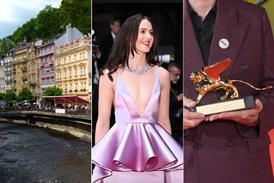


The presentation of the Golden Lion to May el-Toukhy for Woman Unknown at the prize ceremony for the 2026 Venice Film Festival on Saturday night was the crowning moment of an event that soared to several notable highs but experienced its share of challenging moments.
Screen captures these in seven talking points.
Women known
Too often, being in the Palazzo del Casino press conference room meant hearing from a succession of men. Nineteen of the 21 Competition titles – which receive individual press conferences, along with select Venice Open (formerly out of competition) titles – were directed by men, while the programme featured lengthy documentaries about men including Alex Gibney’s near-four-hour Musk and Luca Guadagnino’s seven-hour-plus Joie De Vivre on Bernardo Bertolucci.
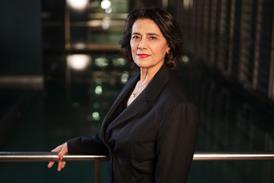
“I guess it’s just finally become clear that men make better movies than women do,” quipped Competition jury president Maggie Gyllenhaal at the opening press conference.
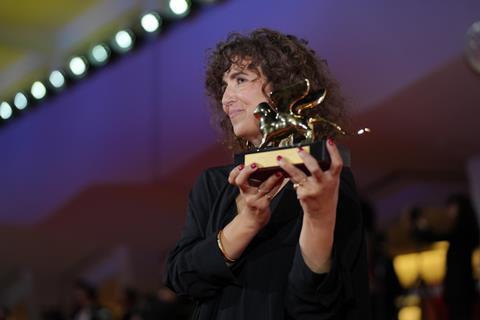
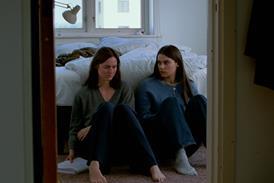
The script was flipped somewhat at the closing ceremony when May el-Toukhy’s Woman Unknown won the Golden Lion. In her speech, el-Toukhy referenced the “lack of equal opportunities for female filmmakers in our industry”, adding that the film was “incredibly challenging to make financially, logistically, emotionally”.
Of the women who made their voices heard at the festival, Ellen Burstyn was a powerful presence across the week, appearing in Kornel Mundruczo’s Place To Be, accepting an honorary Golden Lion and quoting her Oscar-winning role in Alice Doesn’t Live Here Anymore: “It’s not some man’s life that I’m helping out with.”
One of the most eloquent moments of the 12 days came from Ashley St. Clair, contributor to Gibney’s film and mother to one of tech billionaire Elon Musk’s children. The writer and influencer spoke with poise about her experience and participation in the film, including turning down $40m from Musk to stay quiet (which Musk denies). “I want to set the example for my kids that you should never take being materially comfortable over speaking the truth,” said St. Clair.
Sales caution
Venice is not a major market festival, but a lack of significant deals on the Competition titles was still of some concern. Andrea Pallaoro’s The Echo Chamber set key international deals the day before its premiere, while Mohsen Gharaei’s Horizons entry Falling House also sold, both for Paradise City Sales. Marco Bechis’ Competition title Back To Buenos Aires sealed deals the day after the closing ceremony. However, a standout sale is still to emerge. With several Venice films heading to Toronto before going on to San Sebastian and London, buyers were likely waiting for a second look from festival audiences before putting their money down.
Crowded calendar
Venice, the world’s oldest film festival, has long been in competition for attendees with Toronto. The events typically overlap by around three days, with those heading to Canada also needing travel time. The crossover was exacerbated this year by the new TIFF market; some sales agents with films in Venice shortened their stays to make it to Toronto.
The Lumière Summit near Nice, France also posed a challenge this year. It attracted A-list names icluding Juliette Binoche, Isabelle Huppert and Richard Linklater, and top executives including Netflix’s Ted Sarandos and NBCUniversal’s Donna Langley. Screen also heard of two senior executives at national film funds, both with films in Venice, who left the festival before their premieres in order to attend the Lumière Summit. Venice has many unique qualities to offer the international industry, but like any long-running event, there is now a need to refresh its offering to keep attendees on the Lido.
UK talent shines
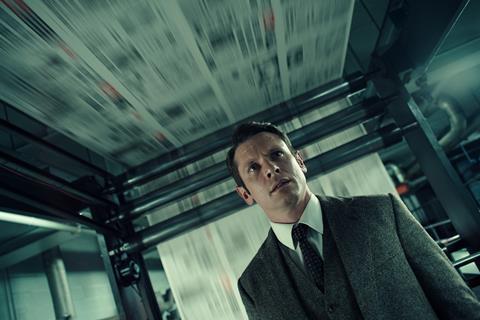
The absence of many big-ticket US films was filled by a decent UK showing, with several titles bridging the Atlantic in their construction. The festival kicked off with Danny Boyle’s Ink, a UK story about the relaunch of The Sun newspaper in the late 1960s, produced by Tessa Ross’s House Productions with US firm Media Res, and financed by Studiocanal. It was followed by Martin McDonagh’s dark comedy Wild Horse Nine, produced by Blueprint Pictures and Chile’s Fabula in association with Film4, for Searchlight Pictures.
Further well-received UK titles included Theo Rollason’s documentary Queer Edward II, showing Derek Jarman’s role in the protest movement around queer life in the early 1990s, backed by the BFI Doc Society Fund; and late Competition entry NAZA, produced by Jim Wilson’s JW Films.
UK actors also took centre stage, including Jack O’Connell and Foy in Ink; Robert Pattinson, as star and producer of Lance Oppenheim’s Primetime; Stephen Graham in Florian Zeller’s Bunker; and Orlando Bloom in Werner Herzog’s Bucking Fastard.
Lido by Lido
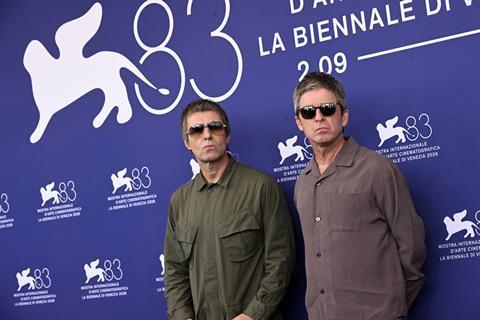
Two UK music icons drew the biggest crowds. The Saturday evening world premiere of Will Lovelace and Dylan Southern’s Oasis documentary Don’t Look Back In Anger was a euphoric occasion. Brothers Noel and Liam Gallagher skipped the film’s press conference, but were in good spirits on the red carpet and then post-screening, showing off their resurrected friendship.
The screening itself was a celebration of Oasis fandom, and the band’s many Britpop standards that feature in the Disney documentary. Audience members sang along to hits including ‘Supersonic’, ‘Rock ‘n’ Roll Star’, ‘Wonderwall’ and ‘Champagne Supernova’, while many a tear could be heard in the moments about the brothers’ rekindled bond.
The excitement among crowds both outside and inside the Sala Grande rivalled that for acting stars Harry Styles and Timothee Chalamet in recent years and the energy was continued at a UK premiere just two days later in London, showing just how well a Venice premiere can work.
Numbers
Festival press office head Paolo Lughi cut in at the end of the opening press conference to inform journalists that pre-festival ticket sales were up 14% on the year before at that stage. Good news for the festival, if not always felt on the ground. The Lido did not feel notably busier, and if anything occasionally seemed on the quieter side (Oasis excepted).
The Venice Production Bridge industry platform saw fewer visitors, with 3,000 accredited attendees down 11% from 3,385 last year. Industry Gold passes were down 5% to 1,371; trade passes down 15% to 808; and professional ones down 19% to 809.
The Venice Gap-Financing market saw a 12% increase in submissions but a slight drop in selected projects, from 54 to 51. It was a similar story at the Venice Production Bridge, which had eight more submissions than last year with 83, but two fewer selections with six.
“Temporary network glitch”
An internet outage struck across the city of Venice on the afternoon of the first Saturday (September 5). The WiFi in the press room went down entirely, sending delegates out into the scorching sunshine to try for cell service, only to find that was also non-operational. Immediate issues included ticketholders unable to download their required QR codes from their emails, PRs unable to access their film materials for imminent premieres and restaurants around town temporarily unable to take card payments. The service was back to normal after a couple of hours, with the outage described as “a temporary network glitch” according to the festival.
Air traffic control issues at UK airports affected departures for many delegates in the second week, including those changing in London on the way to Toronto. Another minor grumble was around having to pay an – admittedly reduced – fee for the waterbus services around the city, previously covered by a free ticket. The communication of this was also an issue, with one journalist shelling out for individual tickets on each journey because they had missed the email about the discount offer.



No comments yet