














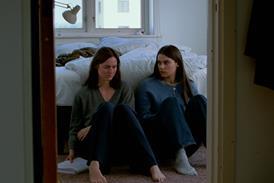

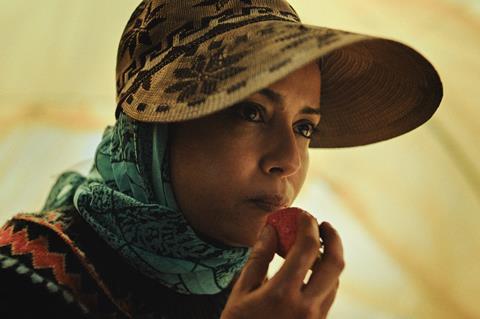
Laïla Marrakchi’s Strawberries follows two women who leave their native Morocco and cross over to neighbouring southern Spain with dreams of good pay and a better future for themselves and their families. They start working on a farm in Huelva, bonding with other female immigrant workers but confronting harsh working conditions and abuse.
Casablanca-born, Paris-based Marrakchi started developing the project with Morocco’s Mont Fleuri Production. Paris-based Lumen Films joined as lead producer when it became clear the scope of the project warranted a bigger structure. Further co-producers are Spain’s Fasten Films and Belgium’s Mirage Films. Lucky Number handles international sales.

Strawberries shot in Morocco in Larache and Tangiers, and the Andalusia region of Spain in Palos de la Frontera, Seville and the city of Huelva. The international crew featured French, Spanish, Moroccan and Belgian craftspeople.
“We did not shoot in a studio. It was important for Laïla that the film was genuine, organic, so we used natural locations,” says producer Juliette Schrameck of Lumen. “We put everything through a credibility test because we wanted it all to be genuine, from the extras to the supporting roles and locations.”
Nisrin Erradi, best known for Nabil Ayouch’s Everybody Loves Touda, leads the cast alongside Hajar Graigaa, Fatima Attif, Hind Braik and Larbi Mohammed Ajbar. Spain’s Itsaso Arana plays the lawyer who tries to help the workers.
“Communication flowed during the shoot, between Arabic, French, Spanish and English. It was our little Babel,” says Marrakchi. “It’s natural for me to be surrounded by different languages. After all, language is one of the topics of the film.”
Accessing the tax incentives and funding in Spain and Morocco was a “straightforward” process, says Schrameck. In Spain, “the minority grant from the ICAA [the Spanish film body] is one you apply for before the shooting. The same goes for the grant from the Centre Cinématographique Marocain [CCM]”.
Tax ‘no-brainer’
The production also accessed Spain’s 30% tax rebate. For a co-production such as Strawberries to qualify, at least 50% of the Spanish portion of the budget must be spent on Spanish elements.
“[It] was easy in this case because part of the crew and cast, as well as the locations, were in Andalusia,” explains the local co-producer Adrià Monés of Fasten Films, which boarded the project in 2021 after talking to Schrameck about the project in Cannes. “We love Laïla’s work,” says Monés. “It fitted right into the kind of films we like to produce — directed by women and with a social theme. Being a story set in Spain, it was a no-brainer.”
Strawberries marks the return to feature directing for Marrakchi after a long period working on TV series. Her first film Marock premiered in Un Certain Regard in 2005.
The filmmaker first heard about the film’s topic through a journalist friend who was writing about Moroccan pickers in Andalusia for The New York Times.
“I went with her and met a lot of workers,” recalls Marrakchi. “It was an inspiration, but I didn’t want to follow the exact story. We wanted to make a fiction film and focus on the characters, humanise these strong women who have no choices, who work incredibly hard, who have the courage to work abroad and show their interactions as a group.”
Grounding Strawberries in the lived experiences of these women was key for the director and producers. “Filming in real greenhouses and being as close as possible to the reality of these women — with extras who were real strawberry pickers — was important for all the crew,” says Schrameck.
The costumes were also inspired by what real pickers wear. The same applied to hair and make-up, designed by Spain’s Zaira Eva Adén, who worked on Oscar-nominated Sirât, which also shot in Morocco and Spain and involved Mont Fleuri.
“Making an important film like this one is the reason why we do this job,” says Schrameck. “Laïla was brave to decide this film should be made, inspired by a true story, and I followed her artistic intuition.”





No comments yet