












French filmmaker Stéphane Brizé explores corporate conformity and the human cost of capitalism in his TIFF Special Presentation A Good Little Soldier.
After a romantic detour with 2023 Venice premiere Out Of Season, starring Alba Rohrwacher and Guillaume Canet, French filmmaker Stéphane Brizé is back to business – and Venice’s main competition – with his 11th feature, corporate drama A Good Little Soldier.
The film follows Brizé’s trio of socio-political workplace features The Measure Of A Man and At War, which competed at Cannes in 2015 and 2018, and 2021 Venice competition title Another World. Rohrwacher plays an HR executive caught between her ethics and a toxic corporate hierarchy, while Vincent Lindon, who earned the best actor prize in Cannes for The Measure Of A Man, plays the CEO, marking his sixth collaboration with Brizé.
A Good Little Soldier world premieres in Venice on September 9 before playing as a Special Presentation at TIFF a week later. It is produced by Sidonie Dumas for Gaumont in co-production with France 3 Cinema; Gaumont handles international sales and will release the film in France on November 25.
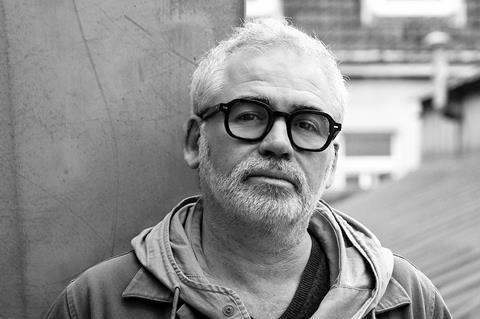
While The Measure Of A Man, At War and Another World where never conceived as a trilogy, their focus on workplace culture has placed them in that frame and, says Brizé, “each film led to the next”. He cautions, however, against viewing A Good Little Soldier as a fourth instalment. “Those films were driven by anger,” he says. “This film is fuelled by a feeling of revulsion at a cynical and violent system, which gives it a more caustic — and comedic — edge.”
What does connect all four films is their focus on “the consequences for individuals, from factory workers to executives, of today’s endless, morbid pursuit of profit.”
“Capitalism is an inherently masculine system”
While A Good Little Soldier moves through the different layers of its central company’s hierarchy, its focus is Carla (Rohrwacher), an HR executive caught between protecting employees and meeting the demands of her superiors. For Brizé, the contradiction is embedded in her job title. “The simple fact that we talk about human ‘resources’ already tells us there is a problem,” he says. “We manage financial resources and material resources, but when we talk about ‘managing’ human beings, we turn people into variables.”
The film is set almost entirely within the company’s walls to mirror Carla’s sense of confinement. “She is nothing but a working woman. Everything outside work – her friend, her son, her ex-husband – is dematerialised. It places the audience inside her psyche, inside the prison she has built for herself.”
Gender disparities are central to the film, with its senior executives notably all men. “Capitalism is an inherently masculine system, steeped in the language of strength and warfare,” says Brize. “The women who rise within it, like the men, lose themselves in the illusion of their own strength… If women from Carla’s generation have been able to attain positions of corporate power, it means they have conformed to the rules of a game run by men.” In that sense, he adds, “It’s a feminist film.”
Brizé lets the film’s situations speak for themselves rather than adopt an overtly political stance. “I’m not interested in preaching to the converted,” he notes. “I want to reach those who aren’t.” That objectivity extends to his characters, with Carla and her colleagues within the corporate chain of command “both perpetrators and victims” and even Lindon’s brutally blunt chief exec afforded moments of vulnerability.
Out of office
Brizé sees parallels between his feature’s corporate world and an increasingly consolidated film industry shaped by algorithms, cost-cutting and precarity. “Cinema is an art but it is also an industry where an aesthetic dictatorship is taking shape,” he says. “So many things look alike on streaming platforms – they are places of abundance but not of diversity. That is what worries me most.”
Amid such homogenisation, Brizé still believes socially engaged cinema can make a difference. “If cinema could change capitalism, Ken Loach’s films would have done it by now,” he says ruefully. “But perhaps the system would be harsher without our films. I see mine as a small flashlight in the dark – like driving at night with the headlights on, something that might help prevent an accident.”
Against this backdrop, Brizé quips, “There are two ways to remain optimistic today: denial and Xanax.” He adds: “We all need some degree of denial to function within capitalism. We compartmentalise. I’m flying to Venice and Toronto despite the impact on the climate. And in the corporate world, when we’re well paid and rewarded for our supposed ‘courage’, denial comes easily.”
Heading to Venice competition for the fourth time and TIFF for the sixth, Brizé believes A Good Little Soldier is more universal than his previous workplace films. “It is perhaps my most psychologically violent film but the humour makes it more palatable,” he explains. “I structure my films like thrillers or crime films, with real stakes because I don’t want to bore the audience. I want them to be accessible.”
Brizé is already back to work writing his next feature, which he describes as a “political, intimate and emotional” story about a father and his autistic daughter navigating our capitalistic world. “This world isn’t a place for young adults who aren’t built for a life of achievement and making money – it doesn’t allow them to exist,” he says. “So, the question as a parent becomes: ‘What will happen when I’m no longer here?’”




No comments yet