





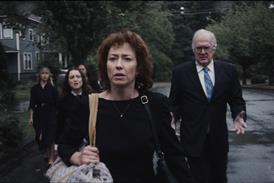








Moura stars in Kleber Mendonca Filho’s Brazil Oscar entry, a political thriller set in 1977 during the country’s military dictatorship that resonates in the modern climate
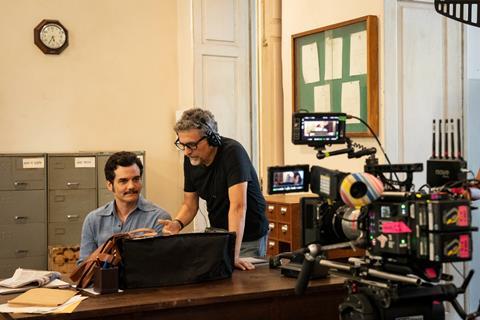
Wagner Moura is looking surprisingly fresh, considering he is taking a break from performing on stage in Brazil to attend the BFI London Film Festival in support of The Secret Agent. But the affable Brazilian actor is clearly driven by passion for both projects, and for good reason.
The play, which he co-adapted, is The Enemy Of The People, Henrik Ibsen’s powerful account of a doctor whose determination to go public about pollution in the local spa pits him against the town leaders. It is a character that chimes with the one he plays in The Secret Agent, and with Moura himself, a political animal who has experienced his own problems for speaking truth to power.
The Secret Agent is set during Brazil’s military dictatorship, with Moura playing a university professor hunted by hitmen because of his conflict with a corrupt federal official and businessman. Writer and director Kleber Mendonca Filho created the part specifically for the actor. By all accounts the pair are brothers in arms, bonded originally by being from northeast Brazil – Filho from Recife, where the film takes place, and Moura from Salvador – and then by their opposition to former Brazilian president and dictatorship defender Jair Bolsonaro.
“I have known Kleber for many years,” says Moura. “I met him in Cannes in 2005, when he was still a critic and I was there for the first time with [Sergio Machado’s] Lower City. We hit it off and became friends. Then I saw his short films, and then I saw Neighboring Sounds and I was like, ‘Holy… this is one of the greatest Brazilian films I’ve ever seen.’ I became sort of obsessed to work with him.
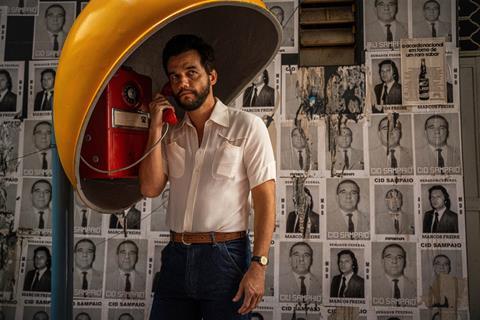
“Then, under Bolsonaro, we both suffered consequences for being vocal against the government. My film Marighella [Moura’s feature directing debut] was censored. It was in Berlin in 2019 but was only released in Brazil in 2021. They just cut all the ways I had to release the film there.
“Kleber had his own problems, so we were together in this thing,” continues Moura. “The genesis of The Secret Agent was that time under Bolsonaro. I ended up being one of the producers because I knew exactly what Kleber wanted to talk about. This is a film about someone who is attacked for sticking to his values.
“This is what a dictatorship, an authoritarian regime is – people’s lives start to be in danger just because of who they are.”
Moura was born in 1976, a year before the film’s setting. He had already researched the period when directing Marighella, a committed, punchy drama about the poet and communist militant Carlos Marighella, who died opposing the dictatorship.
“And listen, the dictatorship ended in ’85. I remember when I was a kid, the way my parents would talk to each other sometimes,” he says, lowering his voice to a whisper. “Like, why are you talking like that? Once I said a word that I’d heard somewhere, ‘communism’, and my father was, ‘Hey, don’t say this word here.’ Not because he was against the word, but he was afraid of being in trouble.
“So I remember the vibe. I also remember the kind of shirt that my father was wearing, the buttons and the hairy chest, the way he would put his pack of cigarettes in his left pocket. I have a pretty accurate memory of that time.”
Both vibe and styling are to the fore in The Secret Agent, a hybrid affair that combines tense political thriller with a delicious strain of absurdity, including a sequence involving a severed leg that marauds Recife, attacking anyone deigning to get amorous in public.
“It’s not by chance that magical realism comes from South America. Crazy shit happens,” says a smiling Moura. “Of course, there’s no hairy leg, it’s a metaphor for police brutality and everything, but it doesn’t seem crazy to me.”
Rising star
The actor’s career started on stage in Salvador. “I didn’t even imagine I would go to Sao Paulo or Rio,” he recalls, let alone having an international career. But by his early 20s, he was appearing in Brazilian cinema and television, including some of the films – Lower City, Walter Salles’ Behind The Sun, Hector Babenco’s Carandiru – that were synonymous with the post-dictatorship renaissance in Brazilian cinema.
The calling card was Elite Squad, Jose Padilha’s controversial exposé of police corruption, which won the Berlinale’s Golden Bear in 2008. “Everybody in Hollywood saw Elite Squad, producers and directors, and because of it I got an agent in the US,” says Moura, adding that it was director Neill Blomkamp’s excitement about the film that led to Elysium, his first Hollywood role.
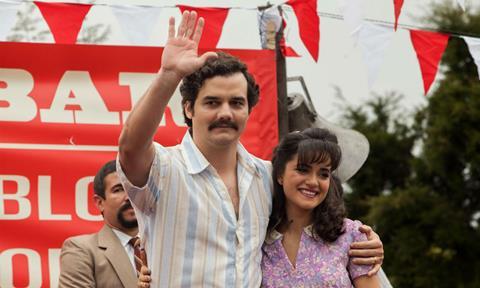
Notable projects since include Olivier Assayas’ Wasp Network, Alex Garland’s Civil War (“I felt that I was in my field, a political film, something I could contribute to”), Netflix’s Narcos, in which he played drug lord Pablo Escobar and remains “the most popular thing I’ve ever done”, Prime Video series Mr. & Mrs. Smith and Dope Thief.
The Los Angeles resident has a home in Salvador and retains a Brazilian dimension to his work. “This is who I am. Even when I’m working in the US, the more Brazilian I am, the more I feel empowered. I don’t understand actors that come from other places and try to blend in, become an American actor. What makes me interesting, I think, is the fact I’m from Salvador.”
There is a moment in the Philadelphia-set Dope Thief where Moura’s addict and conman, finding himself in a situation way over his head, wonders, “Is this a sign? Should I go back to Brazil?” He nods enthusiastically at mention of this. “Every character I play, I make Brazilian. No-one writes a character to be Brazilian, right? I improvise those lines.”
Moura is preparing to direct his second feature, Last Night At The Lobster, which he describes as an “anti-capitalism Christmas movie” about the employees of a New England chain restaurant who are fired a week before the holidays. Moura plays the manager facing a tough decision, and is joined by previous co-stars Brian Tyree Henry (Dope Thief) and Elisabeth Moss (Shining Girls).
Meanwhile, The Secret Agent – which won Cannes prizes for both its director and star, and was acquired by Neon for North America and Mubi for multiple international territories including the UK – was released in Brazil in early November, unencumbered by political forces.
“I’ve never been more proud of Brazilian democracy than I am right now,” beams Moura, who draws comparison between the storming of government buildings in Brasilia, when Bolsonaro challenged his 2022 election defeat to left-winger Luiz Inacio Lula da Silva, and the Capitol Building in Washington DC, when Donald Trump disputed his loss in 2021.
“Brazil did what the Americans didn’t. Bolsonaro is in jail. So, you see a film like The Secret Agent and you think maybe that’s worth it – stick with your values because things might change for the best.”






No comments yet