















Netflix’s UK earnings are boosting the local ecosystem and do not “disappear into a black box in California,” the streaming giant’s Europe, Middle East and Africa (EMEA) content chief has insisted.
Larry Tanz said that UK revenues are “recycled into more British investment, more stories, more jobs and more infrastructure”. Last year, at the Edinburgh International TV Festival Netflix was accused by Channel 4’s Louisa Compton of being a “TV tourist” in the UK.
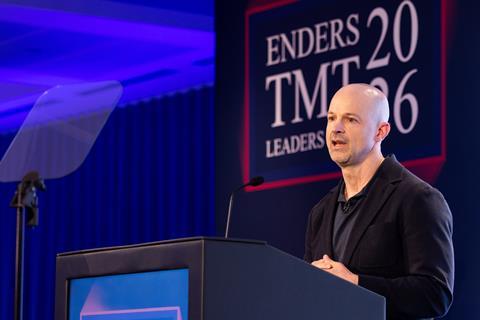
“I know what some of you are thinking: Netflix is part of the problem, an American business undermining British broadcasters - TV tourists not playing by the rules,” he said during a keynote speech at the Enders TMT Leaders Live conference this morning.
“Perhaps if we had stuck with our 2016 model, that might have been true.
“But Netflix UK today is a UK-based business. Our teams are here, we pay taxes here, we work with over 200 British production companies. We have employed 50,000 people in the UK creative industry over the last decade. We make our shows here. We engage with unions and we respect the local talent community.”
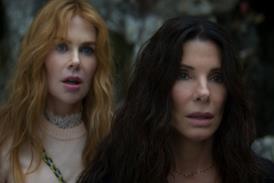
Recent productions to come out of Netflix UK include feature Peaky Blinders: The Immortal Man plus series How To Get To Heaven From Belfast and upcoming Pride And Prejudice.
He emphasised that Netflix remains “additive to the industry, not a replacement for it”, but used the company’s UK funding as a counter to local content quotas that it has argued are disproportionate and restrictive.
“Here in the UK, we have invested heavily in production not because anyone mandated it, but because we see ourselves as part of this industry’s long-term future,” he continued.
“We are an employer. We are a repeat customer for hundreds of British companies and a large chunk of our revenues are recycled back into more British creativity.”
His comments came a day after Canada’s government u-turned on plans that would have forced the streamer and its competitors to spend 15% of local revenues on local production.
During a wide-ranging speech, Tanz criticised “emergent policy proposals around investment obligations, IP ownership and AI” occruing in Europe, most notably in France and Belgium, where the streamer recently lost a court battle around spending requirements.
Germany is set to follow suit, with plans to require streamers to invest 8% of local revenues on local production, but Tanz said such policies “could unintentionally choke off investment and innovation”.
“On investment obligations, unlike some of our competitors, we have consistently met - and in many cases exceeded - the targets set for us across Europe, not because we were forced to, but because our business depends on investing in local stories that people love,” he said.
“The risk now is that ever more rigid, prescriptive obligations start to dictate not just how much we invest, but what we make and through whom we make it - regardless of whether those intermediaries are truly small independents or production companies actually owned by global conglomerates.
“If we go too far down that path, you end up with a system where companies like ours are required to funnel money through specific structures into shows that audiences may not actually want to watch, instead of backing the projects, partners and stories with the best chance of succeeding.
“If the regulatory direction of travel were towards a one-size-fits-all approach, where IP always defaults to local producers by law regardless of who is actually taking the risk, the consequences would be significant.
”We’d be discouraged from commissioning ambitious original local stories and taking chances on new voices. We’d be pushed to smaller licensing deals for library and recycled formats. It would mean fewer risks taken and fewer new voices heard.”
‘Private equity and sovereign wealth-backed’ groups driving rhetoric
Tanz said he sympathises with the independent producers who might have the “instinctive feeling that rights should stay with local producers”, but he warned that those driving quotas, “legacy definitions and incremental investment obligations” are super-indies backed by deep-pocketed investment firms or national entities, though he demurred in naming specific companies.
“In much of Europe today, many of the entities still classed as ‘indies’ are no longer small, cash-constrained outfits,” he said. “They are large international groups with serious market power, often backed by private equity or sovereign wealth.
“When laws and quotas treat those companies exactly like fragile independents, two things happen: first, genuinely small indies find it harder to break through; second, money invested locally is less likely to be reinvested in local talent and production. Instead, it flows to the big media groups that may be far less committed to British talent and infrastructure.”
He emphasised the global industry should remain alert to this tension and not “sleepwalk into a world where legacy definitions and incremental investment obligations distort our ability to take risks and innovate”.
A version of this story first appeared on Screen’s sister site, Broadcast.





No comments yet