



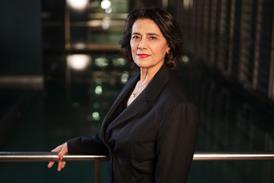














Wolfram Weimer is used to making headlines. A journalist turned politician, he is a former editor-in-chief of the conservative German daily newspaper Die Welt and of news magazine Focus, and also founded the political magazine Cicero.
Now Weimer is weighing up the future of Berlinale festival director Tricia Tuttle after a politically charged closing ceremony in which several prize-winners used their acceptance speeches to voice support for the people of Gaza and to criticise the actions of the Israeli government in Palestine.
In an interview with Bild, Weimer said: “The Berlinale is not a place for incitement, threats, and antisemitism. Hatred of Israel must not be unleashed there, especially not funded with taxpayer money.”
Given his lack of political experience, Weimer was a surprise choice in May last year as culture minister in Chancellor Friedrich Merz’s conservative CDU/CSU alliance, although he is considered close to Merz.
A conservative, Weimer’s appointment seemed to symbolise a cultural shift in Germany. He took over from Green politician Claudia Roth, who was considered more supportive of left-wing ideas.
As culture minister, Weimer’s responsibilities include funding for the arts, culture and film. He also chairs the Berlinale’s management company, KBB, which met this morning to discuss Tuttle’s future.
Just before taking office, he said: “I want to strengthen the wonderfully rich cultural landscape and support it in its extraordinary diversity. Anyone expecting me to act as a cost-cutting commissioner will be disappointed.”
But many commentators criticised the choice of Weimer at the time because of his lack of arts background: an opinion piece in the Frankfurter Allgemeine Zeitung described him as “the wrong man in the wrong place”. A petition against his appointment garnered tens of thousands of signatures.
Actor Ulrich Matthes, former president of the German Film Academy, commented to 3sat’s Kulturzeit that he considered Weimer to be an ideologue with a mission mentality, which “disqualifies him for the office of minister of state for culture”.
A regular guest on German TV talk shows, Weimer set out his thinking in his 2018 book The Conservative Manifesto: Ten Commandments Of The New Bourgeoisie, in which he called for a return to traditional values, and emphasised virtues such as personal responsibility, family, nation, tradition, law and order, and Christian faith.
He has also argued Europe is in a phase of cultural decline and has “lost its vital energy,” using metaphors such as an “extinguished volcano”. In an opinion piece for Cicero, Weimer criticised what he called “naive multiculturalism”.
At the same time, he has written and spoken out against Germany’s controversial far-right political party AfD and right-wing populism.
In the past, Weimer has said there must be space for controversial debates in a democracy, writing of “no-go zones” and “the anti-freedom overreach of the left” and “language policing”.
Political backlash
But his decision to possibly remove Tuttle for views expressed by filmmakers at the Berlinale has sparked opposition, not just from the wider German, Israeli and international film industry but also among politicians in Germany.
Left Party leader Jan van Aken called the Berlinale management’s treatment “outrageous” in an interview with newspaper Spiegel. “A minister of state for culture who set out to fight alleged cancel culture is now himself exerting political influence on an international film festival. For Wolfram Weimer, freedom of expression obviously means only freedom for his own opinion,” said van Aken.
Weimer himself has campaigned strongly against antisemitism. After taking office, he reportedly invited Josef Schuster, president of the Central Council of Jews in Germany, to the Chancellery as his first guest.
Many in the film industry have acknowledged Tuttle has had to walk a political tightrope since taking over at the German government-supported Berlinale, particularly given the country’s post-Second World War “reason of state” (Staatsräson) support for Israel’s existence and security.
But Weimer is not alone in Germany in expressing concern about the criticism of Israel at this year’s Berlinale.
German environment minister Carsten Schneider walked out of the Berlinale closing ceremony during a speech by Palestinian-Syrian director Abdallah Alkhatib, director of the Perspectives winning film Chronicles From The Siege who accused the German government of being a partner in “the genocide in the Gaza Strip”.
Felix Klein, the federal government’s commissioner for antisemitism, commented to the Jüdische Allgemeine: “Using the Berlinale stage as a podium for hate and agitation against Israel is not only unacceptable but also takes away space from artists who want to focus on what the Berlinale really stands for.”
Ottilie Klein, culture and media spokesperson for the CDU/CSU parliamentary group, also told the Jüdische Allgemeine: “The images and messages of this year’s Berlinale have caused significant damage and raise questions of responsibility and oversight. A thorough review and, above all, consequences are needed. In the future, we need a binding antisemitism clause in taxpayer-funded cultural support.”
As of Thursday afternoon, a decision on Tuttle’s future has been postponed. “Talks on the Berlinale will continue in the coming days between the director, Tricia Tuttle, and the supervisory board,” said a spokesman for Weimer after this morning’s crisis meeting.





No comments yet