








The Berlinale Special screening follows ‘The Mole Agent’ and ‘Eternal Memory’

Dir: Maite Alberdi. Mexico. 2026. 96mins
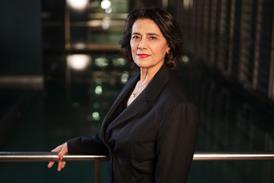
With her latest work, Chilean filmmaker Maite Alberdi utilises the same effective blend of intimacy and universality as she did with previous documentaries The Mole Agent and Eternal Memory, albeit to less impactful results. Following the early 2000s case of a Mexican woman who abducted a newborn after faking a pregnancy, Alberdi weaves talking head interviews and dramatisations to get under the skin of this intriguing story.
Alberdi proves adept at getting to the heart of the matter
A Child Of My Own, which premiered as a Berlinale Special screening, was produced by Mexico’s MGM-owned Gato Grande for Netflix, and the film certainly plays like a streamer-audience-friendly true-crime doc. It perhaps lacks some of the incisive focus of The Mole Agent (2020), which dealt with attitudes to ageing, and Eternal Memory (2023), which followed a Chilean couple living with Alzheimer’s, both of which were Oscar-nominated. Yet the story is undeniably fascinating, and Alberdi again proves herself adept at getting to the heart of the matter at hand, and making it relevant for a wider audience.
From the off, Alberdi blurs the line between fiction and reality. The film opens with a snatch of home video footage of a wedding, taken on July 29 2020, over which the bride, Mexican hospital administrator Alejandra, provides an introductory voice over. “I always dreamed of being a mum,” she says. Next, we see Alberdi auditioning women to play Alejandra in the film’s dramatisations, speaking her words along with her, immediately establishing the preoccupation with artifice and performance shared by both film and subject.
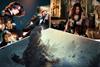
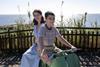
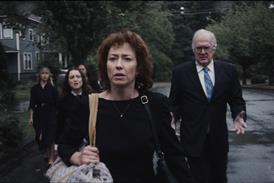
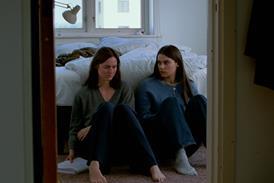
The actress eventually cast by Alberdi to portray Alejandra in dramatisations of key events is the hugely endearing Ana Celeste. We see her during her wedding, in a new home bought by her and husband Arturo (played by Armando Espitia) for the children they – and their extended families – desperately want. Alejandra suffers two miscarriages, to the obvious scorn of her judgemental mother-in-law, and, when she loses a third pregnancy, cannot bring herself to tell Arturo for fear she will be held responsible.
In these scenes, Alberdi and screenwriters Julian Loyola and Esteban Student portray Alejandra as a victim of circumstance, so harshly judged by her husband’s family, so backed into a corner by their expectations, that she makes the extreme decision to fake a pregnancy. Eating junk food to put on weight, and faking hospital paperwork, she fools Arturo and their wider friends and family to the extent that they throw her a baby shower. The dramatisation of this party, as with all the others, is filmed by cinematographer Sergio Armstrong in vivid pops of colour, with a deliberate cinematic sheen. This was all some kind of living fantasy; one to which Alejandra clung with intense determination.
As Alejandra’s time as a pregnant woman began to run out, she made a fortuitous hospital connection with a young woman, Mayra, who professed not to want her impending baby. The two women cut a deal for Alejandra to take the child but, following the birth, the infant’s father arrived back on the scene and Alejandra was left with no choice but to abduct the baby – in a gift bag, no less. After confessing the truth to Arturo, the trio holed up in a motel, where they were swiftly apprehended by local police. Truth, it seems, really is stranger than fiction.
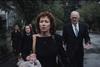
Or is it? The film’s second half leans more heavily into talking head interviews with Alejandra, who was jailed for 14 years, and Arturo, who was released without charge after two years in prison, as well as the lawyers and psychologists who were involved in the case. While Alejandra sticks resolutely to her story, holes begin to appear, backed up by testimony, archive news reports and case evidence, all shown on screen.
And yet, thanks to Alberdi’s sensitive handling of this story, Alejandra remains a sympathetic figure, even as her story begins to flicker and shift. We see how she faced enormous pressure to deliver the family another child, Arturo emphatic about how he wanted a son of his own. This, of course, chimes with the wider issue of women’s autonomy over their own bodies, and the cultural conditioning that can influence decisions around whether or not to have children. Ironically, too, Alejandra found more support and acceptance from the tribe of women she befriended in prison than we see her receive in the outside world.
Alberdi also includes real home video and CCTV footage of events we’ve already seen dramatised – the wedding, the baby shower, the abduction and arrest – which give things an even more layered perspective. Their crackling, shaky, subdued visual quality is a marked contrast to the gloss of the recreations and reminds us that, behind the headline-grabbing audience-baiting shocks of this case, this was real life, with real consequences.
Production company: Gato Grande
International distribution: Netflix
Producers: Sandra Godinez, Carla González Vargas, Maximiliano Sanguine
Screenplay: Julián Loyola and Esteban Student
Cinematography: Sergio Armstrong
Editing: Carolina Siraqyan
Main cast: Ana Celeste, Armando Espitia, Angeles Cruz