






Alexander Murphy’s follow-up to ‘Goodbye Sisters’ debuts in Cannes Critics’ Week
Dir: Alexander Murphy. France, Ireland. 2026. 105mins
Family is the beating heart in Tin Castle, as director Alexander Murphy invites us into the lives of Paddy O’Reilly, his wife Lisa and their ten children. Murphy’s gentle, observational approach creates a warm emotional connection to a travelling family whose traditional way of life is rapidly disappearing. The result is an engaging documentary and touching elegy that should attract festival interest following a Cannes Critics’ Week premiere.
Any notion that Murphy is presenting an overly romanticised view is undercut by what he chooses to show
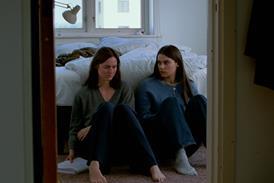
Murphy’s debut feature Goodbye Sisters (2025) celebrated the resilience of two Nepali sisters seeking independence and opportunity. Filmed between 2020 and 2026, Tin Castle confirms Murphy’s sympathetic eye for marginalised lives as he focuses on the trials of another family unit.
The O’Reilly’s ‘tin castle’ is a mobile home that sits in fields beside a busy road. They have no running water or modern amenities. When the generator fails and plunges them into darkness, they simply light candles, sing and tell each other stories. There is space for their dogs and horses and the children can roam at will. Aspects of their existence could have featured in the pages of a Dickens novel or provided the basis of a Ken Loach film but they have a freedom that can’t be quantified.
An unobtrusive Murphy has clearly been accepted into the heart of the clan. The parents and children (ranging in age from 4 to 16) seem entirely at ease before the camera, allowing him to capture both moments of vulnerability and normality. The film’s opening chapter is titled ’An Army Of Twelve’ and folllows the morning bustle of kids grabbing breakfast, searching for lost socks and rushing for the school bus.
Like an Irish version of The Waltons, this is a family that looks out for each other. Older children are expected to feed the horses, clean out the stables and help with their younger siblings. There are lots of giggles and cuddles. Life flows across the changing seasons, captured in luminous detail and through key events from a first communion to eldest son Sean’s impending wedding. The children go to school and their parents shop in the local supermarket, but they do not feel as if they belong in the community. Forming friendships beyond the family unit proves difficult, and there is a melancholy sense that all they have is each other.
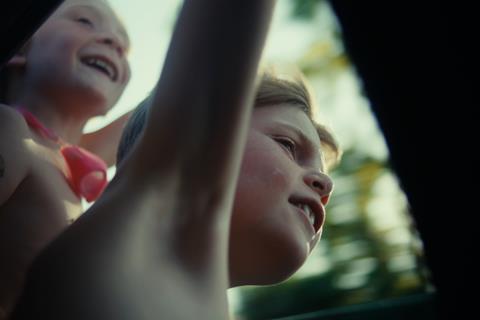
Some of the children talk of their hopes for the future in very traditional terms. The girls mention marriage and children. The boys are drawn to boxing, hunting rabbits and thundering through the countryside on a horse and trap. Murphy captures some lyrical moments from an idyllic summer’s day spent by a river to the tender, heart-to-heart chats between father and son. A soundtrack mingling classical pieces (including Schubert and Glenn Gould recordings) with original compositions makes use of piano, cello and violin to create the insistent verve of a Nyman-esque accompaniment.
Any notion that Murphy might be presenting an overly romanticised view of this world is undercut by what he chooses to show. There is pressure to accept an offer of better accommodation in a housing estate of 50 homes where horses and dogs would clearly not be welcome. There is also an an upcoming sentencing hearing involving Paddy. Lisa is the one who keeps everything together but Paddy seems to fascinate Murphy. He repeatedly frames Paddy alone: smoking, pondering and filled with anxiety.
The future is far from secure. Their home is crying out for repair. Paddy has health issues and Sean will soon have moved with his new bride to a caravan next door. Life feels like it cannot hold, but in Tin Castle we gain a vivid sense of what the O’Reilly’s stand to lose as history slowly sweeps them aside.
Production companies: Goodseed Productions, Samson Films
International sales: Films Boutique. ruta@filmsboutique.com
Producers: Cosme Bongrain, David Collins, Eamon Hughes
Screenplay: Alexander Murphy, Jean-Baptiste Plard
Cinematographer: Alexander Murphy
Editor: Nicolas Longinotti
Music: Kevin O’Leary, Mathias Levy Valensi