











Kai Stänicke’s impressive blend of period drama and folk horror bows in Berlin’s Perspectives strand
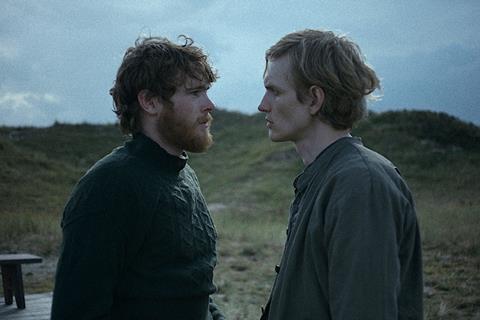
Dir/scr: Kai Stänicke. Germany. 2026. 123mins
In Kai Stänicke’s impressive debut, which opens Berlin’s Perspectives competition, a young man returns to the isolated, tight-knit island community he left 14 years before. Or does he? His mother is suffering from progressive memory loss, his sister was only small back then, and as for his former friends and neighbours – well, if he really is Hein, all they can say is that he’s changed beyond recognition. The only reasonable thing to do, in the circumstances, is to put this suspicious guy on trial to find out whether he really is who he claims to be.
Great formal beauty and thematic riches
A film of great formal beauty and thematic riches, buoyed by a series of finely tuned performances led by Paul Boche’s intense, haunted account of its titular hero, Trial of Hein gambles everything on its skill in keeping some airspace, some tantalising guessing room, between an edgy period drama and the metaphor it contains. The fine script toys with us as well as its protagonists, swerving towards folk horror, flirting with comedy, and standing on the brink of symbolic portentousness before pulling back. It’s this teasing and intriguing audience rapport, along with its sheer handsomeness, that should help Trial of Hein – which was boarded by Heretic a couple of weeks before its Berlinale premiere – to arthouse engagements in multiple territories.
The film’s German title, Der Heimatlose, translates roughly as ‘the man without a place he can call home’. It’s a shame there’s no English word for that, as it adds a premonitory nuance to the tall, gaunt, mournful blonde figure we see being ferried across to what the boatman calls “a godforsaken place”.
This low, windswept island, with its sand dunes, yellow grass and stunted trees supports a small fishing community of people who dress in timeless peasant garb and live in simple wooden houses comprising a façade and a series of unroofed rooms. Seen from above as Hein stands looking down at his village in the valley, steeling himself to announce his return, it looks like an abandoned film set occupied by maritime Amish squatters, or a North Sea take on Lars von Trier’s Dogville stage, with a few more walls and without the painted lines.
This Brechtian touch is a challenge. In the end, if we accept it, it’s because it feels kind of right for these hardy, stubborn folk. Maybe a storm tore all the roofs off years before and the village elders voted not to replace them – the same village elders who look on this apparent stranger with suspicion bordering on disgust. Hein doesn’t receive much better treatment from the village youngers. Philip Froissant’s fiery Friedemann, who Hein claims was once his best friend, gives him the cold shoulder, in that angry way that suggests he is hiding something. And although she is clearly curious and starved for affection, Hein’s sweet but insecure younger maybe-sister Heide – played movingly by Stephanie Amarell – seems so nervous of the village hive mind that she doesn’t know what to think.
What follows, as Hein accepts the village council’s proposal of a trial to ascertain his authenticity, is given heft and weight because the world created here is so fully realised. It’s perfectly credible that in a traditional fishing community like this, boys might be required to demonstrate their mackerel-gutting prowess in a public puberty ritual. Or that a local card game might hinge on knowing when your opponent was telling a lie. Or – in one of many ironic touches with contemporary resonance – that the village headwoman, a canny soul who pays lip service to the democratic process, might appoint herself as trial judge and her sons as court bailiffs.
The tactile realism of a film that was shot largely on the German Frisian islands of Norderney and Sylt is also brought home by costumes so roughly spun they feel itchy, by the weathered authenticity of the production design, by a palette of washed-out colours, by the swish of waves on the sand and the hiss of wind in the dry grass. Rising above this soundscape in short, cadenced bursts, Damian Scholl’s enjoyably spare and sometimes just a little arch soundtrack lays melancholy bowed violin and viola notes over pizzicato cello.
By around the halfway point, we know what’s really going on, but Trial Of Hein’s balancing act between this timeless otherworld and all those small-town boy stories we know so well is so gracefully managed that it never stops engaging, even if the film over-explains its ending.
Production company: Tamtam Film
International sales: Heretic, info@heretic.gr
Producers: Andrea Schütte, Dirk Decker, Dario Suter
Cinematography: Florian Mag
Production design: Seth Turner
Editing: Susanne Ocklitz
Music: Damian Scholl
Main cast: Paul Boche, Philip Froissant, Emilia Schüle, Stephanie Amarell, Aaron Hilmer, Irene Kleinschmidt, Jeanette Hain