









‘Saltburn’ director Emerald Fennell leans into the feverish emotions of Emily Brontë’s original novel
Dir: Emerald Fennell. UK/US. 2026. 136mins
For better and for worse, Emerald Fennell’s adaptation of Wuthering Heights is governed by its characters’ unbridled emotions. The Oscar- and Bafta-winning writer/director of Promising Young Woman and Saltburn transforms Emily Bronte’s novel into a cauldron of lust, anger and sorrow, casting Margot Robbie and Jacob Elordi as the doomed lovers destined to tear each other apart. Very effective in its flamboyant flourishes but dialled up so high it can feel excessively brooding and melodramatic, the film makes no apologies for depicting desire as an addictive drug, inviting the audience to succumb to the story’s narcotic pull.
A cauldron of lust, anger and sorrow
Rolling out globally from February 11, and hitting US and UK cinemas on February 13, this Warner Bros. release is betting big on its two stars and the familiarity of the source material to entice Valentine’s Day and date-night crowds. The box office has recently had little in the way of epic love stories, so Wuthering Heights seems poised to satiate pent-up demand.
Set on Yorkshire’s misty moors in the 19th century, the film opens with young Catherine (Charlotte Mellington) meeting the soft-spoken, impoverished boy Heathcliff (Owen Cooper), who has been brought into Catherine’s home by her abusive father (Martin Clunes). A rapport quickly grows between the children, despite their class differences. Soon, Wuthering Heights fast-forwards to adulthood: Catherine (Robbie) and Heathcliff (Elordi) have retained their flirty bond, although she is tempted to accept the marriage proposal of well-to-do Edgar (Shazad Latif), realising that pursuing a love affair with her penniless childhood friend would leave her destitute.
Fennell’s previous films provocatively examined gender, class and sex, wielding satire and shock as their primary weapons. Her Brontë adaptation doesn’t exactly upend the classic text, but she emphasises the novel’s complicated feelings about its main characters. Both Catherine and Heathcliff are flawed individuals given to indulge their worst impulses, even if it jeopardises the possibility of them ending up together. This Wuthering Heights requires the viewer to accept these lovebirds’ imperfections, recognising that Catherine and Heathcliff frequently hurt one another to protect their fragile hearts — as well as understanding that those personal failings also reflect cultural issues of the time that put women and men of different social standing on unequal footing.
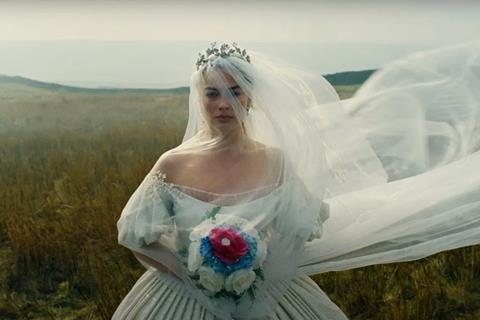
This adaptation is a visual and sonic feast, with Anthony Willis’ demonstrative string-laden score amplifying the plot’s cruel betrayals and the characters’ feverish hormones. Cinematographer Linus Sandgren and production designer Suzie Davies contrast Catherine’s crumbling estate with Edgar’s lavish home, and the dreamy candle-lit night scenes, twisty stairwells and enveloping fog create a thick Gothic mood.
Shot on film, Wuthering Heights incorporates the actual Yorkshire Moors, which feel as untamed as Catherine and Heathcliff’s carnal cravings. The picture introduces vivid colours at crucial moments — a frantic horse ride set against a blood-soaked sky, a hallway bathed in dark red light — or a smattering of original songs from Charli XCX to heighten the agony of these two people, who are kept apart by Catherine’s ill-advised decision to wed Edgar.
Wuthering Heights is persuasive, if a bit shallow, as an immersive simulation of the thorny ecstasy of young love. Fennell has always had a flair for evocative sex scenes, and she concocts several here that are both erotic and revealing of character, suggesting the intensity of the lovers’ attraction. But the central performances are often serviceable rather than revelatory.
Robbie, who has produced all three of Fennell’s pictures, does not shy away from Catherine’s spoiled, selfish demeanour, presenting us with a woman who chose pragmatism over love and is paying the price for her shortsightedness. But the actress sometimes struggles to reveal the character’s complexity, her buried tenderness and vulnerability, and, as a result, this Catherine is a tad one-note.
By comparison, Elordi conveys Heathcliff’s resentment at being underestimated when he was young and, later, discovering he may be too late to win his true love’s affection after he has secured wealth and stature. Underneath Heathcliff’s jealousy is a smouldering adoration for Catherine that makes even his most unconscionable act comprehensible.
As Catherine and Heathcliff engage in their battle of wills, complete with titillating sexual encounters and surprising reversals, Fennell’s film savours the material’s juicy, even trashy soap-opera elements. Hong Chau ripples with surly attitude as Nelly, the seemingly lowly housekeeper who becomes a silent observer, inserting herself into the narrative at the most nefarious moments. Amidst the sweeping sense of foreboding, this Wuthering Heights leaves room for drama about two impetuous people whose desire blinds them from happiness. Fennell makes their star-crossed love entertainingly messy.
Production companies: Lie Still, LuckyChap Entertainment
Worldwide distribution: Warner Bros.
Producers: Emerald Fennell, Josey McNamara, Margot Robbie
Screenplay: Emerald Fennell, based on the novel by Emily Brontë
Cinematography: Linus Sandgren
Production design: Suzie Davies
Editing: Victoria Boydell
Music: Anthony Willis
Main cast: Margot Robbie, Jacob Elordi, Hong Chau, Shazad Latif, Alison Oliver, Martin Clunes, Ewan Mitchell