
















Amid the global momentum of Brazilian cinema, driven by the Oscar recognition of I’m Still Here and The Secret Agent, the Brazilian film industry arrives at the European Film Market (EFM) with one of its largest delegations.
Ten films represent the country across different sections of the festival, shedding light on the aesthetic, thematic and regional diversity of its cinema, while 56 Brazilian companies are looking to create more business opportunities at EFM.
The Brazilian activities in the market are spearheaded by Cinema do Brasil, the national cinema promotion and internationalisation programme. Developed by producers guild SIAESP in partnership with the country’s trade and investment promotion agency ApexBrasil, Cinema do Brasil was created in 2006 to place Brazilian cinema on the world stage. It supports the international sales and distribution of films, encouraging co-productions and developing competitive strategies to expand its visibility.

“Our journey began 20 years ago, with our first action carried out precisely at the EFM, at a time when Brazil had no public policy focused on the international market,’’ recalls André Sturm, the creator and president of Cinema do Brasil. “Back then, the presence of Brazilian cinema at major festivals was close to zero. When we had a Brazilian film selected, it was rare news.”
He describes Central Station (Golden Bear winner, 1998), Me, You, Them (special mention in Cannes’ Un Certain Regard, 2000) and City Of God (Cannes official selection, out of competition, 2002) as “isolated events’’.
“EFM marks an important celebration, as we look back at everything that’s happened with Brazilian cinema internationally in the past two decades. And especially in the last year,’’ says Sturm. He is referring to the important awards and historical achievements of Brazilian filmmakers led by Walter Salles’ I’m Still Here, Gabriel Mascaro’s The Blue Trail and Kleber Mendonça Filho’s The Secret Agent.
For the second year in a row, Brazilian filmmaking talent is being recognised at the Oscars. I’m Still Here made history last year, winning Brazil’s first-ever best international feature film award, as well as picking up nominations for best actress (Fernanda Torres) and best picture. The latter was also a historic first for a Brazilian film.
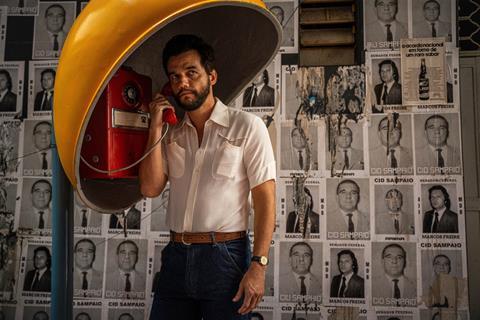
The Blue Trail won the Silver Bear grand jury prize in Berlin last year, and now The Secret Agent is crowning this moment of international visibility for Brazilian cinema with two Golden Globe wins and four Oscar nominations. Wagner Moura has become the first Brazilian actor to be nominated in the lead actor category and The Secret Agent is also nominated for best film, best international film and best achievement in casting.
Talent showcase
As Brazilian cinema experiences a major resurgence, wowing audiences and critics around the world, the country’s film industry is taking the opportunity to showcase the diversity, creativity and consistency of its filmmakers. The selection of 10 films presented in Berlin provides a snapshot of the multiple facets of Brazil, including its variety of landscapes.
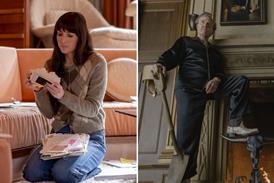
Gabe Klinger’s Isabel — the journey of a sommelier in the high-end gastronomic scene — has been selected for Panorama. It is set in São Paulo, the largest city in the country and one that is frequently portrayed on screen. Other parts of the country showcased in Berlinale selections include Belo Horizonte in the state of Minas Gerais — the Brazilian highlands provide the backdrop to André Novais Oliveira’s Panorama title If I Were Alive.
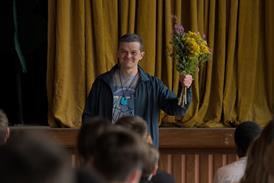
Allan Deberton’s Gugu’s World, screening in Generation Kplus), was shot in Quixadá, situated within the semi-arid hinterland of Sertão and the neighbouring towns in the interior of Ceará, in Brazil’s northeast.
The creative boom is reinforcing the maturity and capabilities of Brazilian professionals, as well as the internationalisation of the country’s audiovisual sector, and helping to drive business.
The government of São Paulo state is partnering with Cinema do Brasil at the EFM to reinforce the institutional support for Brazilian audiovisual companies in the international market.
São Paulo state is participating in the market through CreativeSP, a promotional programme of the Secretariat for Culture, Economy and Creative Industry that runs in partnership with InvestSP, the state agency for the promotion of investments and competitiveness.

“With a business-focused agenda promoted by CreativeSP, our goal is to open doors for companies of all sizes, both in the capital and the interior, connecting them with
international players, co-producers, distributors, and funding opportunities, transforming institutional presence into concrete results,” says Marilia Marton, secretary for culture, economy and creative industries for São Paulo State.
She highlights the results achieved through the participation of the São Paulo government at last year’s Berlinale. “It was a milestone for CreativeSP in terms of economic impact — the 10 supported companies generated 1,393 jobs and brl42m ($8m) in business, results driven by strategic rounds, qualified networking and an international showcase of projects during our mission.”
No time to waste

Cinema do Brasil is also partnering at the EFM with Spcine, São Paulo city’s film and audiovisual organisation. “This moment is historic, as are the opportunities that will arise from it,’’ says Spcine president Anna Paula Montini. “If this global recognition is not accompanied by a broad and integrated plan and programmes for the development of our audiovisual industry, there is a risk of it being wasted.”
Montini highlights some key aspects of Spcine’s strategy to leverage the momentum of Brazilian cinema to benefit the sector in the city of São Paulo, which is reflected in the company’s participation in EFM. “First and foremost, we position São Paulo as an international co-production hub, connecting local production companies with foreign players, international funds, sales agents and distributors,’’ she says.
Next comes the consolidation of São Paulo as a strategic hub for Latin American audiovisual production. “São Paulo brings together market scale, talent diversity, technical infrastructure, financial capacity and business density,” says Montini. “Our role is to translate this differential into concrete competitive advantages, creating a favourable environment for international investments.”
Montini adds that such internationalisation means more jobs, income, innovation and a strengthening of the local production chain.
She also highlights her organisation’s role in talent development at a professional level. “We are sponsoring the participation of six professionals from São Paulo in Berlinale Talents, through the Mirada Mundi SP programme, and supporting 14 companies from our city at the EFM through the NextFrame São Paulo programme,’’ explains Montini.
In total, 56 associated companies from different regions of Brazil are attending the Berlinale this year. They represent more than 75 audiovisual professionals who will take part in market screenings, networking events, institutional activities and business meetings — several of them with international sales agents to present Brazilian films and projects, and encounters with festival programmers and international funds attending the market.
Among the activities focused on expanding international partnerships and generating business opportunities, this year’s Cinema do Brasil agenda includes co-production meetings with representatives from Germany, Dominican Republic, Mexico, Uruguay, Spain, Italy, the UK, the Netherlands and Chile.
Contact: Morris Kachani, executive manager, Cinema do Brasil
Find out more: cinemadobrasil.org.br










No comments yet