















The International Film Criticism Conference is facilitating cultural exchange and helping to grow the Saudi industry.
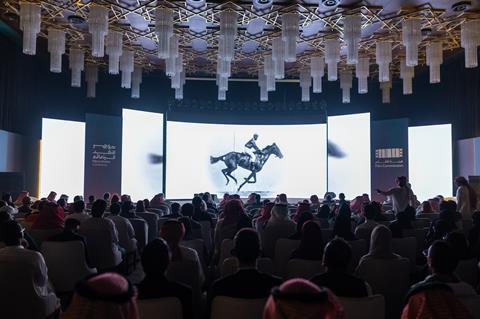
Carlo Chatrian, former director of the Berlin and Locarno international film festivals, was one of the leading international speakers at the 2025 edition of the International Film Criticism Conference (IFCC) in Riyadh, which took place in Riyadh, Saudi Arabia, from November 7-9.
The unique conference is held annually under the auspices of the Saudi Film Commission (SFC), one of the Saudi Ministry of Culture’s 11 sector-specific commissions. IFCC is positioned as an elite and specialised platform that offers an alternative to a film festival and market. Instead, the aim is to establish a cinematic dialogue that contributes to the development of local content across the Kingdom through specialised discussions surrounding film criticism and precise artistic analysis that reveals the aesthetics of cinema and the language of the image.
The IFCC also highlights the experiences of Arab and international critics to broaden cultural dialogue and deepen mutual understanding among different schools of criticism worldwide.
The theme for 2025 was ‘Cinema - the Art of Place’, which reflects the connection between cinematic imagery and the environment from which it emerges. It was chosen because the “place” in cinema is not merely a backdrop but a narrative and aesthetic element that tells a story, giving a film a distinctive character, grounded in time and place.
This sense of place is vital to the work of emerging Saudi filmmakers as they forge a presence at home and within the international film industry.
International speakers
A journalist, author and film programmer, Chatrian was artistic director at Locarno from 2013 to 2018 and the artistic director at the Berlin International Film Festival from 2020 to 2024. He has also curated programmes focused on Japanese animation, including books, retrospectives, and exhibitions, worked as a film critic for several magazines, and has taught film courses at various schools and institutions. Chatrian is a columnist for Italian newspaper La Stampa and has been a programmer for the Alba Film Festival, Florence Festival dei Popoli and Visions du Réel.
Chatrian is presently the director of the National Museum of Cinema in Turin and has published numerous essays and academic texts on filmmakers, including Frederic Wiseman, Errol Morris and Nanni Moretti, along with Japanese animation.
Further speakers included Nicola Davide Angerame, the Italian philosopher, film critic, and curator affiliated with the University of Turin. A board member of ART – Aesthetics Research Turin, Angerame’s work explores the relationship between philosophy, cinema, and contemporary art. He has curated numerous international cultural projects and writes for leading art and film publications.
Paulo Portugal, PhD researcher at Lisbon-based university Nova FCSH, specialising in artistic studies, with a focus on new cinephilia, was also one of the speakers at the IFFC. Portugal has been a freelance film journalist for over 30 years, covering major international festivals and has served on various juries. He is also the founder of the Somos Humanos Association on films and human rights.
Connecting art with audiences
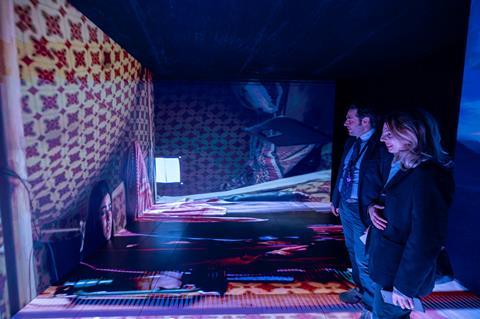
This year’s conference and its forums took place in Riyadh after stop-offs in the cities of Abha and Al-Qatif. It is a key driver for the local Saudi film industry and a bridge that connects art with its audience on a deeper and more conscious level.
The lively programme boasted panel discussions, film screenings, and critical sessions, in addition to interactive activities that allowed audiences and critics to directly engage with filmmakers. It also featured practical and applied workshops aimed at young critics and emerging filmmakers, covering areas such as critical writing techniques, visual text analysis, and the art of interviewing directors.
For this year’s edition, there was a strong international presence with new voices joining from across different continents. There were around 50 speakers from 22 countries, all meeting in the Kingdom to foster cultural and intellectual exchange and contribute to the growth of cinematic criticism as a creative and evolving field.
Cultural hub
The conference aimed to establish Saudi Arabia’s presence as a leading cultural hub within the cinematic landscape by building an advanced critical environment that keeps pace with global industry developments. The presence of such renowned critics and artistic voices from around the world is fostering the exchange of knowledge and expertise in film criticism, building mutual growth with international counterparts while contributing to the broader cultural and artistic transformation inspired by Saudi Vision 2030.
The IFCC also provides a vital opportunity to bring together international critics, filmmakers, researchers, and academics to discuss modern trends in film criticism while highlighting the experiences of both Arab and international critics.
It is one of the many programmes, projects, and initiatives of the SFC as it works to support the Saudi film industry. For international filmmakers, this pioneering conference provided an opportunity to build partnerships with Saudi filmmakers, critics and producers, all with the official support of the SFC.





No comments yet