













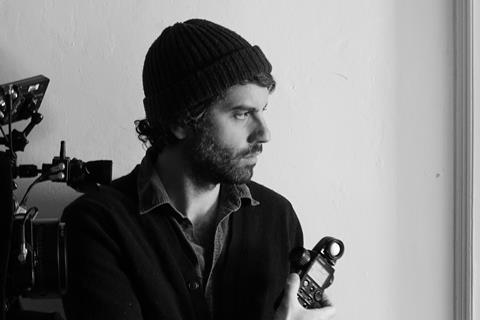
Adolpho Veloso made history this year when he became the first Brazilian to earn a cinematography Oscar nomination for Train Dreams. Right after filming Clint Bentley’s period drama he started work on Festival do Rio selection Queen At Sea, which was a very different prospect and screens on Wednesday (October 7) in the World Panorama section.
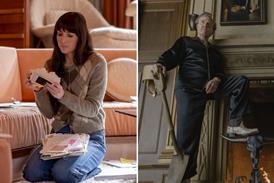
In Lance Hammer’s psychological drama, Veloso used the static camera like a “piece of furniture” to witness the routine, harshness and emotional devastation in the home of an elderly woman with dementia. Exploring the narrow doorways, corridors, and staircases of a London house, the DP created the necessary claustrophobic atmosphere. The result contrasts sharply with his work on Train Dreams, where he captured the vastness of nature in the Washington state wilderness.
The opening scene of Queen At Sea gives an idea of the film’s bold approach to its subject matter. A middle-aged university professor played by Juliette Binoche catches her stepfather (Tom Courtenay) having sex with her mother (Anna Calder-Marshall), a visual artist in the advanced stages of dementia. The perplexed look of the elderly woman, who is incapable of consenting to the act, enrages her daughter, who calls the police and reports her father for sexual assault.
“It’s as if the camera were just another observer there, having a minimal impact on the set to make the actors as comfortable as possible for the most difficult and delicate scenes. This contributes to the realistic and, at the same time, intimate approach,” Veloso says.
“Presenting Queen At Sea in Brazil has a different weight, even though the film has already screened at several festivals, starting its journey in Berlin with a very warm reception,” Veloso says. Hammer’s film won the Silver Bear jury prize and Silver Bear for best supporting performance for Courtenay and Calder-Marshall.
International flavour
“I am curious how the Brazilian audience will receive the film,” he adds. “And there is something beautiful about this whole mix: a film shot in England, with an American director, an iconic French actress and a Brazilian cinematographer.”
Veloso remembers helping Hammer choose the house, a Victorian-style property located in Tufnell Park in North London. “On our first visit, we realised it would be very difficult to film in that house, which is narrow and has many stairs, making it difficult even to get the equipment in,” he recalls.

These challenges, however, were important in conveying the element of danger faced by the elderly characters; as if the place itself, especially the staircase, were a trap. “We knew the house would be a central character in the story. Not only because it serves as a testament to the couple’s entire journey, but also because it functions as a metaphor for the ups and downs of life,” he adds.
Veloso’s camera only starts moving when it follows Binoche’s character outside, and her teenage daughter (Florence Hunt), at which point the filming style becomes more dynamic, shifting to handheld camerawork in tune with the energy of the younger generation.
Shooting ’Petrol’ and ‘Remain’
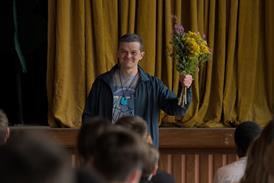
Veloso is currently shooting Screen 2024 Star Of Tomorrow Jess Kohl’s debut feature Petrol in England. The hybrid fiction/nonfiction story backed by Film4 expands on her 2022 short A Mouthful Of Petrol about a father and son in the world of banger racing, which won the Golden Frog for best documentary short at Camerimage.
Since every film demands a unique approach, Veloso practiced another style of cinematography on the set of M. Night Shyamalan’s upcoming supernatural romance Remain. Based on a novel co-authored by the filmmaker and Nicholas Sparks, the feature shot in Rhode Island and follows an architect (Jake Gyllenhaal) who falls in love with a ghost (Phoebe Dynevor) while trying to rebuild his life after his sister’s death.
“What fascinates me most about what I do is being able to immerse myself in completely different worlds,” says the DP, a self-confessed Shyamalan fan since The Sixth Sense, the director’s 1999 breakout. He introduced some “gambiarra” to the project, referring to the Brazilian term for improvising with imagination and few resources. “Because Night is an established director, he already has his own distinct language and my job here is to respect that, but bring a little bit of myself.”





No comments yet