















Ahead of this year’s CinemaCon trade convention in Las Vegas, Screen International is looking at the current and future landscape of cinema, beginning with this panel discussion featuring industry practitioners and thinkers in the US, UK and France.
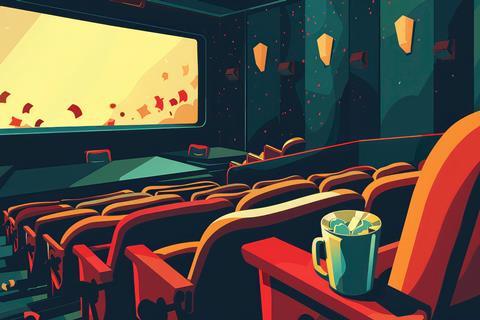
Global cinema box office hit $33.5bn in 2025 — up from $30bn in 2024 — and in 2026 it is forecast by film data and insights specialist Gower Street to reach $35bn. However, the recovery from the pandemic has been slower than many predicted when cinemas fully reopened in 2021, and the global box-office average for pre-pandemic years 2017-19 was $41.7bn.
While cinema box office has been recovering gradually, the rise of Imax and premium large format (PLF) means revenue growth has been driven by premium ticket prices, and admissions have essentially plateaued. Case in point is the UK, where 2025’s cinema admissions total of 123.5 million represented a 2.4% dip from the year before, despite a box-office rise of 1.2%.
The state of the global box office will be occupying minds at the annual CinemaCon trade convention in Las Vegas this month (April 13-16), where exhibitors and distributors will gather to view studio slate presentations and attend industry panels. Participants will discuss navigating our present era of attention warfare; understanding Gen Z and emerging audience trends; practical applications of AI — and more besides.
Meet the team: Screen’s industry experts

- Jackie Brenneman: Independent Film & Television Alliance and The Fithian Group
- Adam Cunningham: Allied Global Marketing
- Elisha Karmitz: mk2
- Patrick von Sychowski: European Digital Cinema Forum and CinemaNext
Ahead of CinemaCon, Screen International invited a panel of forward-thinking practitioners to discuss topics clustered around the theme of ‘The future of cinema’.
From France, Elisha Karmitz is joint CEO of mk2 (alongside his brother Nathanaël), the Paris-headquartered international exhibition, production and sales empire, with 26 cinemas in France and Spain. Karmitz takes the lead on many of mk2’s forward-thinking initiatives including mk2.Alt, which distributes unconventional and non-film content, and in 2024 achieved a breakout French hit with Kaizen (312,000 admissions), documenting non-athletic YouTuber Inoxtag’s mission to climb Mount Everest within one year.
Adam Cunningham is the newly promoted global CEO of entertainment, culture and lifestyle marketing agency Allied Global Marketing, which works with major media companies such as Netflix, Amazon, Disney, Warner Bros Discovery, Paramount Global and NBCUniversal. Cunningham delivered whirlwind keynote addresses last year at both CineEurope and CineAsia.
Jackie Brenneman is president and CEO of the Independent Film & Television Alliance and American Film Market, having served as executive vice president of the National Association of Theatre Owners (now Cinema United). With her former NATO colleague John Fithian, she is a co-founder of The Fithian Group, a strategic consultancy supporting the evolving theatrical and independent film ecosystem.
Born in Stockholm and resident in the UK, Patrick von Sychowski is vice president of the European Digital Cinema Forum and digital marketing and communications manager for exhibition services and cinema equipment installer CinemaNext.
Screen International: This year’s CinemaCon kicks off with a panel on the battle for audience attention, and Adam’s keynotes at CineEurope and CineAsia last year were hooked to a similar theme. How does cinema capture attention in today’s saturated landscape?
Elisha Karmitz: From my perspective, we always have to relate to where cinema is coming from. Cinema is coming from a place where cinema drives all the attention, when we’re talking about moving images. Attention was then battled by television, but cinema was still driving the most prestigious attention.
Social media created a new economy of attention. Cinema is not part of the economy of attention, cinema is part of the economy of culture and the economy of selling tickets and out-of-home entertainment.
Since Covid, is cinema driving less attention? Yes. Is the quality of this attention lower? No. Cinema is providing the best attention quality in the world. Is the KPI [key performance indicator] of today the volume of the attention you can reach? Or is the KPI of tomorrow the engagement of the people? I think we’ve moved from the KPI of reach to the KPI of engagement.
And in a world where the KPI is engagement and communities, then cinema, as it was invented by the Lumière brothers, is the place for people to gather, to attend, to laugh and cry in front of moving images.
Cinema has existed [for] 130 years. What’s challenged today is television. What’s dying is television. Cinema still exists because the brain is programmed in a way where social health means you need to go out and attend culture, and cinema is the most accessible way to do it.
Adam Cunningham: We all need to agree and understand that cinema does not need to beat the internet at abundance. One of the arguments we always see is, “Look at the slate,” as if volume is going to solve the issue. The thing we need to focus on is actually a little bit more downstream, which we’ll call intention.
I’ve always been a bit concerned when you have cinemas competing to be more comfortable than your living room. Your living room is more comfortable, by definition. So the cinema needs to own its special place as an intentional physical site in which to go and have that co-view experience.
In a world of infinite content, cheap content, what cinema does uniquely provide is an immersive, communal, undivided-attention space amid infinite choice. This is an editorial space, and that’s a good thing.
Jackie Brenneman: We don’t need to buy into the definitions that are being thrown at us. I think ‘attention economy’ is incorrect. We should be careful about not falling into a trap that others are setting for us, and think about the words we’re using.
What we have in the home, and we all know this, is a distraction economy. And if anything, it’s attention harvesting, right? You’re not paying attention when you’re going from TikTok video to TikTok video, you’re avoiding life, you’re procrastinating, and we have more and more opportunity to be distracted.
What matters — and especially when we’re talking about an economy — is who is paying? When you’re talking about attention harvesting or the distraction economy, it’s brands paying. Consumers, the audience, don’t value any of that. No-one would pay money to watch a TikTok video. It’s all free. If what we have is an attention economy in theatres and a community and actual humanity, isn’t that going to end up being more valuable for brands?
I very much agree the cinema experience offers something that’s deeply ingrained in who we are as humans. We should not let that go without understanding how important it is. I’ve said to theatre owners time and again, if your business was just turning on a screen and showing a movie, then you would have died during the pandemic. Because there were endless new releases right there on your home screen, and home screens are big now, and we’ve got nice couches. So if that were all true, no-one would have come back after the pandemic.
Audiences did come back after the pandemic, but not at 2018, 2019 levels, certainly not in Europe and North America. Is there anything we should be doing differently and also, is it necessary to fix this volume problem?
Patrick von Sychowski: It is too easy to look at one metric, which is absolute attendance, and be discouraged by the fact it doesn’t match the pre-pandemic years. If we broaden the scope, we’ll see that it has always fluctuated in the 130 years of cinema, taking a nosedive around television.
But there are metrics that are encouraging, which are everything from what people are prepared to spend when they go to the cinema, what the attendance is for Gen Z-ers, what we’re seeing in terms of the diversity of titles and genres on the screen, and audiences rediscovering repertory cinema. If we get hung up on absolute attendance, then at the moment it isn’t as good as it was, although getting better. But if we take a broader scope, then there are lots of reasons to be optimistic.
With spend, are you talking about both on the ticket price and on the in-cinema spending more broadly, including food and beverage?

Von Sychowski: Yes, on both of those metrics, but also things we wouldn’t traditionally consider part of cinemagoing which is the spending on collectibles. When I attended a screening of Five Nights At Freddy’s 2, not my typical film, I was amazed by the number of teenagers going to see it with their parents, wearing make-up or costumes. This was a regular screening, and the number of them that bought the collectible popcorn bucket — that might seem a perverse metric for a cineaste, but that is how one particular community of cinemagoers is engaging with the big screen. We should celebrate that fact.
Karmitz: We also need to relate to how do you build and finance a new cinema? In the ’80s and ’90s, cinema was doing absolutely amazing, so the way cinema rooms were built is as many square metres as possible, the largest room possible. This is not the equipment the audience needs right now. One of the investments we’re doing at mk2 is to transform one of our cinema plexes into a culture plex. We have 20 cinema rooms, and two of them are becoming a cinema hotel, very premium experience for locals and tourists. And two rooms are becoming a museum and an exhibition space, and we are producing the exhibitions.
The culture plex concept means that you have a various type of programming, various type of activities, and then the cinema room is becoming the epicentre of a lively neighbourhood experience. And that’s what will keep cinema relevant for the next 130 years — to become something that is community-driven and creating connections between people.
Brenneman: We know that consumers are more and more comfortable spending more money at the movie theatre. That is the piece of the industry with a clear value proposition: go to a tentpole, see it in the biggest, most expensive theatre you can, the best sound and projection, buy all the stuff, make it all exciting. That part is working.
If we don’t have enough movies that justify that premiumisation, then we have empty theatres, and you can’t staff that. So what do we do with the rest of the screens the rest of the time? We have not yet figured that out. We are trying to serve independent cinema using an old studio model, and instead, what we have are digital screens that are affordable and global, all kinds of audiences everywhere, and we are not yet offering them community-specific movies, affordable movies, movies that are targeted just to you, to bring out the fandom that is micro-fandom, that is still going to fill theatres, is still going to make communities excited.
Von Sychowski: Jackie has made this point before, but it’s worth reiterating that when theatres went digital, in theory they could show anything, but the virtual print fee meant that those projectors were locked up for the big Hollywood blockbusters that paid off the projectors.
Now that the virtual print fees have come to an end, we need new business models. That doesn’t mean that an animation title for families is playing at 10pm. We need to see more flexibility so that cinema programmers can be bold, can experiment, and can use the AI tools for micro-targeting, for having much more versatility in terms of the offerings of not just [Hollywood] films, but much more in terms of local films, films for foreign nationals, for specials and things we cannot even think of. There could be an audience for cooking shows in cinemas, but we won’t know until somebody’s tried and failed or maybe succeeded.
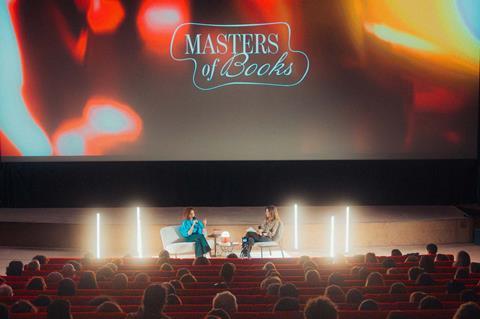
Karmitz: I’ll give you an example of the type of innovation we’re putting together. Since Covid we started a programme called mk2 Institut, producing masterclasses in our cinemas. We’re producing them ourselves with an internal team of programmers. We’re doing about 200 to 250 conferences per year only in our Paris cinemas. Last year, it was more than 50,000 admittances, and the average price is €15 [$17].
We launched Masters of Cinema, and we just launched Masters of Books. It’s a masterclass, very well crafted, and we sell the tickets for €30 [$35]. And so when you have the possibility to produce your own content, to have a full room at three times the average box office of a movie in France, we can talk about leverage in a different manner.
At CineEurope each year, exhibitors and studios regularly talk about the need for and delivery of a full slate of films, big and small, across all genres. At the same time, we are told that audiences will only come out to the cinema for something that feels like an event. How can every film be an event?
Cunningham: It can’t. Everything being a priority means that nothing is a priority. There’s two things here that are important. On the exhibitor side, the most important shift that needs to happen is cinemagoing has lost its ability to become a regular habit for a lot of people. We’re making more money on fewer people, and then we wrap it up into a headline and say, “Hollywood’s back.”
Two, our industry started with the studio brands meaning something, be it Paramount or MGM. A24 is an incredible case study in a studio brand becoming curatorial. That says you may not know what this film is about, perhaps because we’ve cut the trailer in an artistic way. But what you saw was A24, and we represent that we are worth your time.
The wrong diagnosis is, “Well, let’s just do more marketing.” I would argue that the right diagnosis would be better matching of title, audience and occasion. Audiences have not fallen out of love with content. There’s no data to say that people don’t like to watch stories, they don’t like to see movies. What we’re having an issue with is the culturally relevant reason to watch this format in that physical space with other humans.
Von Sychowski: Not every film will be an event, but every type of film has the potential to be an event. It doesn’t just have to be blockbusters. It can be any type of genre. It comes back to the old adage that nobody knows anything. Nobody knew The Housemaid was going to be such a breakout, although it’s interesting that the three most successful films in the UK at the start of the year were female literary adaptations: The Housemaid, Wuthering Heights and Hamnet.
But any genre can throw up surprises, and you can’t get hung up on promoting or expecting one type of film to be a success. Obviously, we’ve seen the enormous rise of anime, creating and tapping into its own subculture and fanaticism among those followers.
The best cinemas can create that space to give audiences permission to make it their own event, to make it something organic that they bring to the cinema and not be afraid. We have to learn to accept a little bit of chaos, whether it’s Gentleminions or chicken jockey [with A Minecraft Movie] or whatever craziness young cinema audiences will bring to it, and try to harness that.
Brenneman: Event doesn’t mean anything. An event is just an excuse for your audience to go. Vibe is a better word. And the vibe is the match of the audience to the event. I worked on a small independent movie, and we had one showtime in a bunch of different theatres [Two Sleepy People, directed by Baron Ryan]. Was that a global event? No. But the movie ended up making two and a half times its production budget, without spending any marketing money. And it was an event for those people because they cared about that storyteller and they loved being in a room with other fans of that storyteller.
There is a lot of emphasis on reaching and engaging with Gen Z and Gen Alpha. Do these audiences have different motivations and needs?

Karmitz: I think there are some specific needs. After Covid, cinema exhibitors knew that a big part of the attention has moved towards YouTube. For my generation or the older generation, we were connected to anchors that were on television. But the Gen Z anchor presenters are coming from YouTube. And so one of our ideas was just to bring the people that were the role models of this generation to the big screen, but not by the casting of a movie which will be old media with new people.
With our release of Kaizen with YouTuber Inoxtag, we realised these communities want to have their own events, they want to gather. And what would be the best places to host events? It’s cultural and obvious that it’s cinema. It’s important for them just to have the expression of the fact that cinema is not rejecting this evolution, that cinema can welcome it, that cinema can be a place for it.
I am 40 right now, and people of our generation can be a bridge between legacy media and new media, and we have a responsibility on it. It’s just trying to look at the audience in the eyes, and not for what we would love this audience to be, but for what they really are.
Cunningham: They’re not an alien species, and they are definitely not just younger media consumers replicating older patterns. They do arrive with a lot of different cultural anchors. Their role models tend to be closer to creators and things that are more native to platforms and smaller fandom ecosystems.
One of the behavioural things that we find so interesting about Gen Z and Gen Alpha is it is almost required at the outset that they want to feel a level of participation, and they want to feel identity and community. If they’re going to share something, it has to have meaning to them. They are like the antithesis of passive consumption.
We do know from a content standpoint they are into horror, anime and creator-led releases. There’s also a lot of emerging data on the younger generations, which is complicated. It seems this is the first younger generation we’ve ever seen, since we’ve been tracking it, where it is not inherently more progressive than the previous generation. And even more complicated within that, we’re seeing the first generation that has a gender split, where young women are becoming more liberal and young men are becoming more conservative.
The good news about Gen Z and Gen Alpha is we have zero data to indicate they don’t want to go to in-real-life ticketed experiences. We don’t have a generation that doesn’t care about content, doesn’t care about stories, and doesn’t want to leave the house. In fact, they love those three things, and we’re in the business of those three things. So it might just be the way we are positioning ourselves as culturally relevant and how we are giving that message.
We are living through a power shift from Hollywood to Silicon Valley, and the major legacy studios have reduced from six to five, and are set to become four. What is the impact?

Brenneman: There is a perception right now that these [tech] companies came in and disrupted cinema. But that’s not true — what was disrupted was cable. Now these companies are realising the cinema piece of the business actually matters: it increases the value for everything downstream. And now we’re starting to see some backtracking and more reinvestment in the cinema space.
There’s going to be more consolidation. But that is why we are now ready for an independent cinema revolution. We are ready to be a place where young people recognise themselves on screen, because we are welcoming their creators, their point of view, their way of speaking. We are targeting them, and we are also targeting Millennials and Gen Alpha and everyone else, because everyone belongs in a cinema and we have something for everyone.
Karmitz: Box office is important, but box office is a tool. It’s what is giving you enough possibilities and validation to do what you want to do. But for me, the most interesting KPI is cultural impact. If you want to do as much money as possible, maybe Silicon Valley is a better place to do money than Hollywood.
One thing we can compare is how many Netflix movies have reached a global cultural impact. And when you compare the money they are spending into content and the cultural impact of this content, maybe there is a KPI ratio that starts to be interesting.
The idea is not to compare them or to criticise them, but it’s how can we ask ourselves questions with other angles and build our own narratives on what’s meaningful, what’s not, and maybe also try to bring this concept to the audience.
Von Sychowski: What it comes back to is the fact that Hollywood is not a place, it’s not a shooting location, it’s not a fixed number of studios. We bemoan the loss of 20th Century Fox, forgetting that it was itself the result of amalgamation of Fox Studios and 20th Century Pictures. Hollywood is haunted by the ghosts of previous studios, whether it’s RKO or United Artists or MGM, which is now an Amazon [label], just like in Europe, we’ve lost great studios like Polygram and others before.
But the creative spirit lives on. And the appeal is irresistible. It’s catnip to tech executives, to pretty much everybody whose surname isn’t Hastings — they want to walk the red carpet, they want to feel the glamour of Cannes, they want to have that opening weekend box office number when it’s a great success.
What are the correct applications for AI in film and cinema, across production, distribution and exhibition?
Cunningham: Let me start with what I think is a terrible usage of AI: replacing any form of taste, point of view, authorship, performance or humans. Film is inherently human, and it is humans doing craft.
But there’s tonnes of good uses. You could do better demand forecasting, better data modelling. On the marketing end, we have far better audience segmentation, so we can do more with a lot less money that goes into media optimisation, asset versioning, how does the creative look?
What we don’t want is the AI to make the decisions. What we want it to do is to give us far better information so the human can make a better decision.
Brenneman: I’m in an AI think tank, and sometimes the group gets so fixated on all the things AI might ruin and I’m like, we can talk about all of the ways AI can just destroy our world, and we can rage, rage against the dying of the light. Whereas AI should be used to help make movies easier to greenlight and make it easier to distribute while spending less money on marketing.
But if you start over-relying on it, and anyone who uses AI quickly starts realising, now you’ve stopped double checking your work, you stop doing the extra research, so your own skills start to fall. You need to be better than the AI. The AI can make you faster, but you need to be better.
How do you see film and cinema industries evolving — over the next few years, and further into the future?
Karmitz: We are talking about the collapse of the cinema industry in the past year, but what has collapsed is television. Television collapsed and YouTube has become one global television tube. I think YouTube is much more resilient and powerful than TikTok, because TikTok is a trendy app, but YouTube is out there since the past 20 years, and has been something [that might have] died a death years ago, but it didn’t die. It didn’t die because it’s useful. It’s used by the people.
And so what we’re all experiencing right now is an ecosystem where the broadcaster is YouTube, and where the money is provided through YouTube by advertisers. It’s going directly to the creators and not to the gatekeeper, which is the head of the studio. That’s a very different world.
Brenneman: It’s a bottom-up approach to audience cultivation. The money isn’t great in YouTube, but there’s competition, and it’s democratic, and so then the ability to aspire to the bigger screen.
I will say that the meek shall not inherit the Earth — the bold, the brave and the optimistic shall do so. Those who want to sit back and just wish that things would go back to the way they used to be are going to go away. That doesn’t mean cinemas will go away. What I’m hoping is that there are brave, new, optimistic people who will take over those locations, who will programme, who will innovate, who will speak to audiences, who will make their theatres open to their communities, who will experiment. There is an exciting future out there for those who are brave.
Cunningham: My gut would be far more bifurcation. I think we’re going to see more giant global tentpoles, and also the other side of the barbell, which is targeted very community-specific, niche-delivered, audience-driven stuff. But the undifferentiated middle is going to have a hard time existing.
I think the creator-led and the fandom-led models will be interesting, and they will be viewed as far more legitimate than they are now.
I think you will start to see more studio brands leaning into this idea that, “Oh, our brand needs to mean something”, and associated, you will see more uptick on the library.
I think the best cinemas we have, the most important ones, will become even more beautiful, more luxurious, more special, better food, better experience. You’re going to see them a little bit more programmable outside of very specific theatrical slates, and you’re going to find them to be more aware and a little bit more mixed-use.
Von Sychowski: My vision of the future of cinema is that, in addition to amazing new films, big and small, it will be the ultimate portal to 130 years of cinema history, that it will unlock and open the archives. I always remember my first trip to Paris in the 1990s and I would open Pariscope [listings magazine], and there would be everything imaginable. There would be a Terry Gilliam festival. There would be one cinema showing all three versions of A Star Is Born. There would be The Battle Of Algiers. I think the potential and the appetite is there now for reconnecting with all these amazing old classics on the big screen, and already we’re seeing it happening thanks to Gen Zers, who are very cine-literate, thanks to Letterboxd and thanks to bold programmers willing to put the best that we’ve ever created back on the big screen.






No comments yet