







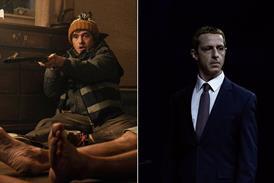



As the 2026 Cannes Film Festival draws to a close, Screen reflects on a few of the major talking points that dominated Croisette conversations for two weeks in May.
Hollywood films need to return next year
On the one hand, the absence of big US films in Cannes can be seen as a good thing. International buyers, who can feel shut out of the acquisitions race when there are no rights available, have access to a greater number of films. (Although the Neon/Mubi axis does replicate that a bit in the indie sector.) Who needs Hollywood? If risk-averse US filmmakers, or their distributors, don’t want to expose themselves to the Croisette critics, it creates space for fresher names to flourish.
But a Hollywood no-show is a problem for film journalists and critics. They try in vain to pitch their budget-strapped editor a story about or a review of a hot genre mashup that has made a star of a rising Vietnamese wunderkind. However, without a Ryan Gosling interview to go with it, the editor isn’t interested. Their publication needs easily digestible stories to engage their distracted readers, with a piece about or a review of a lesser-known film, piggybacking in.
Replicated over and over, this leads to quantifiably fewer stories about the Cannes Film Festival in the mainstream global press. Which means the potency of a Cannes premiere wanes overall as the wider public becomes less attuned to its power. This is a challenge when the film that was a big deal in the rarefied world of the Croisette finally hits cinemas in Doncaster, Düsseldorf, and Darwin.
A decent market
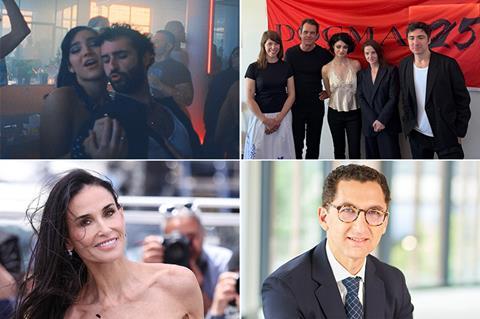
Buyers said that many titles from the official selection had been acquired going into Cannes, so there were few stories from the Croissette about frenzied bidding wars – with notable exceptions such as Jordan Firstman’s Un Certain Regard hit Club Kid, which A24 acquired worldwide for a reported pricetag of $17m.
In the market itself, the general view was that the range and quality of packages and scripts marked an improvement over 2025’s bloated fare. Many said there was a real sense of activity throughout the market, with an appetite for commercially driven titles with strong cast attachments and clear positioning. Prices, however, were a big talking point. Buyers who spoke to Screen were unhappy with Lionsgate International’s inflated asking prices on The Housemaid 2, and cited high pricing on Black Bear’s Jason Statham action thriller John Doe.
As always, the dealmaking will continue after Cannes as distributors weigh up titles and screen materials back home – so the full picture will only emerge in the coming weeks.
Politics? Sort of.
Any lingering fears that Cannes could be taken over by fractious political debate in the way the Berlinale was in February quickly disappeared. Thierry Fremaux set the tone in his pre-festival press session, when he displayed his skill at giving long answers that draw in politics and intimate knowledge of the festival’s history, often without directly addressing the question at hand. The opening jury press conference then embraced the political dimension, with jury president Park Chan-Wook gesturing against Wim Wenders’ Berlinale comments by saying, “I don’t think politics and art should be divided”, and US star Demi Moore advocating for openness: “If we start censoring ourselves, then we shut down the core of our creativity.”
Fellow juror Paul Laverty made the most pointedly political speech, saying “shame on the Hollywood people” who “blacklisted” actors such as Javier Bardem, who had spoken out in support of Gaza. However, there is some doubt that a blacklist exists: five days later, at the launch of the Competition title The Beloved, Bardem cast doubt on the efficacy of any such blacklist, saying he has received a “whole host of offers” of work recently.
However, Israeli films and talent are definitely struggling to break through. Shai Carmeli-Pollak’s Arabic-Hebrew-language The Sea, which won best picture at Israel’s Ophir Awards last year, and was deemed so sympathetic to Palestine that it prompted Israel’s hardline culture minister to threaten to withdraw state funding from the awards, has only just signed an international sales agent in Italy’s Coccinelle Films.
The path forward could be found in the words of a Cannes veteran, 89-year-old Ken Loach, who presented a screening on the beach of 1995’s Land And Freedom. Loach also expressed disagreement with Wenders but pointedly referred to the German auteur as his “good friend”. Making space for those who want to make political points, and working through any differences with discussion, is the most healthy future for festivals.
The Dogma movement is back
As AI swarms over the industry, a counter-movement is taking shape in the return of the Dogma filmmaking programme. It was first relaunched at Cannes last year with five Nordic directors, all making low-budget features under 10 filmmaking rules, in the fashion of the revolutionary Dogme 95 movement led by Lars von Trier.
Two other European nations have now launched their own versions. Germany presented five of its top directors in Cannes, with Tom Tykwer working on a film inspired by his mother, and Ilker Catak undertaking research for his feature without using the internet, as per the Dogma rules.
Mia Bays was present at that event and will spearhead a UK edition of Dogma once her BFI contract as director of filmmaking funds ends in October, working with Gillian Berrie. “This is about being part of a European film movement stripping cinema back to the essentials so something truthful, unruly, and alive can break through,” said Bays. No sign of AI there.
Sweden’s Isabella Eklof, one of the new Nordic cohort, presented the first footage of her Dogma film Mr Nawashi at The Five Nordics showcase. Netflix has joined the Nordic edition as a co-financing partner and will stream the films on its platform in the region after full theatrical releases. Rule four of the new manifesto reads: “We’ll only accept funding with no content-altering conditions attached” – so the streamer will have to watch Eklof’s BDSM relationship drama with the rest of us.
Two-tone festival
By the time Cannes kicked off on Tuesday, May 12, many buyers and sellers had been in town for a couple of days. Some set up shop on Saturday, while another told Screen that they had notably more meetings on Monday, one day before the Marché began, than on the following Monday, when the market is supposedly still in full flow. Talk of day 0 (Monday 11 this year), -1 (Sunday 10) and even -2 (Saturday 9) is common.
The knock-on effect has been execs leaving town early, as soon as Saturday, May 16 in some cases – a change from years gone by when the middle Saturday was seen as the key day of the festival. However, the vacuum left by the departure of traditional film traders has been filled by the upstart tech sector. The Croisette was heaving with people working in AI and virtual production across the second week, with more than 20 tech-centric sessions in the final four days of the Marché du Film programme. Can these two sectors combine in future markets? That’s perhaps a panel for next year’s festival.
The fragile European dream
Away from the red carpet, there was plenty of lobbying at Cannes over AgoraEU – the European Union’s proposed replacement from 2028 for the Creative Europe funding programme. The scene was set on the eve of the festival by a petition signed by over 5,000 filmmakers and execs, calling for the EU to continue supporting cinema. AgoraEU’s budget is higher, but its funding scope is much wider, including news media and video games, and it is still unclear exactly how much financial support will be allocated to film and TV.
The conversations then continued in Cannes: several high-profile European politicians were in town, including the EU commissioner responsible for Creative Europe, Henna Virkkunen (who told Screen the intention is not to cut film funding), Sabine Verheyen, vice-president, European Parliament, and MEP Emma Rafowicz, vice-chair of the European Parliament’s Culture Committee. And leading European film organisations and networks were out in force, putting the case for the need to back films that reflect the many voices and identities of Europe.
Canal+ controversy consumes French industry
Following an open letter published in Liberation on the eve of Cannes, decrying the majority Canal+ shareholder Vincent Bollore’s increasingly tight grip on the industry, Canal+ Group CEO Maxime Saada waded in to say the media giant would no longer work with the hundreds of signatories. He said he viewed this petition “as an injustice towards the Canal teams who are committed to defending the independence of Canal+, and the full diversity of its programming choices”, adding, “Consequently, I will no longer work with, nor do I wish Canal+ to work with, the people who signed this petition.”
Towards the end of the festival, the open letter had gone global and secured at least 3,500 signatures. “By leaving the French film industry in the hands of a far-right boss, we risk not only the standardisation of films, but a fascist takeover of the collective imagination,” they declared, citing fears that Bollore would be “in a position to control the entire film production chain, from financing to distribution on both the small and big screen” once the company takes control of UGC, France’s third-largest cinema chain, from 2028.
Additional reporting by Jeremy Kay.




1 Readers' comment