








Small changes on a production can bring huge opportunity and reward for cast and crew with disabilities and neurodivergence.
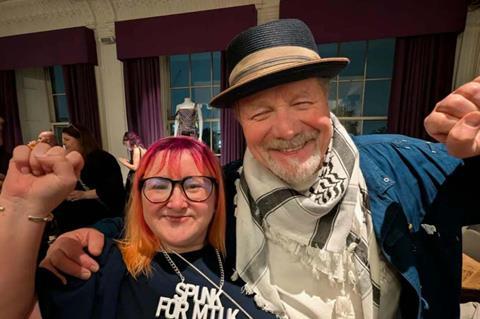
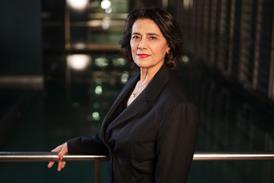
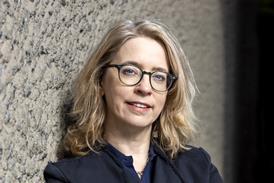
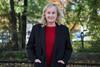
“My job is to make everyone else’s job be done to the best of their ability,” says access co-ordinator Rhona McKenzie Lang of her work on I Swear. The relatively new role is one focused on helping cast and crew members with disabilities and neurodivergence, both visible and not. As McKenzie Lang sees it, it is a smart investment for productions.
“People assume it’s going to be costly, when in fact a lot of my solutions can be cheap and cheerful if we do them soon enough,” she says. “There is funding, and I can assist people to find those things.”
McKenzie Lang grew up with a disability of her own, in a multi-disability household, giving her experience as both carer and cared-for person. She performed disability liaison work for the civil service and trained in production management, leading her to jobs in TV and film – while maintaining a career as a stand-up comic (as Rhona McKenzie). A chance encounter with actress and access co-ordinator Julie Fernandez led McKenzie Lang to the role, bringing to it all of her lived experience.
Wide remit
“I love the variety of it and I enjoy helping the people that I help,” she says. “I’m not only dealing with people who might have physical limitations, such as myself. We’re looking at visual impairment, hearing impairment, deafness, neurodivergence and the wide umbrella there is within the hidden-disability world.”
Her role is tailored to the needs of the individual and the production. It is also confidential, with information shared only where there is a business need, to lessen the worries about discrimination or adverse consequences for freelancers.
Her role on I Swear took four days, and centred around a scene where some 30 people with Tourette’s assemble for one of John Davidson’s workshops. For McKenzie Lang, the preparation for those shooting days involved reaching out to the Tourettic actors and, where appropriate, their parents and carers to find out what accommodations might be necessary. Those needs included pre-advising a train company that someone with Tourette’s would be travelling, in case of incidents, and finding out the best treats and bribes for each of the younger cast to ensure their happiness on set.
She is fiercely supportive both of the production’s inclusion of Tourettic people all around its lead and the decision to have a non-Tourettic actor play John Davidson. “The nature of the condition is such that a Tourettic person playing that role would have to play specific tics on demand, yet suppress their own,” she says. “It’s like holding in a sneeze.”
She hopes for more opportunities for people with disabilities, in particular to play disabled roles that have gone to able-bodied actors. “Why do you assume disability will restrict that beautiful ability to tell a story? A disabled actor may be able to bring things that an able-bodied actor can never bring as they haven’t had that experience.”
Similarly, McKenzie Lang hopes the role of access co-ordinator will not be needed forever, and these considerations will become second nature. But for now, it is a way to help everyone on a production, with visible disabilities or not, to do their best work. “My disability isn’t what stops me,” says McKenzie Lang. “What allows me to be independent is people making accommodations. It’s a mindset.”

No comments yet