







Ever since its first edition in 1972, International Film Festival Rotterdam (IFFR) has carved out a distinctive reputation in the crowded festival calendar.
From the very beginning, it has programmed cinema from all over the world – from avant-garde films to arthouse discoveries, documentaries and popular films that do not tend travel far outside their home borders.
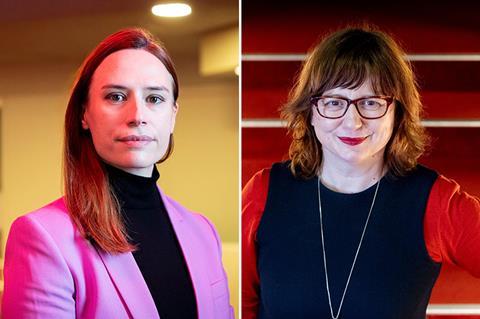
Festival director Vanja Kaludjercic and managing director Clare Stewart describe IFFR as “a place of discovery” with a uniquely diverse programme and audience.
“You can come to Rotterdam and feast on these discoveries from all corners of the world that will never, or rarely, come to your doorstep in terms of cinema,” says Kaludjercic, now in her sixth year at the festival, which runs this year from January 29-February 8.
Rotterdam’s two competitions – Tiger and Big Screen – each showcase 12 films. The Tiger competition spotlights emerging voices from across the globe, while Big Screen aims to bridge popular, classic and arthouse cinema.
Of the non-competitive sections, Limelight highlights films that have been box-office success stories in their own country or festival hits that help to broaden IFFR’s audience appeal.
The Bright Future section is for debuts at the cutting edge of contemporary filmmaking, while Harbour is billed as “a safe haven to the full range of contemporary cinema that the festival champions”.
The wide-ranging festival also encompasses retrospectives (from Egyptian director Marwan Hamed to Japan’s V-Cinema), talks (including Kleber Mendonça Filho and Carla Simón), an extensive immersive section Art Directions, as well as being home to IFFR Pro, project market CineMart and the Hubert Bals Fund.
Programming range
To underline Rotterdam’s global programming range, Kaludjercic picks out a few highlights.
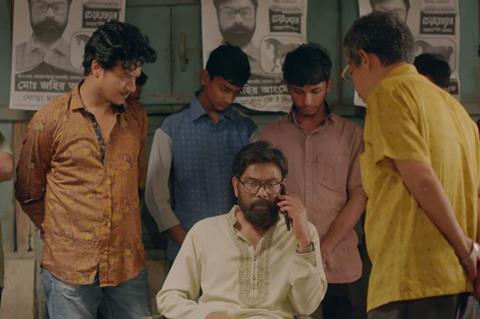
There are three films from Bangladesh this year, including Mejbaur Rahman Sumon’s rural arranged marriage drama Roid in Tiger competition, and Rezwan Shahriar Sumit’s Master, about an idealistic teacher drawn into local politics who gradually becomes corrupt and violent, in Big Screen competition.
Additionally, the programming team has spent time building connections in sub-Saharan Africa, and Kaludjercic says the festival is “incredibly proud” to have selected three in the Tiger competition.
They are: Hugo Salvaterra rap musical My Semba from Angola; Ique Langa’s Mozambique-set O Profeta, about a priest who turns to witchcraft; and Jason Jacobs and Devon Delma’s Variations On A Theme, a portrait of an elderly South African goat herder drawn into a wartime reparations scam.
“Strong political films” are also a theme, notes Kaludjercic, a former head of acquisitions at Mubi. She picks out Tiger competition titles Unerasable! by Socrates Saint-Wulfstan Drakos, a memorable pseudonym for a filmmaker who has fled an authoritarian Southeast Asian regime only to become caught in another struggle, this time with bureaucracy, in the West.
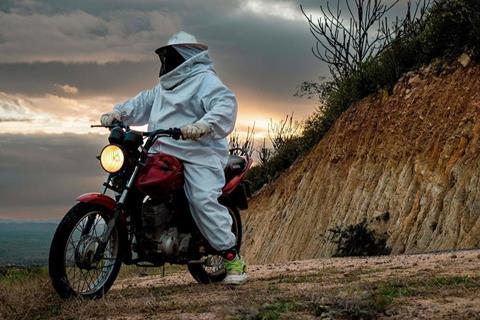
She also flags Brazilian director Tiago Melo’s “pulpy, politically charged sci-fi” Yellow Cake in Tiger competition, about scientists’ efforts to use uranium to eradicate mosquito-borne Dengue fever, as well as Big Screen murder mystery The Arab, the fiction debut of Algerian director Malek Bensmail, known for his documentary work.
Even IFFR’s opening film – Providence And The Guitar by Portugal’s João Nicolau – fits into the festival’s ambition to champion films from around the world and Kaludjercic notes the challenges facing independent Portuguese filmmakers.
Inspired by a short novel by Robert Louis Stevenson, Providence And The Guitar follows two performers trying to keep their stage careers afloat. It marks the acting debut of Salvador Sobral, winner of the 2017 Eurovision Song Contest, and is “witty and playful”, says Kaludjercic.
Human rights focus, industry support
Rotterdam wears its politics on its programming sleeve and leans into a series of human rights initiatives. It was a founding member in 2020 of the International Coalition for Filmmakers at Risk (ICFR) with the European Film Academy and International Documentary Festival Amsterdam (IDFA).
IFFR launched the Displacement Film Fund last year, an initiative backed by Cate Blanchett to fund work by displaced filmmakers. Five short film production grants of €100,000 were given to Ukraine’s Maryna Er Gorbach, Somalia-Austrian Mo Harawe, Syria’s Hasan Kattan, Iran’s Mohammad Rasoulof and Afghanistan’s Shahrbanoo Sadat. They will premiere their completed works at this year’s festival.
Meanwhile, IFFR’s CineMart co-production market has recently launched Safe Harbour, a new market programme for projects in development from emerging and displaced filmmakers. Four early-stage projects are being presented by filmmakers from Myanmar, Sudan, Syria and Palestine/Gaza.
“As the world becomes more troubled, our commitment to the human rights space is something that is developing very strongly,” says Stewart, who joined IFFR in 2023, having previously headed the Sydney, London and Sheffield DocFest festivals.
She notes that one in 70 of the world’s population are refugees or have been displaced, according to the United Nations.
Elsewhere, the festival has agreed new partnerships to expand its community reach throughout the city of Rotterdam. Fenix, Rotterdam’s new art museum dedicated to migration, will host a number of festival activities, from film screenings and creative activities to a children’s corner. The Art Directions programme has two new partnerships with Museum Boijmans Van Beuningen and Nieuwe Instituut. De Doelen will remain as the festival’s central location, home to IFFR Pro.
Stewart says de Doelen and IFFR have agreed on a new strategic alliance this year, which includes developing a film and music programme for the autumn season.
Funding, says Stewart, remains challenging, as it is for many festivals, given rising costs. But Rotterdam is fortunate, she says, in having a four-year funding settlement from the Dutch government and the city of Rotterdam covering its 2026-2029 editions, and has recently received a boost in support from the Creative Europe programme.
“The certainty of those three funding streams does give us a credible and solid base to work from,” she says, adding that the budget for the 2026 edition is between €10-11m including in-kind support.





No comments yet