












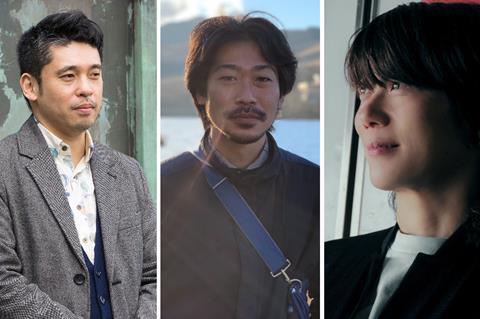
Japan is well-represented in Competition at the 39th Tokyo International Film Festival, with three of the section’s 15 titles originating from the festival’s home country.
Here, the filmmakers reveal the inspirations behind their features.
Akira Ikeda, The Canary’s Lullaby
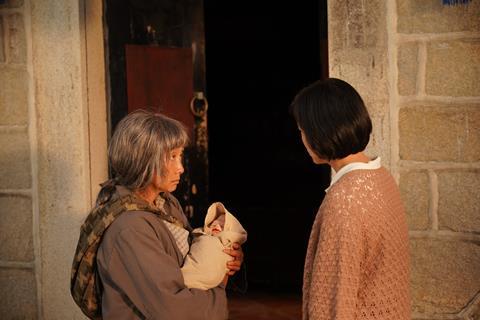
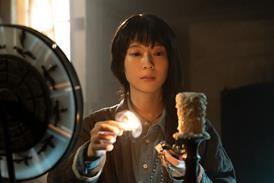
Filmed on a small island in Taiwan, The Canary’s Lullaby uses the setting to give an otherworldly feel to the latest feature by Akira Ikeda.
Based on true events that occurred in the mid-1990s in Russia, the story follows an elderly woman, played by Kimiko Yo, who adopts a strange infant creature she finds one night, and explores the effect their odd yet touching relationship has on the small rustic village where she lives.
“The island was so small you could drive around it in 30 minutes,” says Ikeda of Kinmen, Taiwan, where the production filmed for 20 days. “There was only one hotel, where the entire cast and crew stayed during the shoot. Everyone being located in the same place really helped the team get close, especially because communication required more time with the translation from Japanese to Mandarin.”
It marks Ikeda’s first film to play in Competition at Tokyo, having previously screened Ambiguous Places in the festival’s Japanese Cinema Splash section in 2017. He is also known for 2013’s Anatomy Of A Paperclip, which won the top prizes at Rotterdam and Vancoucer, and 2020’s The Blue Danube, which received the special jury prize at Tokyo Filmex.
The Canary’s Lullaby stars a combination of actors from Japan and Taiwan, led by Kimiko Yo, Joe Odagiri (who also served as executive producer) and Liu Kuan-ting. The actors converse in a combination of Japanese, Mandarin and Hakka Chinese.
“Language often serves to pinpoint locations, which is something I wanted to avoid,” says Ikeda. “By mixing languages, I wanted to further emphasise the imaginary nature of my world. The same goes for the use of Kinmen itself—it really feels like another universe.”
Ikeda credits lead actor Yo, who also appears in Competition title Two Cigarettes, Three Nights, with helping bring the film to life.
“We offered her the role four or five years ago, and the shoot kept getting pushed back, but she stuck with us,” says Ikeda. “She really immersed herself in the role. We built the character together from the ground up, collaborating closely on everything from the costume to makeup and hair.”
Produced by Fumiko Osaka of Shimensoka and Taiwan’s Oxygen Films, the Japan-Taiwan co-production is set for release in Japan by Hark & Company on December 11.
Akira Yamamoto, The Intertwining
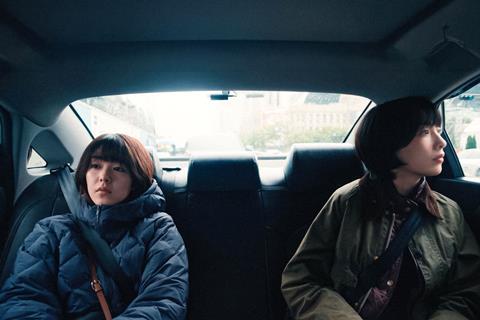
Japan’s Akira Yamamoto had his first chance to film overseas with this story of two women who discover a shocking connection.
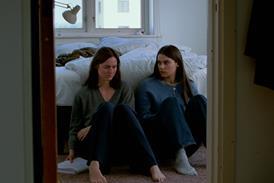
The Intertwining follows two university students from Japan and South Korea who meet by chance and learn that their embryos were accidentally switched before they were born, meaning they were raised by each other’s biological parents.
Based on a 2022 novel by Shiho Tanimura, it is the third feature by Yamamoto, whose 2023 film After The Fever was selected for Busan.
The filmmaker, who was approached to direct by production company NJCreation, found a lot that interested him when he dug into the original novel.
“I loved the story, but I was also entranced by the way Tanimura beautifully described the characters and their daily lives,” says Yamamoto. “I was interested in translating that feeling into cinematic form.”
Playing the role of an exchange student raised in South Korea who is studying in Japan was a fresh challenge for Karata, who not only had to learn Korean, but had to train herself to speak in her native Japanese as if it were her second language.
“I was determined that she shouldn’t speak in so-called ‘broken’ Japanese,” says Yamamoto. “I had her take a moment to think about what she was about to say, to pause a few beats longer than usual. That came from discussions from some international friends who live in Japan, who told me they sometimes have moments of uncertainty, wondering if their choice of words is appropriate.”
Filming took place in Japan for 14 days and South Korea for three days, allowing Yamamoto his first chance to shoot abroad.
“It was a lot of fun,” says Yamamoto. “It felt like the border between the cast and the crew was a little lower than in Japan, and the whole thing had a very friendly atmosphere.”
While this is the first features Yamamoto has had play at TIFF, he participated in the Teens Meet Cinema program as a mentor in 2021, helping young people make short films over the course of a week while documenting the proceedings. The director is also participating in this year’s TIFFCOM Tokyo Gap-Financing Market with a new project titled Where We Bury The Pigeon, which also has a South Korean connection.
The Intertwining is set for release in Japan through Nakachika/Fly Free Entertainment on February 5, 2027.
Yukiko Mishima, Two Cigarettes, Three Nights
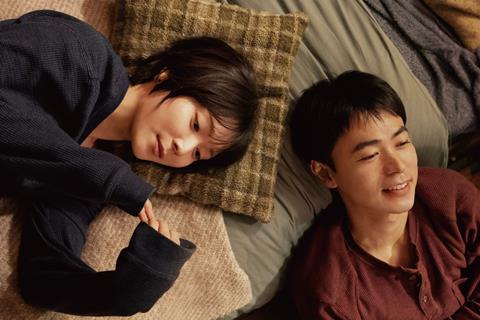
Filmmaker Yukiko Mishima pays tribute to a late friend in Two Cigarettes, Three Nights, which marks her first time in Competition at TIFF.
The film, based on a 2014 novel by Akane Chihaya, follows a troubled illustrator whose reunion with an old university friend changes the course of her life and career.
The cast is led by Mayu Matsuoka, who starred in Cannes Palme d’Or winner Shoplifters and won the Tokyo Gemstone Award at TIFF in 2017 for Tremble All You Want, and Ryo Narita.
Mishima was deeply affected by the original novel, she tells Screen, which reminded her of a male friend who passed away in 2019 (the novel and film are both titled Otokotomodachi, or “guy friend,” in Japanese).
“I discovered the book after having lost that friend, and while the Covid-19 pandemic was taking hold,” says the director. “It made me think deeply about what it means for people to be together and depend on each other, especially during a time when we weren’t supposed to be in contact with others. I wanted to carefully capture the emotional journey of these two characters, and I wanted the film to serve as tribute to my late friend as well.”
Produced by Yusuke Sugimoto of Happinet Phantom Studios, the film shot for 14 days in Kyoto, three in Toyama (including a scene on a high-speed train), and two in Hiroshima.
“I wanted the film to be a kind of ‘waterfront road movie,’” says Mishima. “Kyoto is a place where the waterfront is very close by, which meant I could film the two characters walking along the water’s edge while deepening their connection with each other.”
Mishima was previously selected for TIFF with Night’s Tightrope in 2016 and Dear Etranger in 2017. She was also a featured speaker at a 2021 masterclass celebrating pioneering director Kinuyo Tanaka and took part in a TIFF Lounge talk session alongside Indonesian filmmaker Nia Dinata in 2024.
“Every time [TIFF] rolls around, I try to watch as many films as possible to understand for myself what kind of messages people all over the world are trying to convey through their films, as well as what’s happening around the globe,” Mishima adds.
Two Cigarettes, Three Nights is set for release in Japan by Happinet Phantom Studios on November 6.






No comments yet