








The influence of the IDFA Bertha Fund, which supports auteur documentary filmmaking in territories where access to funding is ’structurally challenging’, exceeds its relatively modest annual budget of just over €1m.
With key stakeholders including the Bertha Foundation, Creative Europe, the Netherlands Film Fund and the Ford Foundation, the Fund’s involvement in a project can be a stamp of quality and can make the difference between a film being made or not.
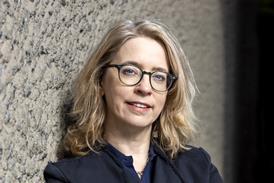
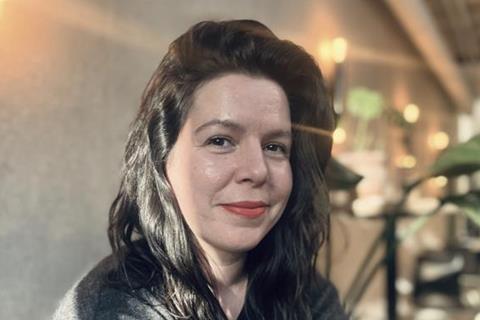
The Fund is now headed by Selin Murat, former IDFA markets manager, who took over the role of executive director from Isabel Arrate Fernandez, IDFA’s artistic director, who had overseen the Fund for more than 20 years
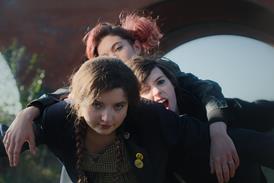
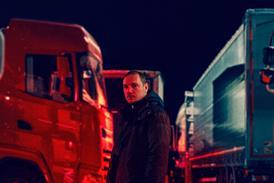
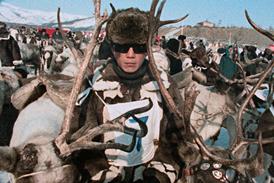
As ever, this year’s festival programme is bulging with titles that have received Fund support. They include Past Future Continuous, co-directed by Iran’s Morteza Ahmadvand and Firouzeh Khosrovan, Iraqi director Zahraa Ghandour’s debut feature Flana, Simón Uribe Martínez’s Grounded from Colombia and María Silvia Esteve’s sexual abuse doc Mailin from Argentina.
Additionally, several Bertha-supported projects have been pitched in the IDFA Forum, including Juan Pablo Polanco’s Trail On The Water and Luis Gutiérrez Arias and Zaina Bseiso’s Todo Lo Solido.
Murat talks to Screen about the importance of the Fund, filling a budget gap and supporting displaced filmmakers.
How does the IDFA Bertha Fund choose which territories to support?
We try to be as transparent as possible about our decision-making processes. We stick to objective qualifications, using the [Organisation for Economic Co-operation and Development’s] DAC List [which identifies low-income developing countries] and Reporters Without Borders. But even those are not flawless systems.
Please talk about how you decide which organisations to support. For example, you are backing the Palestine Film Institute.
We are not the only partners of the Palestine Film Institute; we are one of many. Our funding is not huge, €25,000 over two years, but it will enable [the Institute] to support two or three projects [and will help] them to set up an independent fund that they will run independently. They will be able to work with Palestinian filmmakers globally.
Under Isabel Arrate Fernandez’s leadership, there was institutional funding [from the Bertha Fund] over the years, so this is not completely new.
We also have a collaboration with DocA, a documentary initiative based in Nairobi, which is part of the African Reel Collective (ARC) that brings a delegation to IDFA. We are more connected to East Africa thanks to that relationship. And, of course, we continue to support Ukrainian films, for example, Militantropos from the Tabor Collective.
Does the Fund’s support extend to helping the filmmakers find distribution for their films?
If [filmmakers] are lucky enough to work with sales agents, that’s great and we can help with that. If they can’t find one, because sales agents are over-subscribed and working really, really hard in a tough environment, and filmmakers [try] to do it themselves, we try to help them.
Many filmmakers are now displaced, and we are examining how we can support filmmakers who are themselves refugees on a case-by-case basis.
With Dutch national lottery funding of around €25,000 coming to an end, how will you find the money to replace it?
It’s easy for me to go out and say [to potential funders], “Do you want to be part of this?”. Our current stakeholders are quite impressive.
There’s also a development team at IDFA which fosters relationships with what we call the “special friends”, individuals who believe in education, cinema and the IDFA Bertha Fund – and who donate money. They’re important partners.
I know the value of the IDFA Bertha Fund and its importance in terms of providing filmmakers with the ability to tell independent, creative stories on their own terms with the narrative sovereignty they deserve.

No comments yet