



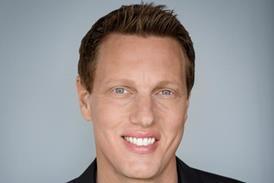








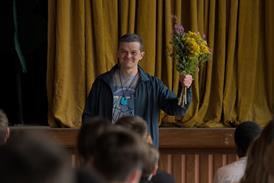


“It was intense and quite a learning curve,” says Tanja Meissner, reflecting on her first year in charge of the Berlin Film Festival’s industry activities.
The former Memento Films International and Celluloid Dreams executive is now heading into her second edition as director of Berlinale Pro, overseeing the European Film Market as well as the Berlinale Co-Production Market, Berlinale Talents and the World Cinema Fund, and she is starting to put her own stamp on things.
For 2026, Meissner says the number of EFM participants are “stable”, predicting around 12,000 participants. The largest contingent is from Germany, as usual, followed by the US, France and the UK. She adds that the Asian presence is high, apart from China because of the overlap with the Chinese New Year. Exhibition space in the Gropius Bau has again sold out, with around 600 exhibitors booking stands.
Meissner acknowledges that the film sales market is not as “feverish” as it once was, with buyers much more cautious amid the challenges facing theatrical and the rise of streaming. “There is still traction, but it is more selective,” she says.
“There’s a healthy demand for compelling stories with distinctive voices and clear market potential,” adds Meissner, picking out genre films and auteur cinema with international appeal.
Given this context, it’s more important than ever for sellers to create market momentum for titles, which is where the EFM can help. “It is still important to come together,” she says. “You can create a different momentum on site and in person than you can online or with an email.”
The EFM’s status as the first big film market of the year is also key. It’s a good time to introduce brand new projects. “Budgets are fresh and everybody comes with full pockets,” says Meissner. “People are usually in a buying mood when they come to Berlin.”
A lack of screening space remains a challenge since CineStar closed its multiplex in the Sony Centre. This year, EFM has created two “pop-up solutions” to help – one in the MGB parking lot, the other on the second floor of the building.
“I would like to develop our venues further and find more screening venues, because there are more requests than I can satisfy,” says Meissner. “It is a real challenge, one I will focus on again much more in the coming year.”
Market innovations
Meissner has introduced a number of new strands to the EFM this year to develop the market further. Many of the new initiatives are focused on producers, who now make up around 30% of the EFM’s participants. Meissner says the EFM has sought to move away from conference type debates “that discuss what is broken” to offering more training type activities that concentrate “on what we can learn and do better.”
She picks out the EFM Innovation Hub, launched last year, which showcases the latest production tools. It returns this year, offering networking sessions to connect executives working in film, animation, gaming and XR.
“It’s about competence building and upskilling, and was the first of its kind,” she says. “Now everybody does it, because it makes sense. There was a huge attendance in those workshops last year.
“Everyone needs to adapt to stay competitive, and that is an imperative too for Creative Media Europe programme who are valuable partners for events like ours.”
Among the new offers for 2026 is EFM Beyond, which brings together producers in film, animation, gaming, and creative sectors such as story-based XR. EFM Beyond will include workshops on subjects such as creating additional revenue streams by expanding IP across multiple media, a worldbuilding session as well as a cross-IP accelerator organised with SpielFabrique and the Annecy International Animation Film Festival.
For Meissner, this is all about sparking new business opportunities, helping the film industry to connect with neighbouring creative sectors and to open up possibilities for additional financing or new revenue streams.
Another new initiative is EFM Animation Days, offering animation showcases, pitches, case studies, workshops and networking. Part of the new initiative is the Annecy Animation Showcase EFM, curated by the Annecy festival and its animation market MIFA, showing around 30 animated works in progress. ”We wanted to support the European animation industry,” explains Meissner, describing it as a genre that Europe excels in – and that is important for European identity.
The EFM has also partnered with Fantasia International Film Festival’s Montreal-based Frontières Market for a genre works-in-progress showcase, the EFM Frontières Focus. Five international genre projects will be highlighted.
Also new this year are several WIP and pitching sessions, including the EFM Far East in Progress WIP selection, a new partnership with EAVE Ties that Bind and Focus Asia (Udine Far East Film Festival). The showcase will present new Asian films in post-production.
Elsewhere, returning strands include the EFM Startups Programme, EFM Investors Forum, Berlinale Series Market and DocSalon, the Berlinale’s networking platform for nonfiction professionals. The EFM Conference Programme, meanwhile, will also offer talks, masterclasses and panel discussions.
Another key focus for Meissner has been connecting the different strands of the Berlinale Pro so that they work more closely together – from the EFM to the Berlinale Co-Production Market, Berlinale Talents and the World Cinema Fund.
“We don’t conceive so much in silos anymore, we have been talking a lot to each other,” she says. Among new appointments are Sata Cissokho as the new head of the WCF, joining from Paris-based Paradise City Sales.
Meissner meets with Berlinale director Trisha Tuttle at least once a week, part of a stated move for the various Berlinale Pro initiatives to work closer with the festival and to stress their joint offer. “Both of us think of the festival and the market as two sides of the same coin,” she says.





No comments yet