










Berlinale festival director Tricia Tuttle believes the event has a significant role to play in driving a strong, year-round conversation about a wide range of films, and helping them connect with global audiences.
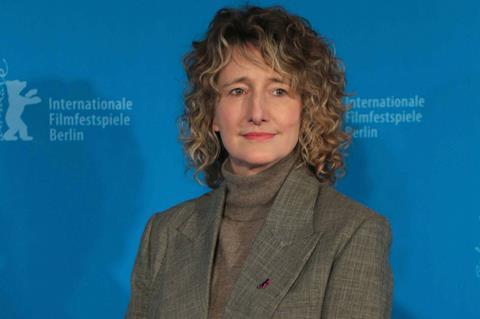
“Everyone wants something different from the festival,” says Tricia Tuttle, reflecting on the feedback from the German and international industries following her first edition in 2025. A year on, and with creative and business oversight of the Berlinale, Tuttle is working to help sales companies by strengthening the festival’s ability to launch films into the world, partly by sharpening the distinctions between the various sections. “I felt they had become a little compressed,” she says. “It was hard to tell what was Encounters or Competition or Forum or Panorama.”
If she has a driving force for this year, it can be summed up as follows: “We’re trying to enable buyers to find what they need,” says Tuttle.
What did you learn from last year that you’re building on or making sure you don’t do again?
Last year was a whirlwind. It took me about six months to get my programme team in place. When we started working on the programme in earnest, it was late summer, early autumn, which is very, very late. This year I wanted to start immediately. Even during the festival [last year], we were having conversations about this year.
What is the industry, both in Germany and internationally, telling you it wants the festival to be?
This is a big, complex festival where there are many different needs. That’s one of the challenges of any big festival, but particularly the Berlinale because we are a public-facing film festival. [Last year] we had 340,000 tickets sold in admissions from our public audience, and another 115,000 from our industry audience. There is a responsibility to serve that public audience. But we are also a major international market, with more than 20,000 professionals coming.
We also have a role to play in supporting and spotlighting German talent and supporting German exhibitors and German distributors, but at the same time, we are serving an international marketplace.
How easy is it to find those crossover arthouse films that launch at a festival and go on to find a commercial audience?
Well, no-one knows anything. Films that we thought would do well in the autumn season, coming out of the festivals and launching into an awards season conversation, haven’t done as well as we hoped. There are lots of things going on. It’s a difficult time for the market. One of the roles we need to play is supporting those films. Last year, Late Shift, Petra Volpe’s film, and Ido Fluk’s Köln 75 [went on to do] very well in German-speaking territories. Blue Moon launched with us last year and it’s nice to see how that film has gone on and been part of an awards season conversation.
But we’re talking about success on different scales, because there are films like Gabriel Mascaro’s The Blue Trail, which isn’t a big international talking point, but it sold well and played festivals all over the world. The sales company [Lucky Number] was very happy with the performance of that film. Keeping that vibrant fauna and flora, that healthy ecosystem for all kinds of films, is part of what the Berlinale can do.
It can seem like some European sales companies hold their big films for Cannes. Is there more you think they can do to support the Berlinale?
Cannes is a wonderful film festival. It’s a powerful place to launch a film and I don’t blame any sales company for wanting to go there. But I think we need a 12-month year. It’s not just about overly focusing on particular festivals. The awards season is taking up a lot of airtime for a small number of films. And I would love to see more marketing. I’d love to see more writing about a wider range of films.
But sales agents are hugely supportive of the Berlinale and we are important to them too. Sometimes I think, what else can we do for them? I feel a responsibility to help make sure our platform is as strong as possible so that we can help them launch films into the world. That’s work we have to do.
Can you give an example of how the Berlinale is doing this?
There are a million little ways you can make changes that add up to a big impact. Our press team is working hard to make sure we keep the international press coming. Our EFM [European Film Market] team is supporting buyers to come to the festival and see work.
We are trying to enable buyers to find what they need. One way is trying to make the distinctions between our [festival] sections sharper again. I’m working with the section heads to sharpen those so the right buyers can find the right films. So that a sales agent feels they can launch a film in Generation and it can find the right buyers and find the right audience and find the right press.
Many of the Competition films have rights available. That should create some lively EFM conversations.
We heard from buyers, and from sellers too, that they weren’t finding as much as they wanted in the programme. And I really, really heard that. It’ll take time to build the platform as one where we can help sell bigger films too. The EFM is already doing that. But the gap between what the EFM sells and the festival programme has widened a bit in the last five, six years.
Tanja Meissner, who is the head of Berlinale Pro and the director of the European Film Market, and I are working with a paper wall between us. It’s the same business but we have different objectives, and our stakeholders have different needs. But we’re working to make sure those two sides of the brain work together.
Following the controversy of the closing night ceremony in 2024, before you took over, some Arab filmmakers were concerned about playing their films at the Berlinale. This year there are some interesting Arab voices throughout the programme. Would you like to see more Arab filmmakers bring their films to the festival?
Absolutely. The festival has a great tradition of screening excellent films from North Africa and the Middle East, and we want to continue that. We spoke publicly about how we needed to rebuild trust with people who felt worried about being able to come here and speak openly. And we did do a lot of talking last year, which was, I think, effective. We took the sting out of the conversation so people do trust this is a platform that values free speech.
But we live in an angry world, and you see the divisions in conversations that happen at festivals around political flash points. And that’s normal. But we also feel a responsibility to make sure our platform encourages thoughtful, open dialogue like it always has done. We spent a lot of time working with our moderators on how to help make conversations healthy and respectful.
There is always talk of the festival moving from its main location in Potsdamer Platz. What is the latest on that?
We are definitely here for the next couple of years. We look at every option, because we have a lease through 2027 on working at the Berlinale Palast. Also the Gropius Bau, at some point, will have renovations. So we always look. Any city festival has to do this. I did the same at the BFI London Film Festival. You rely on a lot of infrastructure, which can change and shift, or ownership can change. Size of venues can change, number of seats can change in cinemas. We invested a lot last year in trying to rebuild some focal points around the heart of the festival at Marlene-Dietrich-Platz, and that made a real difference.
Let’s talk about this year’s films. Who are some of the new talents you have discovered?
There are some interesting second- and third-time female directors. In Competition there is a film coming to us from Sundance called Josephine from Beth de Araujo, a Brazilian American filmmaker. I’m excited for people to see Eva Trobisch’s new film Home Stories. Teodora Mihai has Heysel 85, screening as a Special Gala, which is a European co-production about the Heysel stadium disaster. Anke Blondé’s film Dust is screening in Competition, which I think a good distributor could pick up and do well with, while Genevieve Dulude-de Celles, who is a Quebecois filmmaker, has got a film called Nina Roza in Competition.
Was there a film you loved that got away?
Of course, but we’re very happy with the programme. One thing we did this year, which we will do again, is view films early. But the last film we invited to Competition I watched a cut of in early January.
Have you wooed many films away from other festivals?
That happens every year with every festival. That’s normal. We made some offers, and our positioning offer and maybe alignment with the distribution strategy was right, so the film decided to come to us. I don’t see it as being aggressively competitive at all. It’s just putting your best foot forward.




No comments yet