












For the Tunisian filmmaker, it was important to incorporate a documentary element into the scripted feature. “It’s not me who wrote the thriller, it’s the reality of war,” she tells Screen
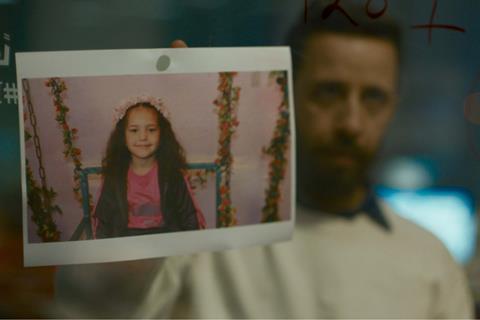
There is a moment in The Voice Of Hind Rajab where director Kaouther Ben Hania cuts to one of the characters filming her colleagues on her phone. On the handset is actual footage of the Red Crescent volunteers during the events told in the film. It is not a cinematic trick designed to impress, but rather brings a bracing reality of the tragedy to the foreground.
Ben Hania’s film, which won the grand jury prize at Venice Film Festival, recreates the 70 minutes in January 2024 during which Palestinian Red Crescent emergency response phone operators attempted to send an ambulance to a terrified five-year-old girl trapped in a car in Gaza, under fire from the Israeli Defense Forces. Please note that significant spoilers follow.
The film plays like a thriller with an urgency that belies its single location setting, but Ben Hania takes no credit for the film’s impact as we listen to the voice of Hind Rajab, surrounded by the dead bodies of her family. She is on the phone, pleading with the Red Crescent volunteers as they wrestle with the bureaucracy required to get help to the youngster.
“The suspense was already there,” says Ben Hania. “A little girl is in danger, the dispatchers are sure they would save her, they have to send an ambulance, there are obstacles – you have already the structure of a thriller. It’s not me who wrote the thriller, it’s the reality of war. It’s almost the Israeli army who wrote with cruelty the episode.”
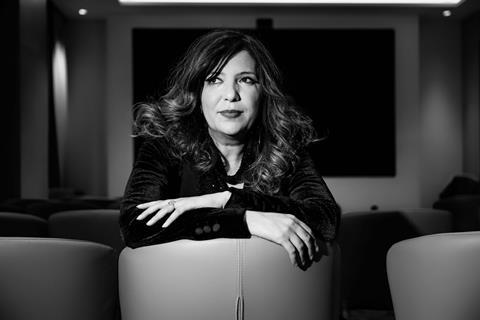
Ben Hania’s creative decision to include the phone footage of the real volunteers has a point.
“It avoids the film becoming a Hollywood thriller,” she says. “The audience [might] think it’s a thriller but it’s not, it’s reality. The moment is beyond imagination, beyond cruelty – the Israelis gave a safe route, the ambulance arrives, sees the car and then the bomb lands and the ambulance driver and medic are dead. It’s almost unbelievable.”
The Tunisian director – whose two most recent titles, Four Daughters and The Man Who Sold His Skin, received Oscar nominations in 2024 and 2021 respectively – began working on the film the moment she first heard the recorded telephone conversations between the Red Crescent team and Hind Rajab when they were released onto social media.
Ben Hania put aside the project that was about to go into production – the Tunisia-set Mimesis, the 1990s-era story of a woman investigating the origins of a cult – and instead began work on The Voice Of Hind Rajab.
Translating impact
A filmmaker who is fascinated by the boundaries between drama and documentary and how to give reality meaning, Ben Hania had several options when it came to conceiving the film.
“The main idea was how to translate the impact of hearing Hind’s voice for the first time, the emotion I felt,” she says. “I thought that a documentary about an event in the past wouldn’t have the same emotional impact on the audience. Also it had already been done by Al Jazeera, which interviewed all the Red Crescent team and [explored] the forensic investigation into the event.
“I thought we are done with explaining – it’s time to feel, to be in the place of the other,” continues Ben Hania. “The killing of Hind Rajab is happening every day, it’s not in the past. So it was important to make this in the present tense, to go back to this moment when she was asking to be saved and to stay in that moment. That’s more impactful.”
The filmmaker was in possession of 70 minutes of recordings of the conversations between the volunteers and Hind Rajab. They made for traumatic listening, so Ben Hania transcribed it in French to put some emotional distance between herself and the words on the tapes. She then approached the Red Crescent dispatchers for information on what was happening in the office at the time of the phone call.
“They told me a lot of things that I wove into the recording. I had to give room to every important moment,” she says. “I had to omit some things, for example when Hind is repeating the same thing over and over, but I tried to stay faithful to the recording.”
The result was a verbatim screenplay that she sent to all the volunteers for feedback. She then teamed up her principal cast – Saja Kilani, Motaz Malhees, Clara Khoury, Amer Hlehel – with their real-life counterparts.
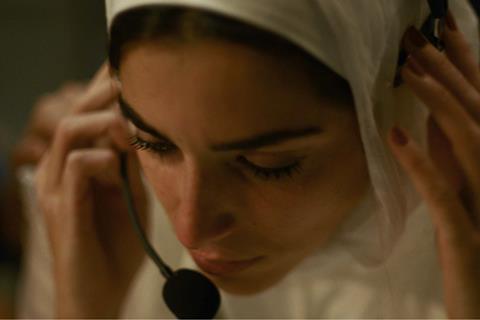
“That helped a lot. The cast are portraying people who exist and conveying how they felt,” explains Ben Hania. “We decided the actors should learn their lines and while filming they would hear Hind’s voice. It wasn’t easy for them. They weren’t acting, it’s not performance, it’s natural human reaction to hearing this young girl’s voice.
“I wasn’t directing actors like normal,” she continues. “The actors were immersed in the moment, reacting to her voice. They’re all Palestinian, so it was very emotional. The story gathered us around the memory of this girl so it was difficult but it gave meaning for what we’re doing as artists.”
With backers including Film4, Watermelon Pictures and Saudi’s MBC Studios, and produced by Jim Wilson, Odessa Rae and Ben Hania’s longtime collaborator Nadim Cheikhrouha, the France-Tunisia co-production was boarded after the fact by several high-profile executive producers, including Brad Pitt, Joaquin Phoenix, Rooney Mara, Alfonso Cuaron and Jonathan Glazer.
Bringing on board those A-list names, says Ben Hania, has enabled the film to be seen by a wider audience: “The idea was to expand the reach because it could be easily classified as a niche movie.”
International impact
The Voice Of Hind Rajab received an epic ovation on its Venice bow, and an unusually emotional response at the press screening and conference. It was submitted by Tunisia for the international feature Oscar, making the shortlist of 15, and earning nominations at the European Film Awards and Golden Globes. Willa released in the US in mid-December, and Altitude follows in the UK on January 16.
Travelling around the world with any film is tiring, but possibly more so when promoting one as devastating as The Voice Of Hind Rajab. Ben Hania shrugs off the suggestion. “It’s a privilege to show this story,” she says. “There is a duty also because we’re honouring the memory of Hind Rajab and making her voice resonate.”
The decision to use Hind Rajab’s real voice has drawn criticism from some quarters, but Ben Hania is tired of the accusations of exploitation.
“What does that mean?” says the filmmaker. “Does it mean, don’t speak about what happened in Gaza? Don’t speak about what happened to Hind? Because if you do, it’s exploitative? Her mother is part of the movie and I would not have even begun to make the film without her approval. [Using the recordings] was about honouring her voice and remembering her. What’s morally questionable is what happened to this little girl.”
And what does Ben Hania – who has now returned to Mimesis – hope The Voice Of Hind Rajab will achieve? “Accountability, justice, because it’s a war crime and without accountability you can’t have justice and you can’t have peace. I hope this movie can push towards this.”





No comments yet