Writer/directors Maggie Kang and Chris Appelhans discuss the evolution of the musical animation phenomenon – the most-watched film of all time on Netflix

KPop: Demon Hunters

Source: Netflix

‘KPop: Demon Hunters’

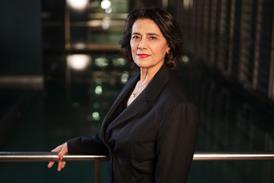
It started with dreams. Seoul-born Maggie Kang had never seen a Hollywood animation that put the country of her birth front and centre, and it was time to do something about it.

“Being a Korean woman and having worked in the animation industry for about 14 years,” says the creator of global phenomenon KPop Demon Hunters, “I wanted to see Korean culture represented through the lens of animation.”

So when Shrek producer Aron Warner enquired if she had a feature to pitch, Kang, who moved with her family from South Korea to Toronto in the 1980s when she was five years old, jumped at the chance to direct her feature debut. “I just said, ‘Yeah!’, even though I didn’t [have a feature to pitch],” she recalls. “I put it together in about a week and then pitched it to him the next day.”

Kang is now at Sony Pictures Animation (SPA) and had known Warner from her days as a story artist at DreamWorks Animation, where she worked on tentpoles such as Shrek Forever After, Kung Fu Panda 3 and the Puss In Boots franchise. Warner and SPA had made the US-China feature Wish Dragon (2021), directed by Kang’s eventual KPop writer and director partner Chris Appelhans, and were looking for another project with international flavour.

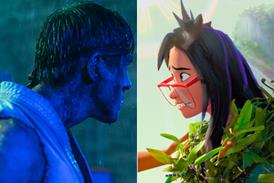
The pitch was simple. “A K-pop girl group who are secretly demon hunters – that was literally it,” Kang says of the story about Rumi, Mira and Zoey, the kick-ass, all-singing, ramen-­guzzling superstar girl band HUNTR/X who protect Earth from dark forces.

Warner liked the idea and developed the story with Kang for several months before he reached out to Appelhans, who had worked with Kang’s husband Radford Sechrist on Wish Dragon. Appelhans and Kang met for lunch and bonded immediately, collaborating closely over the ensuing years to the point where, laughs Kang, they became “one brain”.

Production on KPop Demon Hunters wrapped in April 2025. Two months later, the SPA production debuted on Netflix pursuant to what is understood to be a $750m arrangement whereby Sony makes select films directly for the platform.

The commitment is part of a larger pay-1 deal believed to be worth around $3bn that Sony Pictures and the streamer signed in 2020 during the pandemic. Cinemas were closing around the world and Sony, lacking a streaming platform, needed to monetise its inventory. Netflix paid Sony, which retained Chinese distribution rights, a little over $100m of the production costs for KPop and a $25m premium that sources say could rise to more than $50m.

A phenomenon was born when KPop dropped on Netflix in June. Among many accolades, it has become the platform’s most popular film of all time on more than 325 million views, garnered five Grammy nominations for the lauded soundtrack powered by Billboard number-one hit ‘Golden’, and ranks among the frontrunners for the best animated feature Oscar (it cannot compete for the Bafta after failing to satisfy theatrical release eligibility criteria).

The film even topped the North American box office in a rare one‑weekend-only theatrical release by Netflix. It grossed $19m in August according to exhibitors (Netflix does not report theatrical grosses), and a further $5m for a sing-along re‑release over Halloween weekend.

Folk tales

In her earliest conception of KPop Demon Hunters, Kang wanted to make a story involving Korean demons based on folklore. “I thought that would be a fun thing to see in animation,” she says. “That naturally led to the idea of demon hunters with a group of women who were cool and badass but also could be silly and more relatable. I hadn’t seen that.”

Maggie Kang

Source: Sony Pictures Animation

Maggie Kang

Turning HUNTR/X lead Rumi into a half-demon felt like an opportunity too good to pass up.

“That led to the idea of inner demons. This character’s inner demon being a literal demon was something that intrigued us,” says Kang. “From that came the idea of exploring shame as a theme, and Rumi’s story evolved from there.”

But Kang felt the story needed more, and landed on the idea of K-pop.

“I love music and had silly dreams of becoming a pop star in high school,” she says. “I would skip class and do karaoke for three hours with my friends. And I’m a huge fan of fashion. It felt different and weird but also exciting, and there were possibilities of going into music video mode. Making it a musical gave it scale.”

As they wrote the first draft, Kang and Appelhans agreed the power of music to connect people would be a key theme. “We tentatively said we’d try to tell a story about music as a tool for good,” recalls Appelhans. “It was during the pandemic and the world was in lockdown and pretty dark.”

The idea was validated when K-pop boy band BTS performed a series of virtual concerts in the early 2020s. “We were dancing in our living rooms and texting each other saying, ‘Wait, this is real,’” he says. “The ability of music to connect people and make the world seem less dark for a second is a real thing.”

That realisation helped the filmmakers expand the mythology of KPop Demon Hunters as they toiled alongside an army of animators and artists at SPA and Sony Pictures Imageworks, the teams behind 2018’s Oscar-winning Spider-­Man: Into The Spider-Verse. Kang and Appelhans invented the idea of the Honmoon magical barrier that separates the worlds of humans and demons, the rival Saja Boys K-pop band led by the mysterious Jinu, and the ultimate villain of the piece, Gwi-Ma, voiced by Lee Byung-hun, star of South Korea’s international Oscar submission No Other Choice.

However, much of the film was rooted in existing folklore. The three heroines, for example, were inspired partly by Korean musical shamans known as Mudang. “We took direct influence from the Korean demons,” says Kang. “So there’s Dokkaebi, which are more like goblins and shape-shifters, and those are the demons in the plane fight opening when we meet the girls. The Jeoseung Saja is the Korean Grim Reaper and they’re depicted with a black hat and black garb.”

Chris Appelhans

Source: Screen File

Chris Appelhans

The film’s leads Arden Cho, May Hong and Ji-young Yoo and the rest of the voice cast came on board in the final year or so of production; until then, temporary scratch vocals were used as placeholders. “Casting took a long time,” says Appelhans. “By the time we finally cast their voices, we really knew our characters.”

The music of KPop Demon Hunters has become arguably as famous as the film itself. Songs like ‘Golden’ and ‘How It’s Done’ sung by US and Korean American performers Ejae, Audrey Nuna and Rei Ami as HUNTR/X topped the charts in 2025, and the soundtrack became the second most-streamed album of the year on Spotify behind Bad Bunny.

The filmmakers – particularly Appelhans, who has a background in music – layered in their ideas for the music and songs as the project progressed. Executive music producer Ian Eisendrath, whom Appelhans calls “the fulcrum between the story and our writing process and the songwriters”, collaborated with The Black Label record company in South Korea and other songwriting teams to work out the role of each number in the story. Recordings took place in South Korea, Los Angeles and New York.

Kang and Appelhans are lost for words when they try to reflect on the success of the film – and they might be returning to their immersive world. Netflix, which owns the rights to the sequels, and Sony, which has the option to produce, have announced a sequel that is expected in 2029.